


Imagine a creature built for water—every breath, every heartbeat, every move tied to the liquid world. Now picture that creature stranded on land, the clock ticking as life drains away.
From seconds to days, the limits of fish survival beyond their habitat reveal stories of adaptation, endurance, and biological marvel.
Let’s say that It is a fact that there are many types of fish, and each type has different breathing capabilities. But if you want to find an answer for how long fish can survive out of water, you won’t find a universal time period. All we can do now is to study fish behavior to uncover the surprising science behind what happens when fish leave water behind.
How do fish breathe underwater?
Like any other marine creatures, water is a must for fish to survive. But what you may don’t understand is that they like us in depending on oxygen. Most types of fish breathe by using gills to extract oxygen from water.
Fish feature unique respiratory systems that depend on gills which allow water to get inside, then extract the oxygen from it with the help of the tiny blood vessels found on the surface of the gills before discharging waste gases back out. The function of the gills looks like our lungs, which are designed to absorb atmospheric oxygen in a unique way.
Fish sometimes let the water carry them—like going with the flow, without fighting it as we do. They do that to conserve their energy and oxygen supply in the water. It’s pretty much what happens when scuba diving—just going along with the water.
When fish leave water, the gills will fold in and stop working as it’s unable to find oxygen the way it’s designed to. While no one can know the degree of pain fish can feel, without water, fish can’t breathe and might die within seconds.
But let’s tell you an interesting fact: There are some species that can actually survive on land for a few days by breathing air or soaking up oxygen through their skin.
These are typically larger sea animals and amphibious fish that are capable of storing air so they can last out of the water. How long they last and what tricks they use—it’s what keeps them going out of water longer than you’d expect.
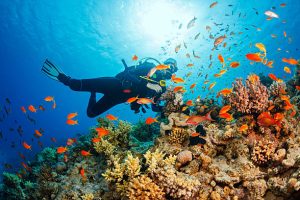
How long can a fish survive out of water?
The chances of a fish surviving out of water depend on what kind of situation it’s in. For instance, If a fish jumps out of its tank and lands on a wet surface with some of the tank’s water, it might stay alive by breathing the oxygen in that water—just as long as its gills stay wet.
Let’s know more about some types of fish that will survive the longest—and shortest—when separated from water, Our list will include:
- Pet Fish.
- Large Ocean Fish.
- Mangrove Killifish.
- Mudskippers.
- Walking Catfish.
Pet Fish
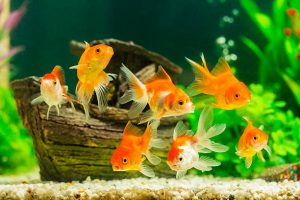
Pet fish, such as goldfish and rainbowfish, are considered much weaker than saltwater fish, In addition to that, they have small bodies besided more fragile gills. This type can suffocate and die quickly becoming out of water (After 3 to 4 minutes of no gill movement), so it’s crucial not to take them out unless the new water is ready for their transfer.
Large Ocean Fish
Large ocean fish are those species of fish that are able to breathe above the surface of the water, including dolphins, sperm whales, blue whales, beluga whales, and other sizable marine creatures. They’re sea animals that people often think are fish, but they’re really warm-blooded mammals.
They resemble mammals in having lungs with an ability to hold their breath for long periods of time underwater. They can survive on land for many months, but they will return to the water in order to provide support for their bodies.
If not supported, their own weight can press down too hard and damage their organs. Fortunately, this enables us to make shows with our favorite whales, dolphins, and some species of pinnipeds.
Mangrove Killifish
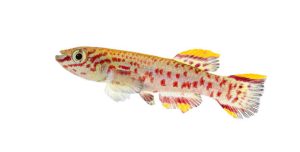
The mangrove killifish, or mangrove rivulus, are considered amphibious and can survive on land for up to a month. According to research, they utilize their skin to absorb oxygen when they’re out of the water and can store them. After going back to the water, they use their gills.
Mudskippers
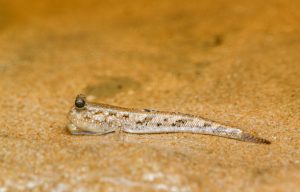
Mudskippers are also regarded as tiny, amphibious fish that spend most of their lives on land. They are born with skin that features blood vessels near the surface that enable them to absorb oxygen into their bloodstream without the need to gills or lungs.
Walking Catfish
This is one of the unique species of fish that has an extra organ that allows their gills to take in oxygen from the same air we breathe. In addition to that, they can even “walk” or wiggle on land with the help of the flexibility of their body besides their pectoral fins which enable them to propel themselves. As a result of this, you might find them on roads after big rainstorms.
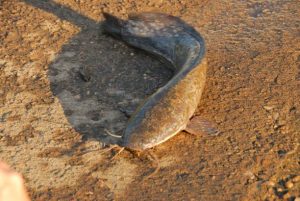
The duration of survival will depend on the species
You can find other fish species that can live without water for longer periods: and the type of the species determines how long they can survive.
Some can’t survive and will die in a matter of seconds or minutes (pet fish) while others can survive out of water for hours to months (amphibious fish). One fact is: Whether you’re going fishing or are simply changing your goldfish’s water, don’t allow it to suffer for long through water deprivation.


