Scuba Divers are usually curious about the environment beneath the sea and have a better chance in their ability to correctly spot and identify various underwater animals and marine life
Here, in this article, let’s correct some of the popular coral misidentifications among scuba divers.
What is a Coral in Short Answer?
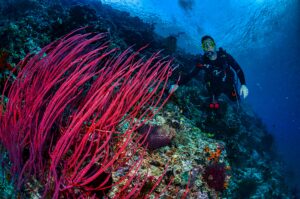
Corals are, in fact, considered animals. They are colonial animals closely related to hydroids, jellyfish, and sea anemones.
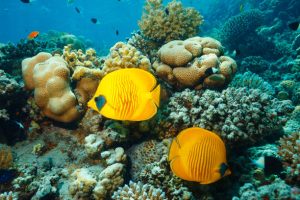
It consists of thousands of small animals called polyps. Corals also offer habitat for a wide range of marine life, including various sponges, clams, oysters, crabs, sea urchins, sea stars, and many species of fish.
Sponges are Not Coral
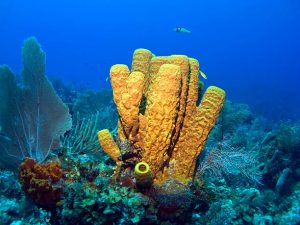
While superficially coral and sponges seem to be commonly alike, both are considered entirely different organisms. Sponges are basic organisms without tissues and instead have spicules which are hard protrusions that make up its body.
Sponges feature tiny pores that cover the whole body lined with flagellated cells. Water enters the sponge through its pores, where flagella capture food particles and expel the leftover water again through the pores
Sponges don’t have circulatory, respiratory, and digestive systems—they depend mainly on circulation in addition to water flow to function. This is perhaps the main difference between coral and sponges.
We can regard the sponge as a collection of lazy animals that don’t do anything unless keeping their mouths open hoping that their prey will come with currents.
Some highly popular sponges that are instantly recognizable by scuba divers are the tube sponge and the barrel sponge.
Compared to sponges, coral are more advanced and live in colonies to form coral heads. Coral are made of polyps, which are multicellular creatures that eat plankton and small fish
The polyps excrete a calcium carbonate which form a hard shell around itself that finally forms the coral structures we recognize.
Coral are relatived for jellyfish or anemones and can feature stinging cells and tentacles that can gelp here capture small fish, however Coral rely on symbiotic algae for food, and that algae gives them their color.
Anemones are not a Type of Soft Coral
Another Popular Coral Misidentifications among Scuba Divers is that Anemones are considered from sof coral types. It is ubderstandablw that there are several species of soft coral that resemple Anemone Sea in shape.
Anemones are more closely related to coral and jellyfish than to sponges. We can say that anemones are cnidarians like jellyfish. They are all fleshy and capable of stinging.
Corals are calcium-rich colonies of many cells, while anemones are single organisms, as they don’t considered a colony of several polyps.
Anemones are considered one of the predators. While they lack calcified armour around their bodies, they depend on their stinging cells as a defence mechanism. Anemones have a single mouth located in the centre besides with several stinging tentacle-like protrusions called cnidocytes.
Sea anemones also differ from corals in that they can move slowly (about three to four inches per hour), but prefer to spend most of their lives in one place.
Some popular types of easily identifiable anemone include the Bubble Tip Anemone, the saddle anemone, and long tentacle anemone.