


With the fundamental equipment of underwater photography, explore the depths of aquatic beauty and capture the fascinating world under the waves. Discover the essential equipment that will take your underwater photography to new heights, from vivid coral reefs to secretive aquatic creatures. These essential equipment may help you explore a world of breathtaking images that are just waiting to be found, whether you are an experienced underwater aficionado or this is your first time dabbling with this fascinating domain.
1. Underwater Camera Housings:
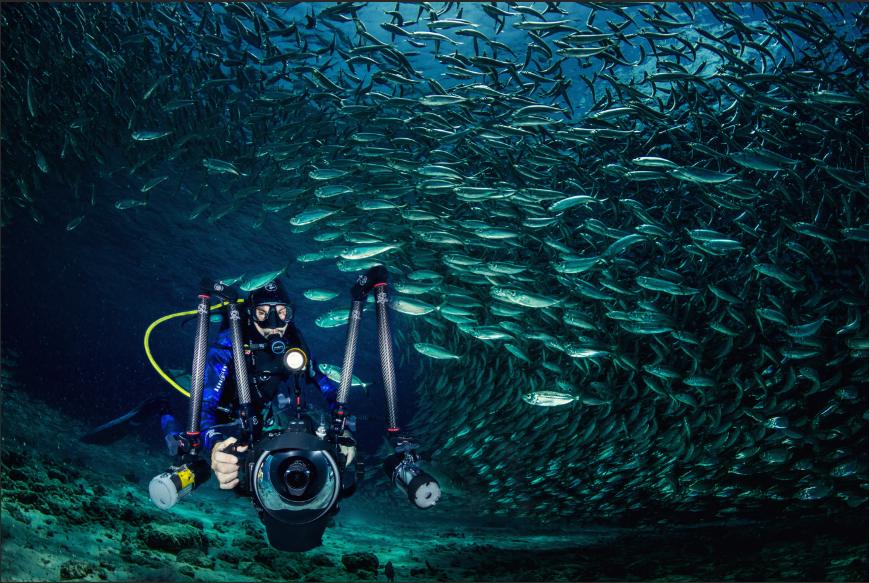
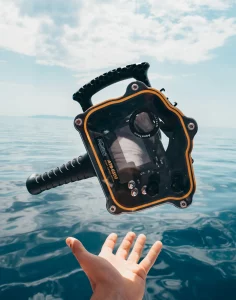
A durable camera housing is the most important piece of equipment for underwater photography. Underwater cameras must be protected from water, pressure, and potential damage, unlike land-based cameras, which are exposed to the elements. Underwater housings are designed specifically to protect and preserve the operation of your camera while it is submerged. They allow access to controls and ensure a tight seal, and they come in a variety of sizes and forms to accommodate different camera models.
2. Underwater flash or strobe:
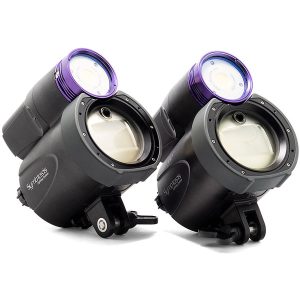
Underwater light has a peculiar behavior, with colors fading and contrast diminishing with depth. Artificial light sources are critical for overcoming these challenges and producing bright, well-exposed pictures. Underwater lights or strobes supply your subjects with rapid bursts of light, restoring the color and detail in your photos. They are especially useful for recording dynamic landscapes or rapidly moving aquatic creatures since they help to freeze motion.
3. Wet lenses:
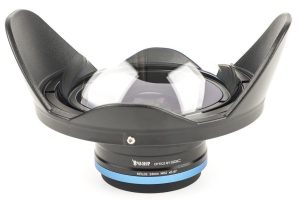
Underwater photography typically requires different lenses than land-based photography. Wet lenses let you take wide-angle and macro photographs, as well as change focal lengths while underwater. They are specifically designed to be fitted to your camera housing. These lenses can substantially expand the possibilities of your underwater photography equipment and are sealed to keep water out.
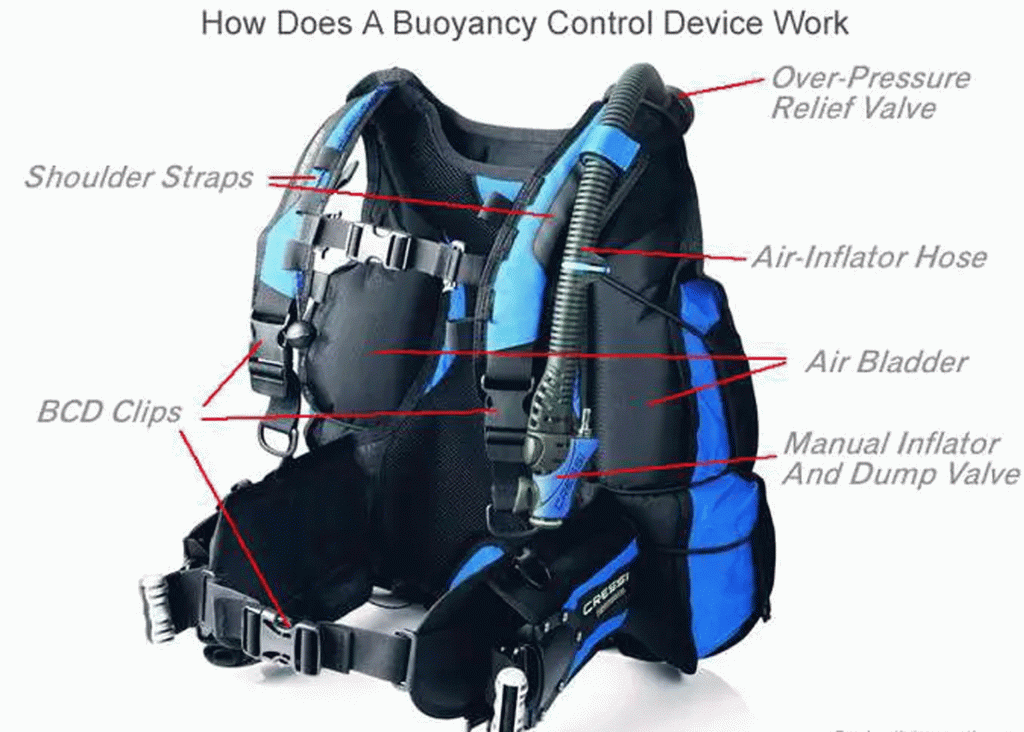
4. BCDs (buoyancy control devices):
Maintaining buoyancy and stability while immersed is critical for capturing clear, well-composed images. Divers regularly use buoyancy control systems to help them achieve neutral buoyancy, which allows them to remain at their goal depth without sinking or floating uncontrollably. This stability is essential for properly arranging your shots and minimizing camera shake, especially in stormy or flowing environments.
5. Dive Lights:
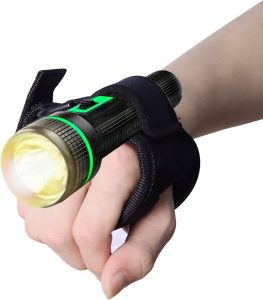
Underwater photographers generally utilize strobes for lighting, but dive lights have another application. These powerful lights provide adequate lighting to facilitate navigation and subject location. They can also be creatively employed to highlight specific elements in your composition or to generate backlighting. For maximum versatility, use dive lights with adjustable beam angles and brightness.
6. Arm and Camera Tray Systems:
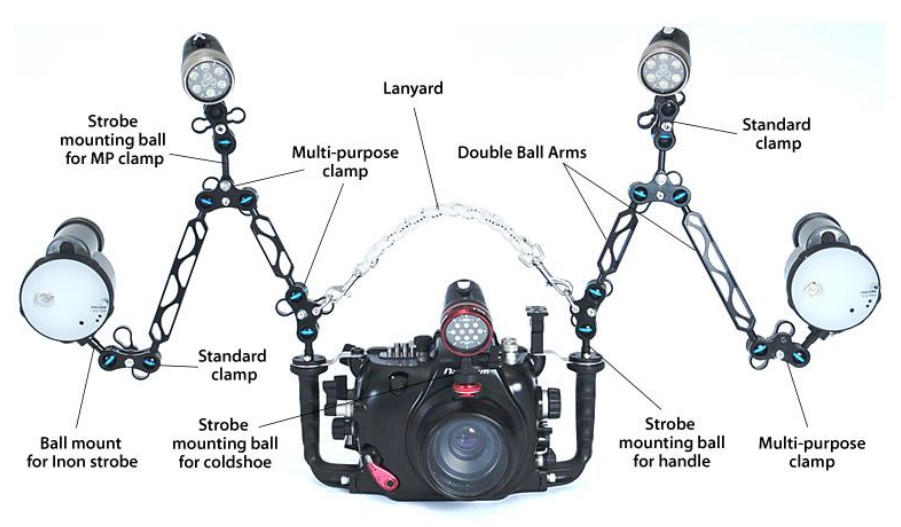
A sturdy camera tray and arm system are required for stable shots and precise camera positioning underwater. These systems provide a stable foundation for attaching your camera and accessories, allowing you to adjust the angle and distance of the lights or strobes for the finest lighting imaginable. Look for materials that will not add unnecessary bulk to your setup and are both lightweight and durable.
7. Underwater Filters:
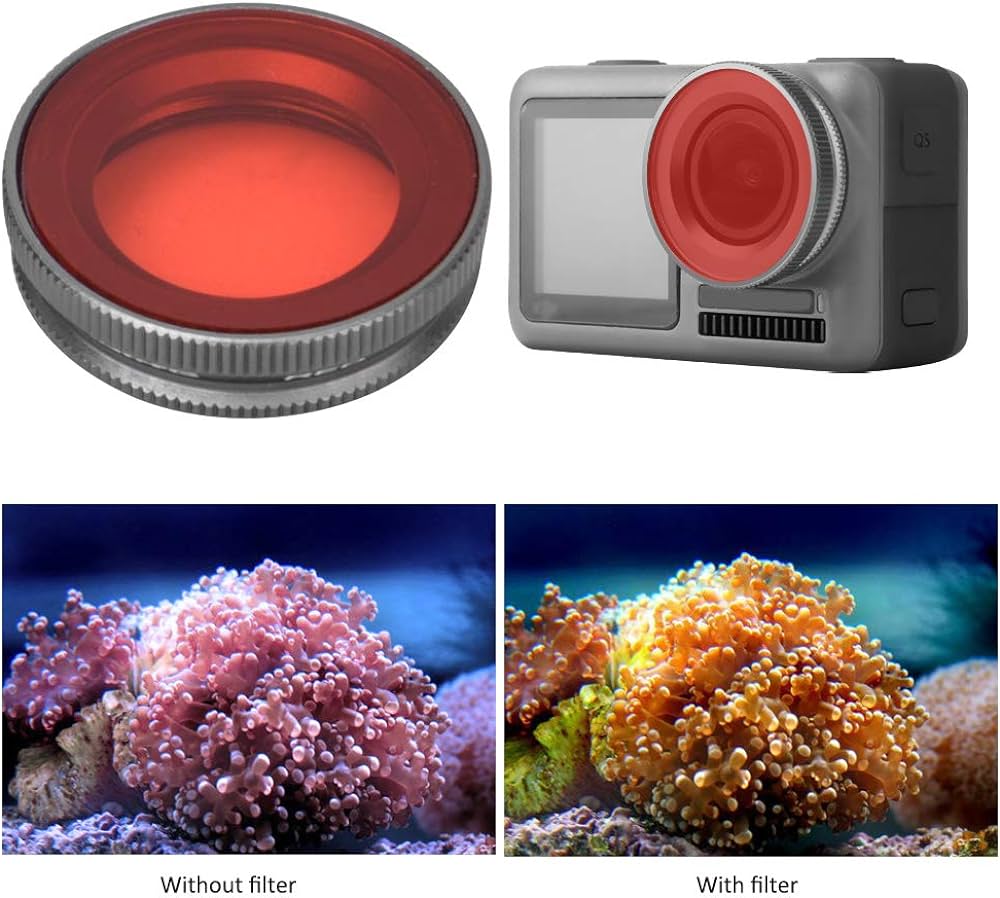
Water scatters and absorbs light, which affects the colors and quality of your photographs. Underwater filters help to repair these distortions by restoring the original colors and increasing the contrast. Red, magenta, and polarizing filters are only a few of the various types of filters available; each type is tailored to specific underwater circumstances and depths. Using the appropriate filter, you can get more precise and vibrant underwater images.
8. Anti-Fog inserts:
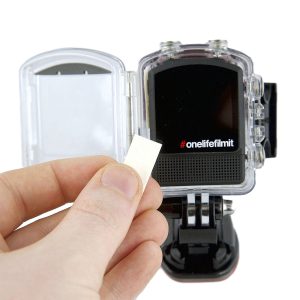
Condensation and fogging inside your camera’s housing might ruin an otherwise perfect shot. Tiny absorbent pads called anti-fog inserts are put inside the housing to absorb moisture and prevent fogging on the lens port. They continuously produce clear, fog-free images and are especially useful while photographing in humid conditions or transitioning between different water temperatures.
9. Dive Loggers With Underwater GPS:
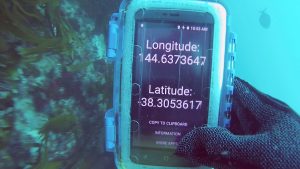
Underwater GPS and dive loggers are crucial equipment for scuba divers who want to monitor their dive sites and surroundings. This device allows you to measure and evaluate your underwater experiences by documenting your dive profile, which includes depth, temperature, and dive time. You may also geotag your photographs for easy access using some models’ built-in GPS functions.
10. Guides and Courses for Underwater Photography
Finally, and equally important, if you want to improve your underwater photography skills, you must invest in instruction and training. Take advantage of underwater photography seminars or lessons to learn about techniques such as lighting, composition, and marine life behavior that are specific to underwater environments. Furthermore, consult comprehensive manuals and resources to stay current on the latest tools, processes, and safety precautions.
If you have these basic items in your bag, you may explore the underwater environment more thoroughly, take sharper pictures, and preserve its marvels for a lifetime. You may express your creativity and showcase the ocean’s beauty with the help of these equipment, which ranges from precise lenses to creative lighting solutions. As you set off on an incredible voyage through the lens of underwater photography, jump in, explore, and let your imagination run wild. Happy and safe diving!


