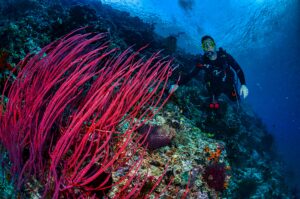
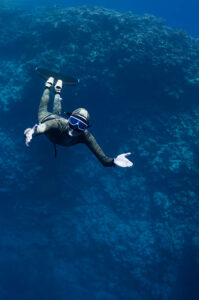
Beneath the surface of our blue planet, coral reefs shimmer with life. their importance lies in supporting entire ecosystems, protecting coastlines, and captivating every diver who drifts above them. But today, these vibrant underwater cities are facing a powerful double threat.
As rising carbon emissions warm the seas, they also change the chemistry of the ocean, making it more acidic and less hospitable for corals to grow and thrive. This “double whammy” is weakening reef structures, slowing their recovery, and putting countless marine species at risk.
Understanding ocean acidification isn’t just science—it’s the first step toward protecting one of the most extraordinary and fragile environments on Earth.
What Are Coral Reefs?
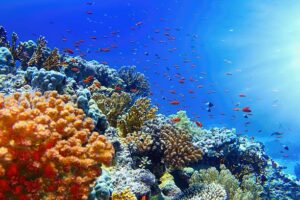
Coral reefs are considered massive underwater ecosystems that are built by colonies of tiny marine animals (referred to as coral polyps), which form hard calcium carbonate skeletons. Coral reefs usually called “rainforests of the sea,” they cover less than 1% of the ocean floor yet support over 25% of marine life, offering vital food, shelter, and coastal protection.
Ocean Acidification
Along with rising temperatures and coral bleaching, the oceans are becoming more acidic each year. Ocean acidification is considered less well-known, caused by the too much carbon dioxide in the atmosphere.
As the oceans absorb more carbon dioxide, chemical reactions reduce the amount of carbonate ions. These ions are important as they help in building blocks for seashells and coral skeletons.
With fewer available, it becomes harder to build and maintain calcium carbonate structures. If ocean acidification progresses far enough, it can help in dissolving calcium carbonate structures.
Negative Impact
Already, for instance in the Pacific Northwest, the consequences of ocean acidification is being felt. Starting in 2008, the oyster industry suffered larval losses severe enough to threaten its survival.
It’s not that their shells are dissolving, but the larvae must spend too much energy early on to build them in a more acidic water.
And in Florida, in one of the USA’s top scuba diving spots, scientists have found that reef dissolution is a major issue on reefs in the Upper Keys. The limestone loss during the winter months (when the rate of the coral growth slows) exceeds the amounts that corals can produce annually. The consequences of that, these coral reefs are starting to degrade.
Become a Catalyst for Change
Find out what is happening in the local area around you by using the PADI Dive Shop Locator and start healing the ocean of our planet one dive at a time!
Be an Ocean Ambassador and Spread the Word
The more people who understand the challenges our oceans face, the better. People are more likely to help when they know you need that, so keep your friends and family updated on new establishments.