Entering a shark’s home might seem like a risky idea. In fact, If done properly, the risk of a shark attack while scuba diving becomes extremely low.
Despite the fear and scary stories, there are, on average, sharks cause about ten deaths worldwide each year. And most of these deaths are from surfers or swimmers, not divers. The reason behind this is that divers know the proper way to interact with sharks, while swimmers and surfers prefer not to interact with them, this may seem surprising. But is that the only reason sharks don’t attack scuba divers?
Sharks know what they like to eat
Most sharks mainly feed on small fish and invertebrates. Larger species may feed on turtles, seals or even sea lions. But what about humans? Are they on the menu?
In fact, no. Humans, especially those with neoprene suits aren’t considered their favored foods.
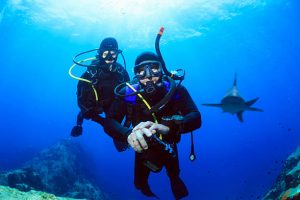
Sharks are smart
Large sharks prefer to avoid contact with humans. Global shark attack deaths from humans, as we mentioned above, are about ten per year. On the other hand, Worldwide deaths from sharks that are only caused by humans can reach one hundred million per year.
Seventy-three million, on average, are killed for their fins by fishermen (for making shark-fin soup which is a popular soap in Asia). Each year, millions of sharks die after being trapped in fishing gear which is intended for other species.
What Does Cause a Shark to Attack Humans?
From the fact that sharks don’t generally prefer humans as a food, besides having a good reason to fear us, there is a good question to ask: why do sharks attack humans? Actually the most common reason for this question is because they get confused.
Sharks often mistake surfers and swimmers for seals, which are their natural prey, because they spend a lot of time on the surface, too. The shark usually takes a single bite before realizing the mistake. A single shark bite can be serious, giving little comfort to the person attacked.
Sharks may attack people when they feel threatened, too. Or alternatively, if they’re already eating a prey and the swimmer or diver is near the intended prey.
For these reasons, any scuba diver who wants to try scuba diving with sharks should collect some information to understand what might trigger him to avoid any shark attacks.
What Makes Sharks Don’t Attack Scuba Divers
Sharks don’t attack scuba divers when following the next tips:
- Consider the timing of the dive: Don’t dive at dawn and dusk, as these are the times when sharks feed, so it is risky to dive in these times. Some choose these times on purpose to see sharks at their most active and interesting condition. They can have a safe dive, too , but it’s crucial to have a dive group who knows exactly what they’re doing.
- Avoid shallow or murky water: Avoid poor visibility, as you will have a high risk of an accidental encounter. Bull sharks, particularly, prefer to hunt in such conditions.
- Limit time on the surface: It is important to enter and exit directly from a boat, to avoid any need for long surface swims. Long surface swims are likely to be dangerous because sharks may be hunting for dead or distressed animals on the surface and while you are swimming, you may be mistaken for these prey.
- Keep your activities quiet and calm: Don’t splash or make fast movements, as you may get mistaken for prey or a threat.
- Dive in a group: More people means more eyes to keep on each other. Make sure your group consists of skilled divers with a local expert.