Diving disorders or diving related medical conditions are these conditions that are associated with scuba diving. Divers are facing a variety of medical challenges in every dive. fortunately, they can overcome these diving related medical conditions by following the rules of diving to scuba dive safely and be able to enjoy their adventure underwater without any problems.
Medical Examination Before Diving
When assisting someone who is planning to go diving, we must consider if they have any chronic medical condition or any recent changes in their health (e.g, pregnancy, surgeries, injuries..etc) and also any medication they use.
Many respiratory conditions such as asthma, chronic obstructive pulmonary disease, a history of spontaneous pneumothorax, and infections can change the normal breathing capacity required for dives.
Mental health disorders like anxiety and disorders related to the central nervous system and consciousness such as seizures can raise challenges about diving fitness.
It is important to review the medications one takes to ensure their compatibility with scuba diving, but the medical condition for which the patient takes medication is the primary concern.
People having one or more risk factors of coronary disease such as diabetes, family history, smoking history, elevated blood pressure, or an abnormal lipid profile, and wish to get into a dive program, should undergo physical examinations at first to assess their cardiovascular fitness.
These examinations include a Treadmill test, an electrocardiogram, and an echocardiogram. Just remember that scuba diving injuries and death are associated with the poor physical condition of the diver.
Diving disorders

Barotrauma
It is an injury that happens to the soft tissues. It is the result of the difference in pressure between the air space of the body. Its injury occurs specifically due to the expansion or the contraction of these spaces.
Ear & sinus
As a diver, ear barotrauma is among the most common Diving Related Medical Conditions. This happens because the diver failed to equalize the pressure changes in his middle ear space. this leads to creating a pressure gradient across the eardrum. As a result of increasing pressure, the middle ear tissue will swell with edema and the rupture of the eardrum will be the final result.
If you make forceful equalization under these conditions, the difference in pressure between the middle ear and the inner ear will be increased. This will lead to the rupture of the round window, leakage of perilymph and the inner ear to be damaged. If you want to avoid these unwanted pathological processes, you, as a driver must learn the proper techniques for equalization
Paranasal sinuses are susceptible to barotrauma because the connecting passageways are narrow. With the small changes in pressure underwater, the symptoms appear mild and subacute, but with continued diving the symptoms may be exacerbated by large changes, especially with strong equalization.
Additional risk factors for these cases include:
- Using solid earplugs.
- Overusing some medications. for example, prolonged use of decongestants which leads to rebound congestion
- The diver had surgery on his ear or sinus.
- Existing of polyps or nasal deformity.
- Suffering from sinus disease and chronic nasal which affects equilibration during the changes in pressure on the large. barometric while diving.
- The symptoms of ear barotrauma.
- Hearing decreases.
- The diver senses that there is water in his ears.
- Dizziness (vertigo).
- Ringing in the ears (tinnitus).
- A sensation of fulness.
the symptoms of sinus barotrauma include:
- Facial pain.
- Sharp pain in the forced.
- Sharp pain in the cheek (beside your nose and below your eyes).
- Bleeding.
- Coughing blood.
Pulmonary
when divers breathe normally and ascend slowly underwater, this will reduce the risk for the problem of lung overpressure. If a diver rapidly ascends to the surface without exhaling, lung over-expansion can occur. for example, when a beginner diver panic and rapidly ascends to the surface, this leads to an increase in the compressed gas in the lung causing lung damage if the expansion exceeds the lung’s elastic limit.
The gas bubbles resulting from that process escape into possible locations:
- the pleural space, causing lung collapse or pneumothorax.
- the mediastinum, which is the space around the trachea, esophagus, and heart, causing mediastinal emphysema and subcutaneous emphysema. sometimes a change in the voice occurs when the bubbles escape into the tissue around the larynx.
- pulmonary vasculature, after the gas ruptures the alveolar walls, it may enter the pulmonary capillaries and pass from the pulmonary veins to the heart’s left side and this leads to arterial gas embolism.
By the time, subcutaneous and mediastinal emphysema restore spontaneously, but pneumothorax generally requires a follow-up with a physical and the physician will prescribe specific treatment and medication to help remove the air and reinflate your lung.
Arterial gas embolism (AGE) is considered a medical emergency that requires urgent intervention in addition to hyperbaric oxygen therapy. The injuries of lung overinflation that happen because of scuba diving range from mild to life-threatening.
pulmonary barotrauma isn’t a common case in divers, but prompt medical evaluation is necessary and clinicians must keep this case in mind while dealing with patients with post-dive respiratory or neurologic symptoms.
Decompression Illness
Decompression illness is described as 2 bubble-related dysbaric medical injuries which are arterial gas embolism(AGE) and Decompression sickness (DCS). Although distinguishing between these two injuries in the field isn’t possible either practically or clinically and the initial treatment is the same for both, they result from separate causes.
Decompression illness may occur to all divers even in those who follow the standard decompression tables and the rules of safe diving. AGE or DCS may cause serious permanent injury or death.
Arterial Gas Embolism (AGE)
When the gas enters the arterial blood through ruptured pulmonary vessels, it can distribute bubbles into the body tissues (especially the heart and brain) resulting in disruption of the circulation or damaging vessel walls.
The clinical symptoms of AGE range from minimal neurologic symptoms to dramatic ones that require urgent and aggressive treatment. In general, scuba divers who lose consciousness within 10 minutes after being on the surface, suspect that they suffer from AGE. You must initiate basic life support with the administration of a high fraction of oxygen.
In order to avoid relapses, divers who suffer AGE must be moved quickly to a hyperbaric oxygen treatment facility even if they have fully recovered.
The symptoms of arterial gas embolism include:
- Blurry vision.
- Bloody sputum.
- Chest pain.
- Ataxia.
- Convulsions.
- Dizziness.
- Muscular weakness.
- Confusion or difficulty in thinking.
- Numbness.
Decompression Sickness
On breathing air under pressure, that causes nitrogen (or any inter gas) to dissolve in the body tissues and saturate it. When the depth and time a diver below the surface increases, the amount of gas dissolved increases.
The excess dissolved gas must be cleared through respiration while ascending, but some gas may supersaturate tissue depending on the rate of ascent and the amount of the dissolved gas. Then gas separates from the solution and forms bubbles which interfere with both blood flow and tissue oxygenation.
The symptoms of Decompression sickness include:
- Losing of bladder or bowel function.
- Unconsciousness.
- Itching.
- Shortness of breath.
- Fatigue.
- The marbling of skin.
- Paralysis.
- Personality changes.
- Joint pain.
- Weakness.
- Loss of coordination.
- Arterial gas embolism.
Oxygen Toxicity
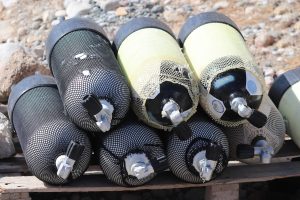
It is one of the most important diving related medical conditions. This case happens when the protective system of our body is affected by the raised oxygen partial pressure. Our body including the tissue protection mechanisms and biochemical reactions are tuned to live in 0.21 atmospherec absolute oxygen partial pressure and when the partial pressure gets higher, the recommended exposure time gets shorter.
The oxygen toxicity in the lungs is like the flu in its bad case, but it rarely causes permanent damage. we can say that long recompress treatments are the most common cause of oxygen toxicity in the lung. Brain oxygen toxicity is a more serious condition, when it occurs to a diver during a dive, it can be a serious risk.
Symptoms of oxygen toxicity include:
- Confusion.
- Tingling.
- Seeing flashing lights.
- Tunnel vision.
- Lethargy.
- Muscular twitching.
- Tinnitus.
- Grand mal convulsion.
- Nausea.
- Vertigo.
Nitrogen Narcosis
Nitrogen narcosis is a common case among deep-sea divers. It has also other names like narks, the martini effect, rupture of the deep and inert gas narcosis.
Deep-sea divers breathe underwater with the help of oxygen tanks. These air tanks contain a mixture of oxygen, nitrogen and other gases. The increased pressure underwater alters these gasses.
The altered gasses can produce strange symptoms that make the patient appear to be drunk. Although this case is a temporary condition, it may has serious health consequences.
Symptoms of nitrogen narcosis include:
- Difficulty in concentrating.
- Disorientation.
- Reduction in nerve and muscle function.
- Euphoria sensation.
- Hallucination.
- Poor judgment.
- Hyperfocusing on a specific area.
- A short-term loss in memory.
- Coma or death in more severe cases.
Hypothermia

This term expresses a drop in core body temperature. It can occur to you either in the Arctic, tropics or anywhere that your body is exposed to lower temperatures which can sap the heat from your core for a period of time.
The core temperature of adults maintains 97.6°F to 99.6°F. Half of the women run slightly cooler. When the diver’s core temperature drops below 95°F, the diver begins suffering hypothermia.
The body tries to keep the core warm by shunting blood to the core causing the initial symptoms of hypothermia. If the dropping in temperature continues to 86°F, the diver will stop shivering and his pupils will dilate. At 82°F the risk of cardiac complications becomes considerable.
Symptoms of hypothermia include:
- Initial symptoms
- Shivering
- Dizziness
- Nausea
- Hunger feeling
- At 86°F
- Shivering stops
- Dilated pupils
- At 82°F
- Muscles become rigid
- Risk of serious cardiac complications