Imagine yourself submerged in the fascinating world beneath the waves and surrounded by inspiring marine life and vibrant coral reefs. When you are ending your dive, you should know that the most important part is to make safety stops while ascending.
If you are a novice diver, you may wonder about what the safety stops in scuba diving are and why they are necessary. That’s what we will discuss in this article, so go along with us.
What are Safety Stops in Scuba Diving?

Safety stops in scuba diving are considered a precautionary measure that every diver must take while ending a dive.
The idea is to remain still for three minutes at a depth of five meters in order to allow your body the time to get rid of any extra nitrogen that is accumulated in your tissues while scuba diving. This excess nitrogen can lead to Decompression Sickness or lung overexpansion injuries.
Although this amount of nitrogen will off-gas on the surface after diving, staying under a small amount of water pressure for a period of time makes the process quicker due to the water partial pressures at depth.
The Importance of Safety Stops in Scuba Diving
Safety stops are a vital step in scuba diving which serve as a precautionary measure to prevent the risk of the Decompression Sickness and ensure safe ascending to the surface.
Decompression Sickness which has the acronym of “The Blends” can occur when the gases in your body, especially nitrogen, form bubbles in your bloodstream due to the decrease in pressure while ascending.
As a scuba diver, you must incorporate safety stops into your dive plan in order to reduce the risk of decompression sickness and create a safer diving experience.
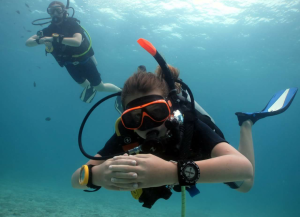
Preventing Decompression Sickness
Safety stops in scuba diving play an important role in preventing decompression sickness. When you slow down your ascent rate, this allows excess nitrogen bubbles to dissolve out of your body.
When scuba diving, you breathe compressed air that contains nitrogen that in turn dissolves under pressure into the tissues of your body. While ascending, the pressure that surrounds you reduces rapidly, then nitrogen begins to come out of the solution and form bubbles.
When you make a safety stop, this gives your body time to release the excess bubbles of nitrogen which in turn reduces the risk of Decompression Sickness.
If you are wondering about practicing recreational scuba diving and the necessity of the safety stop. The answer is yes. Regardless of the depth of the dive and gas mixture you use, every scuba diver must make a safety stop at the end of the dive to prioritize his own safety over anything else.
This practice doesn’t only reduce the risk of decompression sickness, but it also instills safe diving habits that will benefit you throughout your journey.
Ensuring a Safe Ascent
Making safety stops can also help you maintain proper position and buoyancy during ascent and in turn ensure a safe return to the surface.
Adhering to guidelines in achieving a safe ascent rate is important to avoid potential lung overexpansion injuries or DCS. 18 m is considered the highly recommended distance to be the ascent rate of a certified diver.
The final 5 m of the ascent is the most dangerous part in the water column for decompression sickness and lung overexpansion injuries. Performing a safety stop of 3-5 minutes at 5-6 meters deep can give your body the time to adjust the change in pressure to ensure a controlled and safe ascent to the surface.
Diving for many people around the world is meant to be an enjoyable experience and adhering to safety procedures such as safety stops help you stay safer and relish every second underwater.