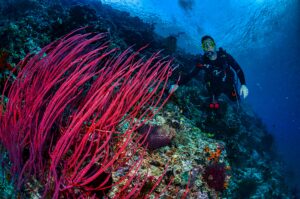
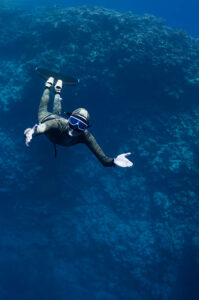
Since the middle of the 20th century, there have been major changes in marine archaeology or human interaction study with the sea through the recovery and analysis of submerged artifacts. Among these, the prime has to be scuba, which has now opened new vistas of prospecting, documenting, and preserving underwater cultural heritage. It has opened up a new frontier of archaeological research by providing access to shipwrecks, sunken cities, and ancient harbor installations that were previously inaccessible. What scuba diving has done for this field of study is to open up an entirely new frontier, a means of access to a largely unknown part of humanity’s maritime past.
The Origins of Marine Archaeology
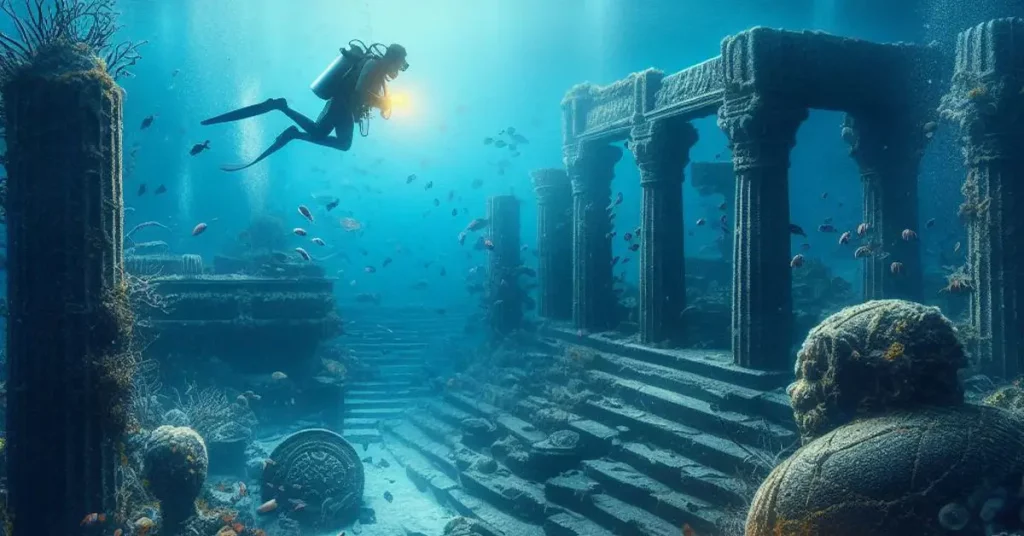
The concept of marine archaeology dates back at least a few centuries when early explorers and treasure hunters brought back artifacts from shipwrecks with very basic methods like diving bells and simple breath-hold diving. These early studies were very select in nature and usually involved the recovery of valuable material from the sites rather than more visionary ideas.
In 1943, with the invention of the Aqua-Lung by Jacques Cousteau and Émile Gagnan, the turning point began for man’s underwater activities. This new set of equipment allowed divers much longer time underwater, more mobility underwater, and deeper depths underwater. The application of current scuba diving technology gave the marine archaeologists the opportunity to study the underwater sites in situ with the greatest detail and accuracy.
Shipwreck Exploration
Perhaps the most significant contribution that scuba diving has made to marine archaeology has been in the area of shipwreck exploration. The ocean floor, filled with these wrecks of ships, is regarded in some ways as a time capsule providing safekeeping of historical and cultural information related to the lost ships, their crew, and the peoples who manufactured and used them.
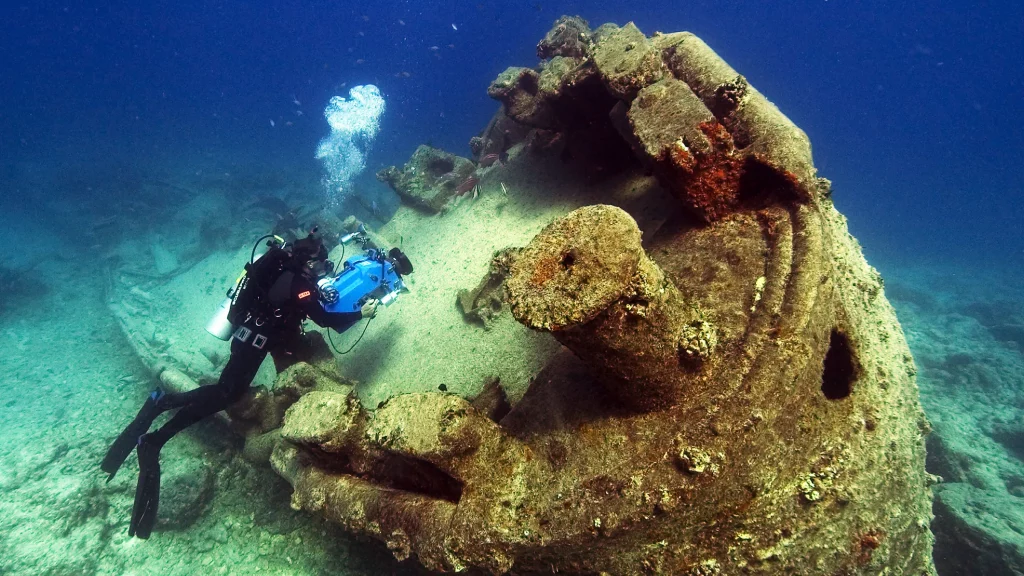
Scuba diving has enabled archaeologists to inspect shipwrecks from ancient Greek triremes to World War II submarines. In the case of the excavation of Henry VIII’s warship, the Mary Rose, off the coast of England during the 1980s, it took lots of work underwater by scuba divers. The way the artifacts were salvaged from the wreck today gives great insights into naval warfare and shipbuilding during the Tudor period and details about ordinary seafaring life.
In the same way, scuba diving greatly associated with the discovery and exploration of a 17th-century Swedish warship, the Vasa. Astonishingly well treated by the cold waters of the Baltic Sea, which it sank into during its maiden voyage in 1628, divers were important players in the recovery of the vessel. They again took a prominent role in the time-consuming, complicated process of conserving its timbers and the many other artifacts that are now displayed in a dedicated museum in Stockholm.
Exploration of Submerged Cities, Harbors, and Other Ancient Coastal Structures
This exercise has also allowed for exploration into submerged cities, harbors, and other ancient coastal features of human settlement, which very easily get inundated from rising sea levels or tectonic activity, among other natural phenomena, and it has exposed researchers to look closely into the ancient past and the relation of a civilization to the ocean.
Perhaps the most striking example would be that of the submerged city of Pavlopetri, situated off the southern tip of Greece. It is more than 5,000 years old, making it one of the oldest underwater cities known today. To this day, scuba divers have taken great care in the mapping of the complex layout, which shows streets, buildings, and tombs, offering great insights into the urban design and daily life of the Bronze Age.
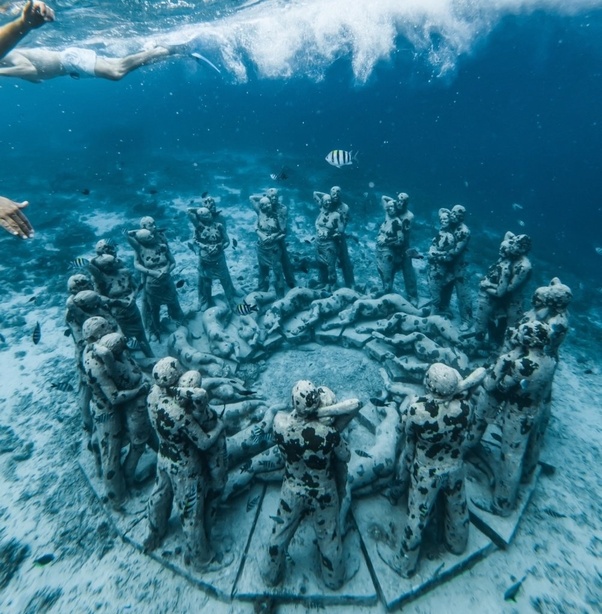
It would be another vital archaeological site to perform scuba divers. In the first century BCE constructed by Herod the Great, Caesarea was a significant Roman harbor and also one of the eastern Mediterranean’s main commercial port centers. The sustained efforts of scuba diving have now opened the possibility to investigate submerged remains representing Roman engineering and maritime trade, such as the giant breakwaters, quays, and warehouses of this place.
Preservation and Conservation
The underwater sites are an integral part of marine archaeology, and preservation or conservation of the artifacts that are recovered is another. Many scuba divers work hand in hand with conservators to recover delicate objects and stabilize them.
This creates unique preservation challenges in underwater settings: wood, metals, and ceramics, after centuries or millennia underwater, break down more quickly when brought into contact with the open air. For example, the conservation of wooden ship timbers often involves rinsing to remove salt and replacing the water with a preservative, such as polyethylene glycol, to prevent shrinkage and cracking.
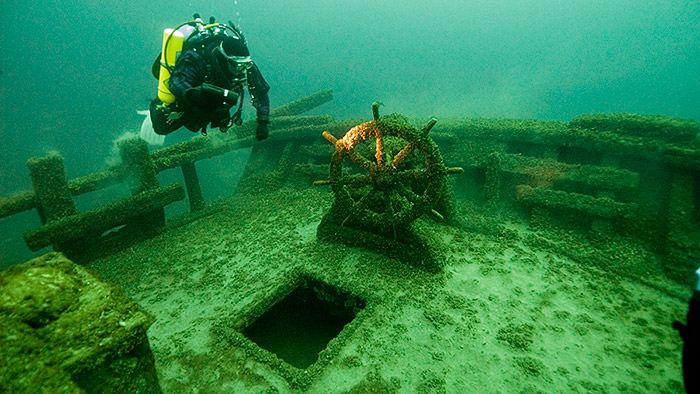
Scuba diving has also complemented tangible preservation with the formation of underwater museums and protected areas. Brittle, unprotected artifacts in the ground can be fissured with seawater and pulled from their original site by moving currents, artifacts still exposed to harsh environments for the first time in thousands of years, while all 100% have gone unexamined. A specific example of this is the Underwater Archaeological Park of Baiae, Italy, where divers can access the submerged remains of a complete Roman city, including mosaics, statues, and bathhouses.
Challenges and Future Directions
While scuba diving supported so many advances in marine archaeology, this field is still shadowed by several difficulties. Many underwater sites lie in remote or dangerous locations and can be visited only with special training and equipment. Underwater cultural heritage is also threatened by looting, pollution, and climate change.
To tackle these issues, marine archaeologists are in the process of developing technologies and approaches to the field. Advancements in underwater robotics, remote sensing, and 3D mapping with conventional methods of scuba diving are making investigating more cryptic sites possible in greater detail.
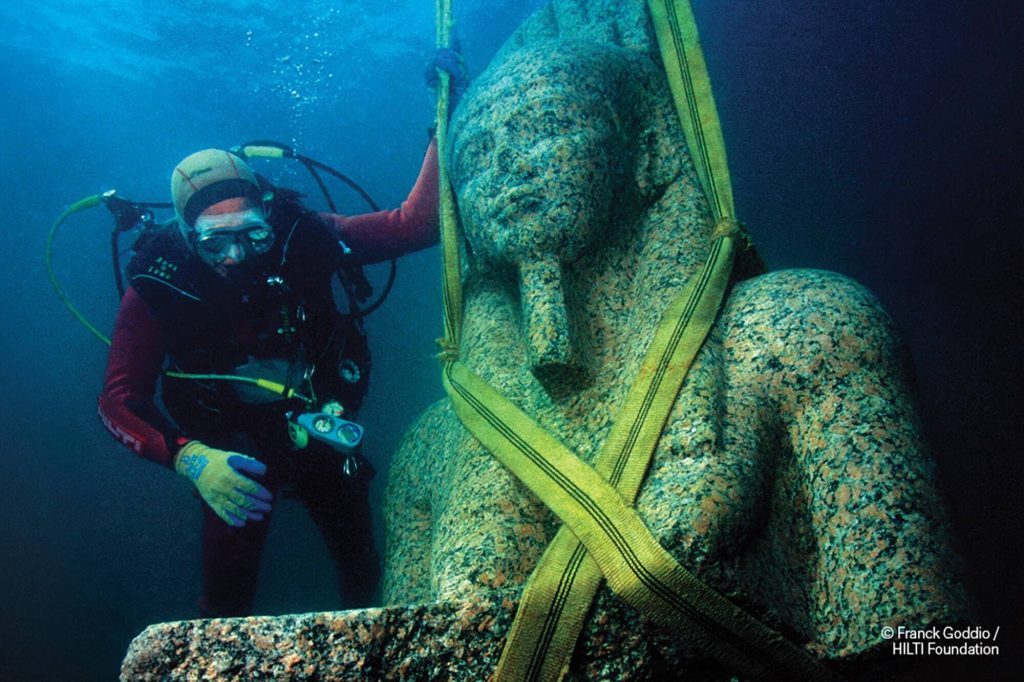
An exciting mix of scuba and tech will no doubt be a part of marine archaeology’s future, ensuring this study and care of our underwater heritage stay continually on the rise. This only stands to enrich our history as new finds come to light beneath the waves, and deepen our appreciation of the close relationship humankind and the ocean share whenever scuba divers get an opportunity to journey into the subsea world.
As it confers access to sites below the surface, where material culture lies, literally centered on concealment, scuba diving is to the development of marine archaeology which transforms the field from treasure-hunting pastime into a scholarly scientific discipline. Scuba diving thus paves the way for archaeologists to uncover, study, and then preserve the remnants from our sea-centric past. While the technologies around improve and the field advances, scuba diving will remain one such key tool in the exploration and preservation of underwater cultural heritage, each window into history as vast and mysterious as the oceans. Happy and safe diving!