As a certified scuba diver, whether you are practicing scuba diving professionally or recreationally, it is always recommended to train to a Rescue Diver level. Rescue diver courses and training are not designed only for a diver looking for a career in rescue diving or scuba diving, but also for anyone who wants to know what to do in case of problems underwater or just wants to expand their knowledge.
Although you always dive with a dive buddy, you are the most dependable rescue diver for yourself in case of any emergency. Taking a rescue diver course from any of the scuba certification agencies will help you be a better scuba diver for yourself and even for your dive buddy.
This article is your guide in rescue diving. If you are interested in this field, keep reading to know all the information you want.
What is a Scuba Rescue Diver?
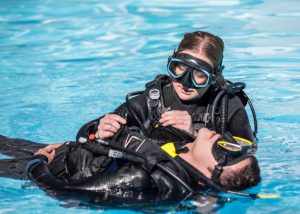
The rescue diver course is considered a challenging and demanding course in which you learn the following:
- You will learn to anticipate and manage risks.
- You will learn how to respond to any basic problems that happen underwater and diving emergencies.
However, if you know any certified rescue diver, ask him and he will tell you that it was the most rewarding and useful certification he has ever taken since passing the Open Water Diver Course. This course will boost your confidence in the water. It is not an exaggeration if we said it is a must when scuba diving.
Reasons to be a Rescue Diver
Why to become a certified Rescue diver? Even in recreational scuba diving, emergency situations may arise. With this kind of advanced level of training, you would have the additional knowledge you need to respond quickly to these cases and help save lives.
Even if you are making routine dives, you can make a mistake that makes your dive go sideways quickly. With this advanced level of training, you can not only recognize a hazard in the making, but also get control of the emergency situation before it worsens.
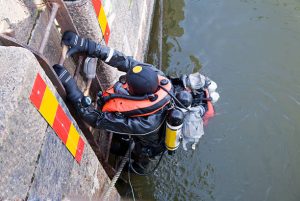
All the members in your dive group will want to be your dive buddy and dive near you on the next charter! In addition to that, you can delve into the world of professional scuba diving, such as:
- Swift water rescues in flood scenarios.
- EMT rescue.
- Underwater crime scene investigator divers.
The Requirements to Be a Rescue Diver
Before you think of taking a rescue diver course, you must first be certified as a scuba diver. An advanced open water certification with more than 20 logged dives is also needed besides your open water diver certification.
Some scuba diving certification agencies, such as PADI and NAUI have a prerequisite of being trained and current with both first aid and CPR while others, such as CMAS offers the CMAS 2 star certification which is considered an advanced level of a rescue diver course which goes without the CPR and first aid trainings.
It’s also important to be very comfortable with all the basic scuba diving skills that have been taught to you in your previous course which you may also need in this course. Some other skills that can help you is to be calm, composed, a quick thinker and react efficiently in controlled manner.
What You Learn in the Rescue Diver Course
- Emergency management.
- Several techniques of self-rescue.
- Common problems happening to dive equipment.
- How to respond to a panicked diver.
- First aid procedures for accidents related to pressure.
- Best ways to release function and problems.
- Procedures in case of a missing diver.
- Spotting potential problems and managing stress in other scuba divers.
- Scuba diving equipment Function.
- Rescuing the Responsive scuba diver while being underwater.
- Rescue Exits with the responsive diver.
- Rescuing the Responsive Diver while being at the Surface.
- Rescuing the Unresponsive Diver while being Underwater.
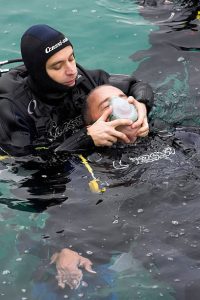
- Rescuing the Unresponsive Diver while being at the Surface.
Scuba Diving Equipment Requirements for Rescue Diving
During the course, you use all the basic scuba diving equipment, including Scuba mask, Buoyancy Control Device (BCD), Fins, Regulator and Weight Belt which include a dive computer. You will also need some extra gear, such as a Dive Knife and Signaling Device.
You will take the Rescue diver course usually in 3 days including both theoretical study from a manual provided in addition to practical sessions including dive accident scenarios which can be performed in confined waters (swimming pools) or shallow open water.
The Rescue diver Course is considered the last part of the recreational course and the next levels in scuba diving are more specific for professional pursuits. The Rescue Diver course is highly recommended as a must for all scuba divers because it’s always better to Be Well Prepared and Hope for the Best!