Do you run out of air quickly while scuba diving, faster than other divers in your group? Do you frequently have to end your dive before other divers in your group?
Well, this article was written for you. You should understand that people are different, as divers with slower metabolisms tend to use less air. Smaller scuba divers use less energy than bigger ones to swim forward, as a result, they also use less air.
On the other hand, you can take steps to reduce your gas consumption and extend your Dives. Actually, divers usually waste air by leaking it before it gets to their lungs because of the free-flowing octopus and worn out o-rings.
When you use more energy than necessary, this also wastes air. Using energy means using air, as oxygen is needed to burn the calories that make energy.
When you get less maximum benefit from each breath, you also waste this air, as when divers have inefficiently breathing, they exchange less oxygen for carbon dioxide, so they have to take another breath sooner.
In this article, we will tell you three main tips to consume less air while scuba diving and extend your dive.
3 Main Tips to Consume Less Air While Scuba Diving
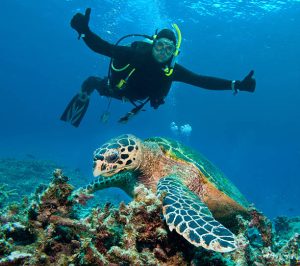
When scuba diving, consuming less air is crucial if you want to extend your dive times and enhance your safety. Here are 3 main tips to help you consume less air while scuba diving:
- Fix the Small Leaks
- Dive More
- Take a Class
Fix the Small Leaks
You should check the O-ring or the inflator swivel, as any tiny stream of bubbles on them can add up over 40 minutes and this can also be a sign of more serious problems ahead.
Ask from your body to look behind and search if any leak presents. Another kind of leak is having a scuba mask that doesn’t seal as you have to constantly blow air into it in order to clear out the water.
It’s also regarded as a source of stress and elevates your breathing rate which affects the efficiency of your breathing. Ensure that your octo doesn’t free-flow easily as that can make you consume a lot of air quickly. Ensure to mount it carefully with the mouthpiece pointing downward.
Dive More
If you are an inexperienced scuba diver, you are likely to burn through your air supply at a furious speed. The reason behind this is anxiety. A novice diver is likely to feel nervous and his body responds to danger by raising its metabolism, his breathing rate and heart rate.
Although a lot of air cycles through the lungs, it’s never used and only dumped into the ocean. Even if you aren’t a new diver but you don’t dive every week, diving is still an unnatural activity to your body and isn’t happy yet when putting your head under water.
You need to dive more and you will find that your body is getting used to the idea and your breathing rate Will be less.
Take a Class
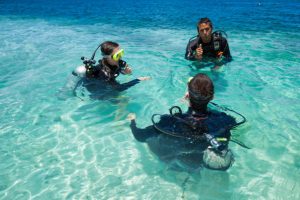
The last tip to consume less air while scuba diving is to take a class. Any class you will take will help you reduce your gas consumption by making you feel both more accomplished and comfortable. If you are looking for the best one, choose a class to improve your weighting and buoyancy control.
After the class, you can control your attitude using your lungs. You don’t need then to squirt this valuable gas into your BCD and venting it to the ocean; you just need to drift like a fish and relax instead of concentrating on the mechanics of scuba diving.