The Red Sea has long been a magnet for both scuba divers and travelers. Stretching between Africa and Asia and connecting the Indian Ocean to the Mediterranean, this unique body of water offers far more than just geography—it’s a true underwater wonderland.
With crystal-clear visibility, warm waters year-round, and an astonishing variety of marine life, it’s not surprise to know that the Red Sea remains a top choice for divers from around the world.
Add in pristine beaches, endless sunshine, and easy access from Europe, and you’ve got the perfect recipe for adventure. Curious to know more? Let’s dive into some fascinating Red Sea facts and see why it continues to capture hearts above and below the surface.
5 Red Sea Facts
Curious about the Red Sea? Here are five bite-sized red sea facts that dive beneath the surface—perfect for sparking wonder or planning your next underwater adventure.
- The red sea is small but important.
- The red sea is the ideal spot to learn scuba diving.
- There’s plenty to do along the red sea’s coast, too.
- The red sea is home to superb wreck diving.
- The red sea offers great biodiversity.
The Red Sea is Small But Important
Although it is included in the top 50 largest seas list, the Red Sea is among the world’s busiest waterways. Because of its strategic location, besides the opening of the Suez Canal in 1869, the Red Sea becomes one of the busiest shipping lanes worldwide.
The Red Sea provides ships with a shorter route between Europe and Asia. Its calmer waters make it better than sailing around the Cape of Good Hope in South Africa.
The Red Sea runs from the Gulf of Aden in the south to the southern tip of the Sinai Peninsula in the north. It spans 1,400 miles in length, 221 miles at its widest point, and is bordered by Egypt, Saudi Arabia, Yemen, Eritrea, Djibouti, and Sudan. At its northern tip, the Red Sea splits into two gulfs.
Going up the Gulf of Suez leads to the Suez Canal and the Mediterranean, while the Gulf of Aqaba heads toward Jordan and Israel.
The Red Sea is the Ideal Spot to Learn Scuba Diving
The Red Sea is only a short flight from Europe and offers great dive conditions for scuba divers of all levels. While experienced divers can find plenty of deep diving opportunities, the Red Sea is still a fantastic place to learn scuba diving.
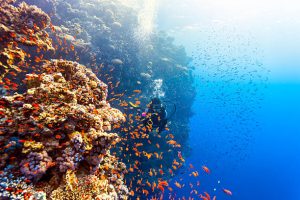
The water stays clear, currents are mostly calm, and the sea temperature is pleasantly warm. What more could you want? The crystal-clear visibility is because the region is receiving very little rainfall in addition to the absence of major rivers flowing into the Red Sea. This lack of rain besides the high rates of evaporation because of the hot climate, also is responsible for the high salt percentage in the Red Sea.
With this high salinity, the section of the ten-minute float in the Open Water course can be made very easily. The abundance of house reefs is considered the other factor that makes the Red Sea an ideal place to learn scuba diving – You can walk straight into the sea from the hotel.
There’s Plenty to Do Along the Red Sea’s Coast
If you don’t want to practice diving every day here or even when travelling with non-divers, you can do many things along the costline of the Red Sea’s ochre-hued.
If you are on of the history buffs and hikers, catch sunrise at Mount Sinai, where many people believe God gave Moses the Ten Commandments. You can spend your day visiting Saint Catherine’s Monastery which is the oldest continuously inhabited Christian monastery in the world.
If you are looking for more activities filled with fun? Try to explore the surrounding desert. You can enjoy many oppurtunities, from a camel ride, desert quad biking, to a dune buggy safari.
If you don’t prefer getting sand in all the wrong places, you can enjoy on the surface of the Red Sea by kiteboarding, parasailing, or desperately clinging to the banana boat which has a high speed (you’ll enjoy it, we promise).
If you are inspired by ancient Egypt, try tacking on a few extract days to your dive holiday in a steam ship to cruise down the Nile River. After you spot the sights in Cairo (including the legendary pyramids of Giz), go down the Nile to take a look at the ancient sites of Luxor and the Valley of the Kings.
The Red Sea is Home to Superb Wreck Diving
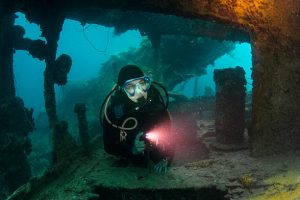
Not only the Egyptologist who can enjoy history on a Red Sea diving holiday. If you are interested in the more recent past, you can enjoy in the excellent wreck diving sites of the Red Sea. The SS Thistlegorm is the most famous one, which is a British cargo ship which sunk by a German bomber aircraft during WWll.
Divers from Hurghada and Sharm El Sheikh flock to this wreck to glimpse its sunken military haul—boots, rifles, trucks, bikes, armored carriers, and aircraft parts laid out like an underwater museum.
If you like exploring old sunken ships, Hurghada is a great place to go. In addition to scuba diving in the Thistlegorm wreck, you can enjoy exploring a further half dozen wrecks. El Mina, Suzanna, and MS Balena are well-known wrecks, and tech divers dive to 55m to see Rosalie Moller’s giant propeller.
The Red Sea Offers Great Biodiversity
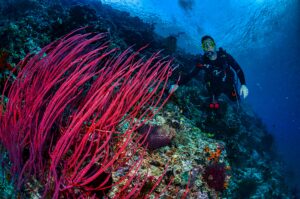
Our last poing in our Red Sea Facts list is related to the incredible biodiversity. Whether you prefer spotting big or small sea creatures, there are plenty of species that you can keep an eye out for. Most of the Red Sea’s coast has fringing reefs, the base of its marine life system.
The nooks and crannies of the corals shelter myriad creatures; tiny critters that make their homes within the reef attracts bigger creatures, followed by to predators, to continue the cycle up the food chain.
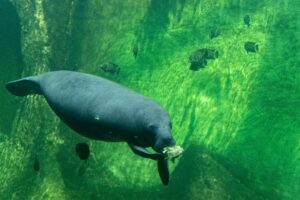
Macro photographers will enjoy spotting bright nudibranchs and searching for hidden reef creatures like frogfish. It is a common thing t spot turtles whild diving. On the other hands, diving close to shore may also encounter a dugong munching on seagrass.
The Red Sea also has its fair share of the big stuff. One of the Res Sea facts ten species of shark live here – including threshers, hammerheads, and whale sharks in addition to dolphins.