Enriched Air (Nitrox) Diver course is one of the most popular dive courses—and for good reason. It helps divers extend their bottom time and feel more energized after dives, but it also comes with important rules and safety guidelines.
If you’re curious about Nitrox and wondering how it works, who it’s for, or whether it’s right for you, this FAQ guide answers the most common questions clearly and simply—so you can decide with confidence and dive smarter.
What is Nitrox Certified?
When you become nitrox certified, this means you have completed the necessary training to be able to use enriched air (nitrox) safely while scuba diving. Nitrox is a breathing gas with a high percentage of oxygen and low percentage of nitrogen than regular air, about 32% or 36% oxygen.
This composition helps in reducing nitrogen absorption, which enables you to have extended bottom times and shorter surface intervals, making it very useful for repetitive dives.
To earn enriched air (nitrox) diver certification, you must complete a nitrox course offered by agencies, such as PADI or SSI, which covers topics, including the proper way to analyze and label nitrox tanks, how to adjust dive computers when using nitrox cylinders, and understanding both the benefits and risks of enriched air, including preventing oxygen toxicity. You must have the certification to be able to dive with nitrox safely and to get nitrox tank fills.
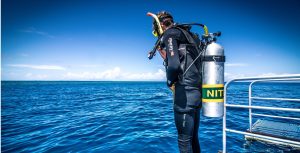
What is the Downside of Nitrox?
The main downside of scuba diving with nitrox is the high risk of getting oxygen toxicity at depth. While nitrox enables you to have longer bottom times and shorter surface intervals, the high percentage of oxygen it contain can become hazardous if you go beyond safe depth limits.
Oxygen toxicity can cause severe symptoms, including seizures, which are very dangerous underwater. Other drawbacks include depth limits, since divers must stay shallower than when using regular air to keep oxygen exposure within safe levels.
You will also need specialized training to use nitrox safely,in addition to the overall cost and commitment. Filling a nitrox tank tend to be more expensive than regular air, and this isn’t available at all dive shops or locations.
Additionally, tanks and some gear must be compatible with nitrox and labeled in a proper way. In summary, while there are some benefits you will get when using nitrox, it comes with higher costs, additional safety considerations, and logistical challenges.
How Long After Diving with Nitrox Can You Fly?

In general, it is recommended to wait for 12 to 18 hours at least after scuba diving with nitrox before flying, considering the type and number of dives. You should wait 12 hours after conducting a single no-decompression dive, 18 hours in case of repetitive dives or several days of diving, and 24 hours when involving decompression stops in your dive.
Although nitrox reduces nitrogen absorption when comparing it to regular air, it isn’t a must that the required surface interval before flying will be shorten. In fact, Because nitrox has more oxygen, some experts recommend extra care with surface intervals when using it.
These guidelines are designed to reduce the risk of decompression sickness from the changes of altitude changes. When flying to higher altitudes or having any health concerns, you should wait longer or consult your dive professional or medical specialist for personalized advice.
What is an Enriched Air Diver?
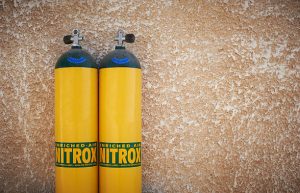
An Enriched Air (Nitrox) Diver is a certified scuba diver who have the proper training to use Enriched Air Nitrox (EANx)—which is a breathing gas containing a higher percentage of oxygen and a lower percentage of nitrogen than regular air. This enables them to enjoy with longer bottom times, shorter surface intervals, and be less fatigue after scuba diving.
Enriched Air (commonly contain 32% or 36% oxygen vs. 21% in regular air) reduces nitrogen absorption, with lower risks of decompression sickness allowing divers to have more dives in a day.
However, divers need specialized training, because using higher levels of oxygen involves specific safety procedures along with equipment considerations. The PADI Enriched Air (Nitrox) Diver course is one of the most popular specialty courses for scuba divers looking to extending their underwater time safely.
How Long Can You Dive with Enriched Air?
Scuba diving with enriched air (nitrox) enables you to enjoy with longer bottom times compared to regular air, but it doesn’t extend your total dive time beyond the ability of your tank. The main benefit is that nitrox minimizes nitrogen absorption, which means a diver will enjoy with longer no-decompression limits—you can stay at certain depths longer without the need to conduct a decompression stop.
However, your overall dive time is still depend on your air supply as well as how fast you breathe. Nitrox doesn’t change your consumption rate or increase the capacity of your tank. It’s particularly effective in the depth of 50–100 foot (15–30 meter), in which no-stop times are noticeably extended.
For example, at a depth of 60 feet, enriched air (like EANx36) may enable you to have up to 80 minutes of bottom time, compared to around 40 minutes on regular air. So, enriched air lets you stay longer safely at depth, but your dive is still limited by how much gas is in your tank and your breathing rate.
What is the Difference Between Nitrox and Enriched Air?
There is no real difference between the terms “nitrox” and “enriched air” as both refer to the same breathing gas used in scuba diving: a mixture with more oxygen than regular air. “Nitrox” is short for nitrogen-oxygen and technically refers to any blend of those two gases.
“Enriched air,” on the other hand, specifically refers to nitrox mixtures containing more than 21% oxygen, which are commonly used in recreational diving. In practice, the terms are often used interchangeably to refer to Enriched Air Nitrox (EANx), which typically contains 32% or 36% oxygen.
The higher percentage of oxygen helps in minimizing nitrogen absorption, which enables you to have longer bottom times and shorter surface intervals, but it also demands special training because of the higher risks of oxygen toxicity at depth.
Want to Become An Enriched Air (Nitrox) Diver?
If you are interested in becoming an enriched air (nitrox) diver, enroll now in the Enriched Air (Nitrox) Diver Course with the best, DRAR DIVING Center.