Learning CPR can feel intimidating, especially when so many myths and mixed messages surround it. Some people think it’s too complicated, others believe it’s only for medical professionals, and many worry they won’t remember what to do in an emergency.
The truth? Most of these fears are based on misunderstandings. This article clears up the biggest myths about learning CPR, so you can see just how simple, valuable, and life-changing this skill really is.
What is CPR?
Cardiopulmonary resuscitation (CPR) is considered an emergency treatment that you should do when when the breathing and heartbeat of someone has stopped. For instance, when someone suffers from a heart attack or nearly drowns. CPR is an emergency treatment that can save a life.
You should start CPR by pushing hard and fast on the chest according to the recommendation of the American Heart Association. The pushes are referred to as compressions. This hands-only CPR approach is advised for untrained bystanders and first responders.
The 6 Biggest CPR Myths
There are plenty of misconceptions about CPR that may stop people from learning or using it. In this section, we’ll clear up the six biggest CPR myths so you know what’s true, what’s not, and why CPR skills are worth having.
- You Will Perform “Mouth-to-Mouth” on a Stranger.
- CPR is Difficult.
- Performing CPR Won’t Make a Difference.
- My Friends and Family are Healthy; I Don’t Need to Know CPR.
- I Can Learn CPR by Watching a Video Online.
- I’ll Harm the Victim More Than When I Found Them.
You Will Perform “Mouth-to-Mouth” on a Stranger
Studies show that most people end up giving CPR to someone they know, not a stranger, with about 80% of cardiac arrests happening at home.
Furthermore, the guidelines of the International Liaison Committee on Resuscitation (ILCOR) prioritize chest compressions over mouth-to-mouth. Research shows that chest compressions alone can work well which is known as Hands-Only CPR.
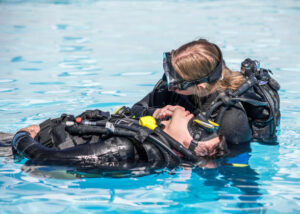
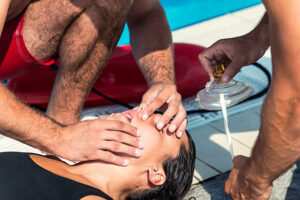
That said, there are two circumstances in which performing mouth-to-mouth ventilation may increase the survival of the victim: whether he is a child, or the rescue happens because of a drowning accident.
During the class of the Emergency First Response© (EFR), you’ll practice performing mouth-to-mouth ventilation on a mannequin.You’ll also learn how to safely and correctly use pocket masks to give rescue breaths.
CPR is Difficult
Like any other physical skill, you can master CPR easily by sufficient hands-on training and practice. How easy? According to a recent study, around 86 percent of children (having between 9-18 years old) could correctly perform CPR after hands-on training.
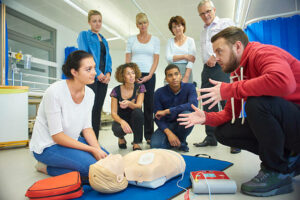
The steps are quiet simple, but you can’t learn the effective way to perform CPR by only watching a video. During a hands-on class, there will be a CPR training mannequin on which you will learn exactly where and how hard you have to press in order to provide the victim with chest compressions effectively.
If you’re scared of doing CPR wrong or hurting someone, just remember that the only wrong thing is doing nothing.
Performing CPR Won’t Make a Difference
CPR is a synonym for cardiopulmonary resuscitation, which we can describe as the act that we do in an unresponsible victim in order to pump blood to the brain. When the heart stops, the brain tissue starts to die within the next three minutes. Unfortunately, you only have an average emergency response time of seven minutes or longer.
Average Ambulance Response Times according to:
- United Kingdom: is 8 minutes and 22 seconds
- United States: is 7 to 8 minutes
CPR can make a difference especially when every second counts. In some cases, performing CPR can, double the chances of survival of a victim.
My Friends and Family are Healthy; I Don’t Need to Know CPR
CPR can save the life of someone who suffers from asphyxiation , drowning, cardiac arrest, electrocution, or a heart attack (is not breathing and there is no heartbeat). Even if you and your family and friends are in good health, accidents may happen.
In the CPR course, you’ll learn the proper way to:
- Evaluate the condition of a victim in addition to determining whether they need CPR or not.
- Respond in an emergency in a calm way.
- Use an Automatic Electronic Defibrillator (AED).
I Can Learn CPR by Watching a Video Online
The only way to learn CPR properly is through hands-on skill practice. If you truly want to learn how to save a life, find an in-person class with an experienced CPR Instructor.
In an EFR CPR class, you’ll gain the confidence and skills to respond in an emergency. You’ll practice real-world scenarios and your instructor will answer any questions and address any concerns you may have. Learn more about a CPR certification from EFR, view our accreditations, or find a CPR Instructor near you.
I’ll Harm the Victim More Than When I Found Them
The act of pressing on the chest of the victim is considered a big misconception about CPR. CPR shouldn’t be done gently, and further injuries are possible.
When doing CPR, you should know that regardless of the potential injuries that can happen, don’t forget that you are performing a life saving task that can potentially bring someone back to life.
If you’re doing CPR, you’ve already checked the person’s airway and breathing. After these check, you Determine that the victim isn’t breathing and doesn’t respond. You can’t leave them in a worse condition.
Take the Emergency First Response Course with the Best
After knowing about the 6 Biggest CPR Myths, we hope this pushes you to get certified. Enroll in the Emergency First Response course with DRAR DIVING Center, and get your friends, family, and neighbors involved.
The more people who know CPR, the better the world will be.