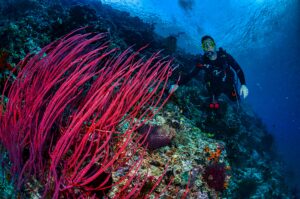
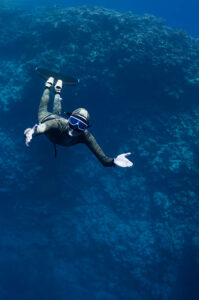
Drifting above a coral reef feels like entering a living city—fulling with color, movement, and life in every direction. But what is a coral? It may look like rock or plant, but it is considered something different. Corals are regarded as tiny animals working together in vast colonies, building the very structures that shelter thousands of marine species and protect our coastlines.
In this article, we’ll uncover what corals really are, how they grow, and why understanding them is the first step to protecting one of the ocean’s most extraordinary and fragile ecosystems.
So what is a Coral?
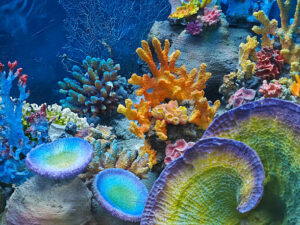
Corals are regarded as colonial animals. They consist of hundreds of tiny animals called polyps that reproduce asexually by budding to form identical clones. The multiply of polyps results in colonies growing to impressive sizes. Depending species, colonies can span several meters and contain thousands of polyps.
Not all corals form colonies, as some species live as solitary polyps. Acanthophyllia, Scolymia, and Heliofungia are considered some of the most interesting, colorful and indistinct corals you willsee on the reef. The largest species of Scolymia that you can find in the Caribbean can grow to 6 in (15cm) in diameter, while Heliofungia in the Indo-Pacific can reach 8in (20cm).
Coral polyps resemble sea anemones in having the same internal body structure. The coral polyp features a crown of tentacles, a mouth, and a stomach. It exit any wast through its mouth.
During the day, coral polyps are usually closed, depending on the species. While at night, most coral polyps will extend their tentacles to catch any passing meal. In a night dive, you can notice the corals look more alive, with their large active tentacles.
Corals have a symbiotic relationship with zooxanthellae (which is the photosynthetic marine algae). In exchange for protection within the coral tissue, the algae produce energy by photosynthesis that the coral uses to build its skeleton.
When the temperature of the water is too hot and corals bleach, this results in losing these symbiotic algae. Their tissue turns translucent (zooxanthellae will be greenish brown) and all you can see is the ghostly white skeleton under the empty tissue. Once this happens the coral die.
Coral reefs are consist of different species of coral which we call them the reef. Once you are deciding what to look out for, Scuba diving on a coral reef turns into an exciting adventure to search for hidden treasures. Some corals are more common and easy to spot, while smaller, hidden species take refuge in caves or beneath larger colonies.
Coral Identification
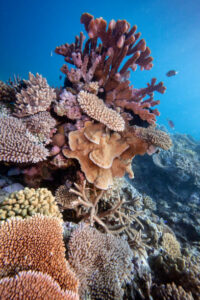
Corals different from fish in having different shapes even in the same species. This is dependent on some factors, including:
- The depth in which the coral grow.
- How much light is reaching the coral.
- If the coral grow in the current or in an area with low flow.
This diversity in shapes even within one species is what keeps many people interested about looking for corals. You never know how is the shape of the next colony, or what beautiful arrangement neighboring corals will make.
It’s good to know a little bit of science when trying to identify corals. Corals’ names are decided into two parts, genus and species. Identifying a coral to the genus level is much easier than the species level.
For instance, Acropora, is a genus. Acropora have three species in the Caribbean and around one hundred and fifty species around the world. You can learn how to identify the genus Acropora easily before trying to distinguish each species.
Learning coral identification required knowing that corals are considered regional animals and the dive site you choose will determine the type of coral species you will find. When trying to identify any coral, note specifically in which region you are scuba diving to decrease the possible species.
Corals are crucial animals that deserve more attention and appreciation. Learning how to identify coral will ingrain your diving experience whether you are beginner or experienced diver. Next time you dive in a dive site rich in corals, try to identify some corals and notice the diversity and difference in each species.