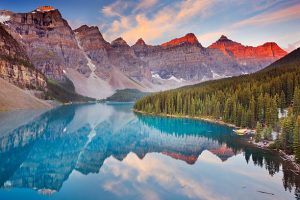
Have you ever thought that you can dive in a lake surrounded by mountains? Actually, that is exactly what altitude diving is.
In this article, we will dive deep together to know what altitude diving is and what makes it different from traditional scuba in the ocean in addition to knowing the challenges that may face you and 9 tips for altitude diving.
So, if you are an enthusiast of diving somewhere other than the sea and want to learn about this different type of diving, then this article is written for you.
What is Altitude Diving?
Altitude diving is considered very similar to traditional scuba diving, but it differs from it in that altitude diving takes place in freshwater ponds and lakes that are located at higher altitudes like mountains. With altitude diving, you rise above sea level where the air pressure is lower.
The most important thing to be aware of about altitude diving is the change in water pressure because it affects our bodies interaction with gases, especially nitrogen gas from the air we breathe. You will need to adapt your diving procedures,as your body manages nitrogen differently in attitudes than in normal scuba diving.
In a short brief, altitude diving isn’t only about simply experiencing the underwater world of high altitude lakes, but it’s also about knowing and adjusting to the water pressure shifts that happen around you to ensure enjoying a safer dive.
9 Tips for Preparing for Altitude Diving
If you are still interested in this type of diving, here are 9 tips for altitude diving to ensure an enjoyable and safe dive.
Understand the Difference in Pressure
The greater the altitudes, the lower the pressure is. Don’t forget that at lower pressures, your body reacts differently to gases. This enhances the importance of the decompression stops and the length of surface intervals.
You should also change your regular dive tables or use a dive computer after configuring it to dive at altitude. You can also find slates on the market that can show you the difference in pressure while altitude diving.
Be Prepared for Cold Water
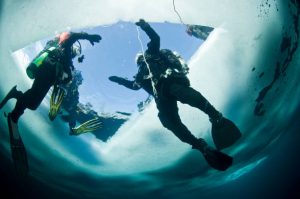
Mountain ponds and lakes are cooler than tropical and marine freshwater areas. For this reason, you will need thermal protection, a thicker wetsuit or a dry suit will be a good choice to keep you warm while altitude diving.
From the fact that cold water may impair both the performance and flexibility of your scuba diving equipment and also your own physical response times, ensure to buy regulators that are suitable for diving in cold waters, such as, the Apeks MTX-RR. cold water regulator.
BCD Weighting and Adjustments
Buoyancy in salt water is different from that in fresh water. You will need to adjust yourself if you notice that you are sinking more than usual. As a result of the difference in pressure, the adjustment is considered more important when altitude diving. This in addition to the cold water which requires the use of bulkier suits.
So, you must ensure to perform a buoyancy check, as there are several factors that can affect your buoyancy.
Be Able to Recognizing the Symptoms of Altitude Sickness
In altitude diving, scuba divers like climbers, both can develop mountain sickness. The symptoms include nausea, headaches, exhaustion and dizziness.
If you or any of the scuba divers in your group have one or more of these symptoms, you must address the situation seriously. If symptoms persist, it is critical to make slowly ascent from your dive and seek medical assistance.
Ensure to Stay Hydrated and Acclimatize
You should be well hydrated before scuba diving. When altitude diving,it becomes more crucial to drink enough water.
When you arrive at a high altitude location, ensure to give your body a day or two to acclimatize to the different height before delving into a dive. This will help a lot reduce the risk of altitude sickness.
Make Safety Protocols Priority
As a golden rule, safety comes first! Ensure both you and your dive buddy understand all safety signals and procedures. It is very essential to keep in contact and frequently check your air and no-decompression limits due to the special conditions of altitude diving.
Learn Emergency Procedures
Like any diver, there should be a potential for emergency situations. In altitude diving, these may be quite different because of the reduced pressure.
It is very important to know the nearest location of the decompression chamber that contains emergency oxygen. Also make sure that both you and your dive buddy learn the first aid procedures well.
Plan the Dive & Dive the Plan
Actually, it is an old saying in the diving community, but it is especially important for altitude diving. With the unique challenges coming with altitude, it is essential to plan your dive carefully.
Decide times, safety stops and depths with your buddy, and once you agree on a plane, stick to it.