


As a school diver, you may have heard about Nitrox or maybe any experienced diver has recommended it to you.
What exactly is nitrox and why you should put it into consideration.
To get the answers to these questions, you will need to look at the science behind diving. Follow this article wirth us to get what you need about diving with nitrox.
Everything About Diving with Air
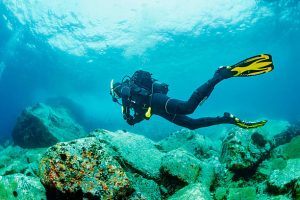
When learning to dive for the first time, we take with us cylinders filled with regular air that contain 21% oxygen and 79% nitrogen.
That is the same composition of the air we breathe in our daily life. Air also contains a few quantities of other gasses which occupy only 1% of the total volume. That is the reason for focusing only on the oxygen and nitrogen levels.
When breathing air, the oxygen is used by lungs to fuel your body’s cells. Oxygen is very beneficial to our bodies as without it we will die, but on the other hand, too much oxygen can lead to a medical condition called oxygen toxicity.
When considering the 21% of oxygen that we breathe, we only breathe approximately 15 to 18%. The rest of it is consumed by the body. Oxygen already has a purpose to our bodies while nitrogen doesn’t. All the nitrogen that enters our body is exhaled as we exhale. Our bodies don’t benefit from it.
However, too much nitrogen can cause great harm to our bodies such as Decompression Sickness which is a diving illness that occurs when there is too much nitrogen in your body and this condition can cause variable symptoms from joint pains to even neurological damage.
What Happening to Air When Scuba Diving

When we breathe from tanks underwater, we breathe in more letters of air than the normal letters on the surface, as underwater, we are under pressure. The real reason behind this is that the air gets compressed underwater.
In 10 m deep, the air gets compressed into half it originally was, so if you are normally using 11 l of air per minute at surface, you will use the double (24l of air). In 20 m deep, the air gets to compressed to 1/3 its original size and you will use in 36 l
The more liters of air enters your body the more oxygen and nitrogen is in your body. When you go deeper, you build up oxygen and nitrogen quicker and this is the point in which you have to start paying attention, especially if you are using nitrox tanks.
Diving with Nitrox
The difference between nitrox and normal air is that in nitrox, there is more oxygen and less nitrogen. In most nitrox mixes, you can find 28 to 36% of oxygen and 64% to 72% nitrogen; this makes nitrox the best gas to dive with underwater, as a result, you can dive longer.
For instance, when diving with a Nitrox mix that contains 36% nitrox, you can dive 20 minutes longer at 100 ft and an hour longer at 60 ft. In addition to that, divers have reported that they feel less tired after scuba diving with nitrox.
Many scuba divers prefer diving with nitrox because with it they can do longer dives or even multiple Dives a day. They can’t dive deeper when using nitrox because nitrox contains more oxygen and in deeper depths they can cause oxygen toxicity.
As a result of being a real threat when diving with nitrox, you must know how to analyze your nitrox tanks and be able to calculate your maximum depth.
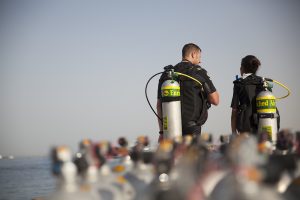
Become a Certified Nitrox Diver Now
There are many benefits from diving with nitrox. If you are interested, you can take a nitrox course to learn everything you want to know about scuba diving with nitrox. After the course, you will be able to calculate your maximum depth, in addition to analyzing how much oxygen remains in your dive cylinder.
You will also learn how to configure the dive computer you have to nitrox settings. Once you have the certification, you can dive in any place around the world with nitrox safely. If it is available.


