Buoyancy control is one of the essential skills that are needed for safe scuba diving. So, why is it so important? And what skills do you need to perfect your buoyancy underwater? That is what you will know after reading this article.
What is the Importance of Buoyancy For Scuba Diving?
Good buoyancy is what makes you a great scuba diver. After some years of experience and practice, you can hover and move around underwater so effortlessly just like your scuba instructor.
Good buoyancy is considered an essential skill for scuba diving for the following reasons
Protecting the Reef
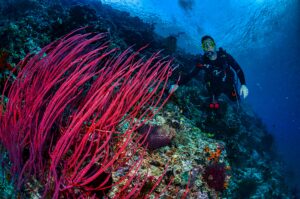
Coral reefs usually grow less than one inch every year. Almostly one quarter of all ocean creatures depend on corals to thrive. This is the main reason why you shouldn’t damage corals while scuba diving.
Of course, scuba divers didn’t mean to destroy corals on purpose, but accidents may happen. When you perfect your buoyancy underwater, you can stay a safe distance away from corals while getting close enough to see it in detail.
Seeing Clearly
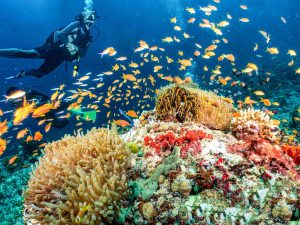
When you have bad buoyancy, you feel like you have to do many kicks to be able to stay up, away from the floor of the ocean. This act will kick up sand causing it to ruin good visibility. When you feel like you have to kick up to stay at a specific depth, try to add a little air to your buoyancy compensator device (BCD) until this feeling disappears..
Longer Dives
When you kick up a lot -due to bad buoyancy control- will make you consume more air from your tank quickly. . When you perfect your buoyancy underwater, you will enjoy prolonged bottom time.
Safety
If you do not have good buoyancy for scuba diving, you may not be able to deal with many emergency situations and even make some situations become dangerous to you. For example, a diver with bad buoyancy can make an uncontrolled ascent to the surface and this can increase his risk of decompression sickness, or at best hit the bottom of a boat. There are many dangerous marine creatures, such as stone fish, sea urchins, etc. which can cause serious injury if you touch them by accident.
Having good buoyancy is definitely considered the main goal when scuba diving. You can perfect your buoyancy underwater by training and being properly weighted. this is where the importance of doing a buoyancy check comes in
The 2 Main Skills to Perfect Your Buoyancy Underwater
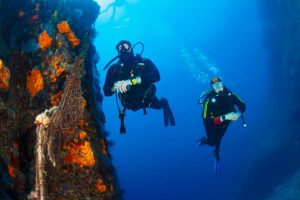
To perfect your buoyancy underwater, you need to:
- Get the correct weight.
- Master controlling your breath and your BCD.
In the Open Water diver course, you will learn some skills that can help you to practice controlling your buoyancy. Take these skills with you beyond the open water diver course, and practice them continuously.
In the next lines, there are two main skills that you can practice in shallow water to learn how to perfect your buoyancy underwater.
Hovering
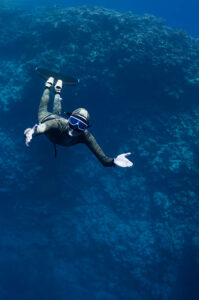
Hovering is considered the first skill you need to master to have good buoyancy, having this skill will make you be able to adjust the air in the BCD you have and also to maintain neutral buoyancy while you hold a normal breath.
To hover means you are neither shooting up to the surface, nor touching the floor. You are exactly in the middle of the water. This can be quite hard at first but with adjusting the amount of air in the BCD just a little bit at a time, as well as breathing normally, you can keep yourself hovering neutrally without moving much up and down.
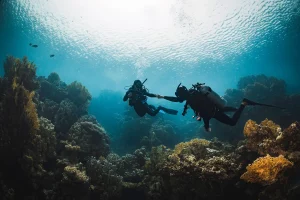
Neutral Buoyancy
The next main skill to perfect your buoyancy underwater is to use your breath to control your buoyancy. The first step is to start with enough air in your buoyancy compensator to reach and maintain neutral buoyancy. Then, take some bigger breaths slowly in and out to be able to move up and down in the water.
It can be hard at first because there is a slight delay, so you need to practice this skill to decide the correct time to start the inhale. You’ll have to test when you need to start the exhale before getting too close to the surface or to the bottom.