Diving into the stunning underwater realm carries its own set of risks, and out-of-air situations can transform an exciting exploration into a perilous scenario.
In this article, we will explore the primary causes of out-of-air situations and offer essential tips and strategies to help you avoid such emergencies.
Whether you’re an experienced scuba diver or just a novice one, learning how to manage air usage, identify crucial signals, and prioritize safety will improve your scuba diving adventures and keep you ready for any eventuality. Let’s dive in!
12 Causes of Out-of-Air Situations

Running out of air underwater is considered one of the most critical emergencies that a scuba diver can face. Understanding the causes behind such situations is essential for every diver’s safety and preparedness. Let’s explore the common causes of out-of-air situations and how to address them to stay safe beneath the surface.
- Diving too Deep.
- Staying Too Long.
- Working too Hard.
- Not Monitoring Your Pressure Gauge.
- Ignoring Anxiety as a Factor.
- Starting With Less Than a Full Tank.
- Not Opening the Tank Valve All the Way.
- Omitting Pre Dive Check and Buddy Checks.
- Regulator.
- Buoyancy Control Device BCD.
- Pressure Gauge.
1- Diving too Deep
Diving too deep is considered a frequent cause of out-of-air situations. As a scuba diver go deeper, the pressure rises, leading to higher air consumption. Without careful monitoring and control, divers can quickly exhaust their air supply, putting themselves in peril.

2- Staying Too Long
Another frequent cause of out-of-air situations is prolonged underwater stays. The longer you remain submerged, the more air you use. Disregarding dive time limits or failing to keep track of your air supply can lead to running out of air before safely surfacing.
3- Working too Hard
Exertion during a dive can greatly raise your breathing rate and rapidly deplete your air supply. Actions like swimming against strong currents, performing strenuous tasks, or carrying heavy gear, or underwater can result in out-of-air emergencies if not properly managed.
4- Not Monitoring the Pressure Gauge
One common error is neglecting to monitor your pressure gauge during the dive. Regularly tracking your air consumption and planning your dive based on this information is crucial. Ignoring the gauge or its warnings can lead to unexpected air depletion.

5- Ignoring Anxiety as a Contributing Factor
Anxiety can greatly affect both the breathing rate and air consumption of a diver. Ignoring anxiety or panic underwater can result in rapid, shallow breathing and a rapid depletion of air. It’s essential to address any anxiety before scuba diving and to practice relaxation techniques while submerged.
6- Beginning a Dive with Less Than a Full Tank.
It is highly risky to start your dive without a full tank. Underestimating your air needs or assuming you can conserve air can lead to running out prematurely. Always start diving with a full tank to make sure you have enough air throughout the dive.
7- Failing to Fully Open the Tank Valve
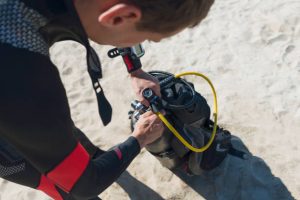
Fully opening the tank valve is essential to ensure a steady air flow to your regulator. Not doing so can limit your air supply, resulting in inadequate breathing gas and potentially causing you to run out of air quicker than anticipated.
8- Frequent Changes in Depth and BCD Adjustments
Frequent depth changes and continuous adjustments to your buoyancy control device (BCD) can significantly affect your air consumption. Rapid ascents or descents, along with constant BCD inflation or deflation, can elevate your breathing rate and accelerate air depletion, thus heightening the risk of an out-of-air emergency.
9- Skipping Pre-dive and Buddy Checks.
Skipping pre-dive and buddy checks is a frequent cause of out-of-air emergencies in scuba diving. These checks are vital to confirm that all equipment, including the BCD, regulator, and pressure gauge, is working correctly.
Ignoring these checks can result in equipment malfunctions as well as an unforeseen depletion of your air supply.
10- Regulator
Regulator malfunctions can happen due to poor maintenance, damage, or even wear and tear. If the regulator fails, it can result in losing your air supply during a dive. To minimize this risk, ensure regular servicing and inspections, and always carry a spare regulator.

11- Buoyancy Control Device (BCD)
Problems with the buoyancy control device (BCD), such as malfunctioning valves or leaks, can increase air consumption by causing air loss and quicker depletion of your air supply. Regular maintenance, careful handling, and thorough inspections of your BCD can help prevent out-of-air emergencies.
12- Pressure Gauge
A faulty or inaccurate pressure gauge can mislead divers into thinking they have more air than they actually do, which can result in unexpectedly running out of air. The gauge is crucial for providing accurate information about your air supply.
Regularly checking your pressure gauge and confirming its accuracy is essential for staying aware of your air supply.
This enables you to make informed decisions during your dive, for example, surfacing or sharing air with your dive buddy if needed. Ensuring your pressure gauges are properly functioning and calibrated is vital for safe scuba diving experiences.
What Occurs in Case of Running Out of Air While Scuba Diving?
In out-of-air situations, your body and mind react in various ways. Understanding both responses can help scuba divers in staying calm and handling the situation efficiently.
Physiological Responses
- Hypoxia: Running out of air results in hypoxia, in which the body doesn’t get enough oxygen. This impacts the brain and other vital organs, which are very sensitive to oxygen deficiency. The symptoms include confusion, loss of consciousness, impaired judgment, and, if not addressed swiftly, can lead to death.
- Carbon Dioxide Buildup: As oxygen levels drop, the level of carbon dioxide (CO2) in the blood rises, causing hypercapnia. This condition can result in headaches, shortness of breath, dizziness, and feelings of panic.
- Barotrauma: In a frantic effort to ascend rapidly, divers risk barotrauma due to pressure changes. Quick ascents can cause lung over-expansion as well as decompression sickness (the bends), both of which can be deadly.

Psychological Responses
- Panic: out-of-air emergencies can trigger panic, a natural but hazardous reaction. Panic might lead divers to make irrational choices, like rushing to the surface without exhaling, which heightens the risk of both decompression sickness and barotrauma.
- Tunnel Vision: Under stress, divers might develop tunnel vision, concentrating only on the immediate issue and overlooking other crucial aspects like ascent rates or making a safety stop.s.
- Cognitive Impairment: Hypoxia can hinder cognitive functions, making it challenging to think clearly and recall emergency protocols.