During the PADI Open Water Diver course, divers are taught that pregnant women should avoid scuba diving. This guideline is also present in the RSTC medical form, in addition to recommendations to avoid scuba diving even while trying to conceive. Naturally, people are curious about the reasons behind these restrictions.
To assess the effects of scuba diving during pregnancy, let’s review the key facts.
Understanding Scuba Diving During Pregnancy
Although no human studies have been conducted to understand the effects of scuba diving on the fetus like alcohol, tobacco, and drugs, a mother must be mindful of how her actions can impact her baby. If a pregnant woman experiences decompression sickness (DCI), there is no assurance that the fetus will remain unaffected.
Effects of Decompression Sickness
Not only open water dives but also freediving and even pool dives can potentially affect a fetus. Dive injuries like arterial gas embolism (AGE) or pulmonary barotrauma can happen in water that is 4 feet deep (1.2 meters).
AGE is caused by air bubbles that block the blood flow in the vessels or heart. It is considered a DCI that can potentially harm a fetus even if the mother has no symptoms.
According to the Society of Obstetricians and Gynaecologists of Canada (SOGC), animal studies have indicated that DCI as well as hyperbaric oxygen exposure might pose risks to the fetus.
DAN reported that AGE (which may happen with or without pulmonary barotrauma) involves gas bubbles in the arterial circulation. These bubbles can travel throughout the body and disrupt blood flow, resulting in direct tissue damage to the fetus.
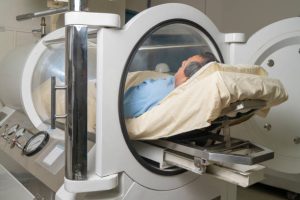
Hyperbaric oxygen therapy
For a pregnant diver experiencing DCI, standard hyperbaric oxygen therapy may introduce additional risks by subjecting the fetus to decompression stress in addition to the fluctuations in pressure and depth..
According to DAN, the filtration of bubbles from the circulation is highly effective in fully functional lungs. However, in a fetus, most blood bypasses the lungs and gas exchange takes place through the placenta, so pulmonary filtration of bubbles does not take place. This could increase the risk of arterial gas embolism (AGE), potentially leading to severe consequences.
Practical Considerations about Scuba Diving During Pregnancy
Besides potential risks to the fetus, bodily changes during pregnancy can also complicate diving. such as:
- Swollen sinus mucous membranes can make equalizing challenging.
- Seasickness can intensify nausea, leading to increased discomfort.
- The bump of the growing baby bump can complicate the fit of suits, weight belts, and buoyancy compensators.
- Consequently, scuba diving might become excessively uncomfortable to enjoy.
Additionally, a woman might experience self-blame and distress if she believes her choice to scuba dive led to a negative outcome for her pregnancy, even if it wasn’t the case.
Bottom line
Generally, Before participating in any physical activities while pregnant, it’s advisable to seek your physician’s guidance.
Whether you’re trying to conceive or are already pregnant, it’s best to avoid all types of diving in order to keep your baby healthy and free from any predictable complications. Snorkeling and swimming are excellent alternatives for enjoying the water during pregnancy. After the baby is born and with your physician’s approval, you can resume scuba diving.