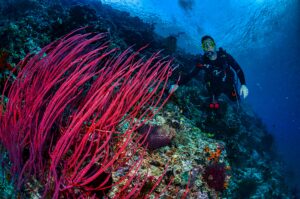
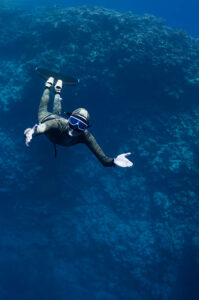
Depth training in the freediving course helps to improve the ability of a freediver to dive in a safe and efficient manner to greater depths while he is holding his breath.
This is a type of training that is done in open water and alongside a weighted line that the divers can use in descending and ascending next to a swell that is tethered to be used as a safety lanyard.
The goal of this training is to gradually increase your Dive’s depth over time in addition to improving the movement of the divers and the techniques of proper diving, especially equalization and streamlining.
Freedivers use several freediving techniques for this such as constant weight freediving either with or without fins and free immersion. During this training, the diver will perform several dives to a specific depth and also practice emergency procedures for example buddy rescues and black-out drills.
It’s important to consider that a diver should only practice depth training under the supervision of a qualified instructor or a trained buddy and also ensure to follow the established practices of safe freediving.
Tips for Depth Freediving Training
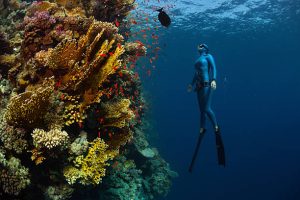
If you are a beginner freediver, here are some tips on how to practice and improve depth training in freediving:
- Start diving with shallower depths, then gradually increase your depth over time.
- Dive in calm open water with the help of a weighted line or a guide rope to help you while descending and ascending.
- Practice the proper basic diving techniques, for example, proper weighting, streamlined body position and equalization.
- Practice emergency procedures, for example, buddy rescue and blackout drills.
- Train with a dive instructor or an experienced buddy to help you monitor your progress and also to provide support.
- Train and practice regularly and ensure to gradually increase the depth of your dives over time.
- After surfacing, ensure to perform recovery breaths immediately.
- Incorporate some mindfulness and relaxation techniques into the depth training you practice in order to help you stay focused and calm.
- Ensure to follow safety protocols and not to dive beyond your limits.
- Remember to take sufficient breaks and rest between sets and ensure not to overdo many dives in every set.
- Be aware of your dive site, conditions and the environment.
Risks that Can Occur Without Having the Proper Training

Freediving is considered an accelerating and fun activity that allows divers to explore the world beneath the waves. As a freediver, you can connect to nature in a unique way. The sense of freedom and the weightlessness that you feel when diving without any heavy scuba diving equipment make the adventure very enjoyable.
However it’s crucial to follow safety procedures, as like any sport, freediving carries some inherent risks. It’s a demanding activity that may put stress on the body and mind, so the divers must be well trained and properly equipped to handle any challenges that may face them.
We can say that the main risk in freediving is considered blackout, which is losing consciousness because of lack of oxygen. This can happen to you if you hold your breath for a long time and you aren’t properly trained in how to manage your breath hold.
This is just one of the many risks that are covered in the Freediver course from PADI. Safety procedures must be followed to minimize these risks and make your freediving experience as safe and fun as possible.