


Scuba diving certification levels were developed to ensure maximum safety for divers. Each scuba diver possesses a certification card, confirming their qualifications. This is crucial for booking diving trips, selecting appropriate equipment, choosing the correct type of air, and even securing a job as a professional diver.
The scuba diving certification level you have indicates your knowledge, experience, and skills as acknowledged by various scuba training agencies. Some of the most well-known and respected organizations include CMAS, SSI, NAUI, and the world’s largest diving training entity, the Professional Association of Diving Instructors (PADI). By reading this article, you’ll gain insight into their respective scuba diving certification levels.
Recreational Scuba Diving Certification Levels
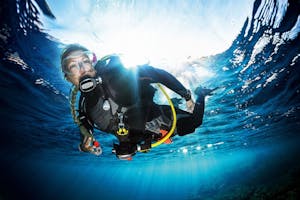
Although PADI offers the “Discover Scuba Diver Program” (DSD) for an initial introduction to scuba diving, it does not qualify as certification training. The PADI recreational scuba diving certification levels involve:
1. PADI Scuba Diver (Junior PADI Scuba Diver)
The PADI Scuba Diver certification highly suits individuals with limited time. gaining this certification means having sufficient knowledge to dive up to a maximum depth of 12 meters (40 feet). However, you must always be accompanied by a professional diver.
At this level, you cannot dive independently with just another certified diver having the same level, as professional supervision is required.
2. Open Water Diver (OWD) (Junior Open Water Diver)
This scuba diving certification level grants you independence. The primary goal of this course is to teach you how to manage both yourself and your scuba diving equipment underwater.
After completing this course, you are considered an independent certified scuba diver. This means you can freely choose your dive partner and go diving on your own without the need for professional supervision.
However, remember that there are depth restrictions at this level: 18 meters (59 feet) for adults and 12 meters (40 feet) for juniors.
3. Advanced Open Water Diver (AOWD)
The Advanced Open Water Diver (AOWD) certification is regarded as the third level in recreational scuba diving. This certification allows you to enhance your diving experience and broaden your knowledge in this area. The main difference of this level from the previous one is that as an AOWD, you can dive deeper, with a maximum depth of 30 meters (100 feet).

4. Rescue Diver
The Rescue Diver course is designed to enhance your rescue abilities. Upon completion, you’ll be a much safer diver, equipped to prevent issues and handle emergencies upon arising.
5. Master Scuba Diver
The Master Scuba Diver certification represents the pinnacle of recreational scuba diving credentials. PADI offers an extensive array of training programs designed to enhance scuba diving expertise. Among these are specialty courses in deep, night, or wreck diving, plus numerous others.
To qualify as a Master Scuba Diver, one must already be certified as a Rescue Diver and complete five of these specialty courses.
Professional Scuba Diving Certification Levels
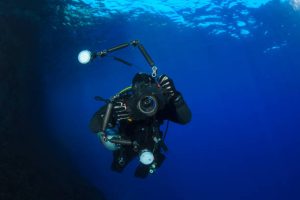
Professional Scuba Diving Certification Levels are designed for those who aspire to turn their passion for diving into a career. These certifications not only enhance your scuba skills and knowledge but also open up opportunities to work in the diving industry, teach others, and reach advanced levels of expertise.
6. Dive Master
The Dive Master certification is the entry point for a professional career in scuba diving. Earning this certification allows you to begin working in the diving industry.
Upon completing this initial level of professional training, you will be qualified to assist Dive Instructors during their courses and act as a guide for diving groups. This certification can still be granted by an Instructor.
7. Assistant Instructors
Diving instructors are responsible for teaching and training aspiring divers, but they often require assistance. This is where certified Assistant Instructors step in.
Once certified, an Assistant Instructor can conduct theoretical lessons for future divers and assess their performance in surface exercises. However, they are not authorized to certify divers; only a diving Instructor has the authority to do so.
8. Open Water Scuba Instructor (OWSI)
The Open Water Scuba Instructor certification is the level after which you are able to certify others. To become a Dive Instructor, the “Instructor Development Course” (IDC) must be completed.
After getting the sufficient training by your “Course Director”, an official PADI examiner will be responsible for certifying you as a scuba Instructor. As a scuba Instructor, you will be allowed to train and certify other scuba divers at various levels.
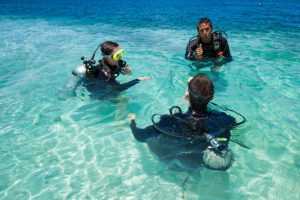
9. Master Scuba Diver Trainer
PADI Instructors who have certified at least 25 divers and completed five PADI Specialty can achieve the title of “Master Scuba Diver Trainer.” Additionally, you can enroll in the MSDT course to attain this designation.
10. IDC Staff Instructor
The IDC Staff Instructor serves as the Course Director’s right hand, much like how an Assistant Instructor supports an Instructor, these professionals assist Course Directors in training new Instructors.
At this certification level, you can teach both theoretical and practical aspects of scuba diving under the supervision of a Course Director.
11. Master Scuba Instructor
The Master Scuba Instructor certification is an esteemed recognition for elite diving instructors. To achieve this level, you must have issued 150 PADI certifications across various levels, conducted 10 Emergency First Response courses, and participated in 3 PADI seminars.
12. Course Director
A Course Director holds the prestigious certification level of teaching future scuba instructors. They conduct PADI Instructor Development Courses and are responsible for training the next generation of diving instructors. To earn this certification, one must complete the PADI “Course Director Training Course”.
You’ve now discovered the 12 PADI Scuba Diving Certification Levels. Are you prepared to earn yours?


