The temperature of the water in the dive spot plays a vital role in choosing wetsuit thickness suitable enough to keep you warm. If you choose too thin wetsuit, you may feel cold, and have to end your underwater exploration quicker than you want!
On the other hand, a too thick wetsuit will add unneeded extra warmth and restrict your movement. Choosing the right wetsuit thickness on a dive is important to feel comfortable and feel safe.
This article can be considered as a diving wetsuit thickness guide that will help you in choosing westuit thickness that is suitable to enjoy your scuba diving experience.
Can You Wear a Surfing Wetsuit While Scuba Diving?
Generally, scuba diving requires a thicker wetsuit than that of surfing or other water sports, because you will be submerged in deep water and the deeper you dive, the cooler the temperature of the water.
If you don’t dive regularly, then it isn’t a problem to dive in a surfing wetsuit as long as it is considered thick enough. But in case of diving regularly, it is better to purchase your own specialised diving wetsuit, as they’re designed to be thicker and slightly differently in order to provide sufficient insulation and resist both compression and pressure at depths more than surfing suits.

Is it Possible to Scuba Dive Without A Wetsuit?
Yes, it is possible to scuba dive without the need to wear a wetsuit. If the water is warm enough, you can dive in a swim costume and a rash vest. But scuba diving without a diving suit has its consequences.
Although it may be warm on the surface of the water, the temperature at the depth of 20 metres is much cooler. At a depth like that, you lose around 25% of your body heat faster than on its surface. That is another reason to wear a wetsuit!
A wetsuit can also protect you from many, like sharp coral or sea creatures like stingrays and jellyfish. Wearing a wetsuit protects your skin from anything that may harm or irritate you.
What is the Suitable Wetsuit Thickness for Diving?
As we mentioned above, the temperature of water is considered the most crucial factor when choosing wetsuit thickness for diving. Your personal preference is another factor, as you may feel the cold more than others.
Below, you will find a general guideline that you can follow when choosing wetsuit thickness, give or take depending on your personal cold threshold.
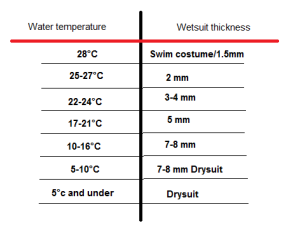
A Breakdown of Wetsuit Thickness for Diving
Let’s know together the different wetsuit thicknesses that are available in the market and the conditions that suit each one.
Diving Wetsuits That are 3mm and Below
In general, diving wetsuits, which are 3mm thick (and below), are the best choice in case of scuba diving in the tropics, like Sri Lanka, Maldives, Hawaii, Indonesia, and more. Depending on your personal cold threshold, you can choose whether a shorty wetsuit or a full-length one in case of going on a long dive.
4mm To 5mm Diving Wetsuits
This thickness range is considered the most popular range of diving wetsuits, especially when diving in UK waters. This thickness has excellent insulation against cooler waters without affecting flexibility or the ease of movement.
They are the best thickness range for those who are seeking for the perfect balance between mobility and warmth! They are the best choice for temperate seas, such as freshwater lakes, and the Atlantic sea.
6mm To 7mm Diving Wetsuits
6mm to 7mm diving wetsuits are ideal in case of diving in colder waters. These thicker suits offer the proper insulation to keep you comfortable and warm in chilly depths. They are designed to withstand harsh conditions, they offer superior protection against the cold without losing flexibility or restricting movement.
8mm Diving Wetsuits
Let’s explore the depths of the coldest waters even further! When exploring a dive spot having very low water temperatures, a 8mm diving wetsuit will be your ultimate best friend to protect you from the harsh chill.
These suits provide you with maximum insulation, as they will keep you snug and warm even in freezing waters. Although their design for extreme cold, they still offer the flexibility you need for effortless manoeuvrability.