Marine animals are truly wonderful creatures, and you can find many ways by which humans can emulate them. Studying fish helps us to know more about propulsion of our bodies and vehicles, For example, studying their feeding habits make us become better hunters.
Many aquatic animals possess a rare gift by which they can hide in plain sight. This unique talent helped in preserving countless marine species, in addition to serving many animals to get an unsuspecting meal.
Sea creatures have many benefits from using camouflage, including:
- Camouflage helps many species to stay hidden from predators.
- Camouflage also helps predators in staying covered until catching their prey.
- Camouflage is also used to hide nesting areas to protect hatchlings in eggs until they emerge to see the light of the sun.
Actually, regardless of their use, the use of shapes, colors, and designs to be blended into the immediate environment is astounding! Let’s discuss some creatures to discover together some secrets of marine camouflage.
Secrets of Marine Camouflage: Life Behind the Mask
Life underwater is a constant game of survival, and staying hidden can mean the difference between life and death.
For many marine creatures, camouflage isn’t just a clever trick—it’s a finely tuned skill shaped by generations thanks to the pressure from predators and prey. Let’s understand the journey of “how and why marine life wears its mask” by learning three marine creatures, which are:
- Octopus.
- Scorpionfish.
- Skates and Rays.
Octopus
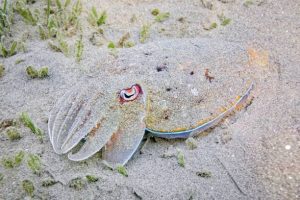
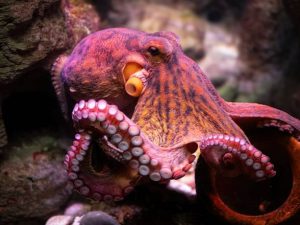
When we contemplate this extraordinary creature “the octopus”, we can see and realize its numerous fascinating features, the most perfect one to me is its ability to change its skin to match their surroundings.
Actually this process is done thanks to the functions of chromatophores, which are cells that contain pigment and are responsible for light reflecting. This pigment can also be found in many sea creatures.
Octopus use these with the help of muscle movements, which can also have an effect on the texture appearance of their skin. For example, a changing itself looks more like coral structure, sea plants, or sand.
Octopus are considered one of the clever creatures, and Research confirms that they learn and display stream-of-consciousness behavior. It’s pretty clear, as they can change how they look to fit the place.
When becoming under attack, An octopus can drop an arm as a sort of distraction to be able to escape, then a new one regenerates later.
The Mimic Octopus can twist its body and use all its tricks to look like other fish! While this is considered a marine camouflage that is used to hunt, octopus also use it to hide from predatory creatures.
Scorpionfish
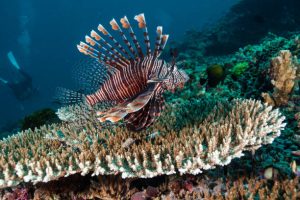
The scorpionfish is also called an adept predator, thanks to how well it hides in its surroundings. You can sea scorpionfish in different looks and styles, depending on the type of environment they are living in.
Some are living in more sandy, muddy environments, so their appearance is more sandy and gritty. Some live in coral-rich spots, letting the scorpionfish take on many looks to blend into the corals.
Some can’t be recognizable as a fish at all, because of their wild coloring and unique spines, fins, and tendrils. Scorpionfish usually hide and grab passing prey with a quick, strong bite.
Other types, such as the lionfish, act aggressively while hunting and attacking their prey. Certain scorpionfish spines are venomous and harmful to both humans and other fish, so watch out!
Skates and Rays
Rays and skates are considered beautiful marine creatures that actually evolved from sharks. They soar swiftly and smoothly through the sea as if they were birds in the air.
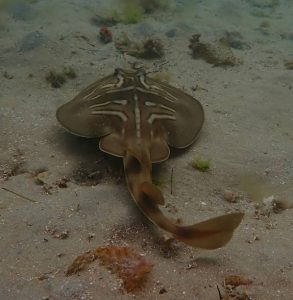
Skates and rays come in a wide range of varieties within their family, but a common characteristic they all have is the flattened shape of their bodies, which makes them a perfect example for marine camouflage.
Most skates and rays stay near the seabed, searching for food and laying their eggs in the sand. As a result of their constant proximity to the bottom, the color of their skin has adapted to blend well into the sands and seabed surfaces, and the structure of their bodies enable them to burrow to remain even further undetected by predators.
Now, after learning about these amazing creatures. Share with us, what would you want to do if you had the ability to blend into your surroundings?