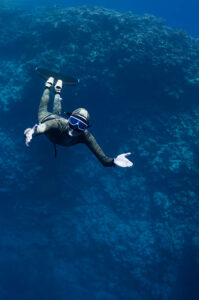
A safety stop is an important part of your dive, as it allows you to safely ascend at the beginning of diving and safely descend before reaching the surface.
To ensure that you are making an effective safety stop, there are a few essential tips to keep in mind. By following these tips, you can make a successful safety stop and enhance your whole diving experience.
5 Tips for a Successful Safety Stop

Safety stops can be tricky for novice scuba divers or divers who don’t dive frequently. Without good practice and the proper technique, a scuba diver may find himself ascending unintentionally. Here you are 5 essential tips to make every safety stop a successful one:
- Neutral buoyancy.
- Slow ascent.
- Time your stop.
- Maintain a good positioning.
- Grab a line.
Neutral Buoyancy
If you are so close to the surface, buoyancy will be a challenge for you. When you establish neutral buoyancy while exhaling, this makes your safety stop more easier. Remember to vent air from your BCD during accent.
The air gets bigger and the pressure decreases while you head upwards. It’s important to frequently tweak your accent and buoyancy slowly as this prevents uncontrollably and accidentally float to the surface.

Slow Ascent
Finishing your safety stop doesn’t mean shooting like a cork to the surface. The last 5 meters to the surface is considered the most dangerous meters of the water column because it’s where the biggest change in pressure can occur and is famous for the injuries of lung overexpansion and the decompression sickness after you finish your safety stop.
Ensure to ascend slowly to the surface at an ascent rate of 30 feet every 9 meters per minute. The rule of the dive computer here is monitoring your accent and warning you if your essent rate is very high.
Time Your Stop
As a certified scuba diver, your safety is your own responsibility. Every scuba diver must be responsible for timing their own save stops. Buying a dive computer will be very helpful, as with it, you can properly track depths and save stops on every dive you delve into.
Maintain a Good positioning
A safety stop doesn’t need a correct body positioning, as what is crucial is choosing a horizontal or vertical position that fits your situation and personal preference.
If you reach neutral buoyancy, it’s still very important to keep a close eye on the dive computer. To maintain a good positioning in the water, you should keep your dive computer at your chest level in order to keep your torso at the right depth.

Grab a Line
In open water scuba diving, making gas if you stop can be a challenge when you have no visual reference point. Even professional divers sometimes find themselves prone to popping up and down.
While you are going to of off-gassing, it is crucial to keep your body at the same level to facilities your safety stop in an easy way try to hold on to an anchor or more line.