


One of the most common questions about Red Sea diving is: when is the best time to go diving in Egypt? The good news is that the Red Sea in Egypt offers excellent diving conditions all year round, with sunny weather, warm water, and incredible marine life in every season. Whether you prefer warmer summer waters or quieter winter dive sites, dive in Egypt each time of year and enjoy with a unique experience for divers exploring the Red Sea.
When to Dive in Egypt
Egypt offers year-round scuba diving, with each season bringing different water temperatures, visibility, and marine life encounters. The best time to dive depends on the conditions and experiences you are looking for. We will devide that into:
- Red Sea Diving During Spring (April to June).
- Red Sea Diving During Summer (July to August).
- Red Sea Diving During Autumn (September to November).
- Red Sea Diving During Winter (December to March).
Red Sea Diving During Spring (April to June)
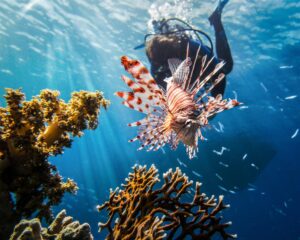
In spring, marine life becomes more active, with an increase in the number of fish and sea animals. At this time, you can find huge amounts of fish fry everywhere. At the start of spring, many of them are still tiny fish that are difficult to identify. Coral towers and blocks are surrounded by large shoals, and inside them hiding. By late spring, the coral gardens are filled with larger fish.
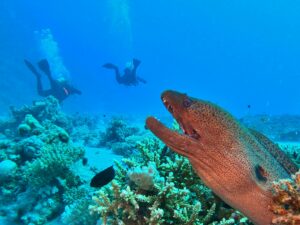
In June, some of the coral reefs around the Red Sea in Hurghada are crowded with schools of squirrelfish. Around the reefs, scuba divers can find predators such as moray eels or groupers that feed on these fish.
The water temperature in the Red Sea is usually 23 degrees at the beginning of spring and 26 by the end. If the wind blows, the temperature still be a little cold in April. Therefore, the busy diving season usually begins in May. The air temperature then ranges between (25 to 35) degrees, so a long 5mm neoprene suit is highly recommended.
Red Sea Diving During Summer (July to August)
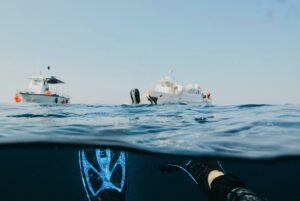
Many people think Egypt is too hot in summer, but the weather is pleasant by the sea and divers feel comfortable while spending long periods in the water. The reefs are still full of life. In summer, triggerfish lay on their eggs in funnel-shaped nests in the sand and fiercely guard the surrounding area around and above them.
Larger triggerfish species, such as the green or titan triggerfish, may become aggressive and bite you at fins for example. If you come here in late spring and early summer, you have a better chance to see dolphins or sharks underwater.
The water temperature in the Red Sea ranges from 27 to 30 degrees while the temperature of the air ranges from 30 to 40 degrees. It can be very hot in direct sun in sheltered areas, but you will feel cool when you become underwater. With a thin 3mm suit or a short one, you can dive here, as you don’t need that much weight. Families with children usually travel during the holidays.
Red Sea Diving During Autumn (September to November)
Autumn is usually regarded as the peak season for certified divers. Both the temperature of air and water is pleasant, getting cold begins in the second half of November. You can also find many species of fish and other sea creatures.
In Autumn, the water temperature in the Red Sea is gradually getting colder and ranges between 28 and 25 degrees while the air temperature ranges between 35 and 25 degrees. A 5 mm suit is a good choice.
Red Sea Diving During Winter (December to March)
In winter, the sea is so calm and dive sites are less crowded. There are few numbers of scuba divers, and may be a little more in the Christmas holidays. As the water gradually cools, you can spot large stingrays such as feathertail or mangrove stingrays at some dive sites.
You should wear at least a sweatshirt on the dive boat. If it’s windy, it’s best to change your wetsuit in a sunny, sheltered spot. The water temperature at diving sites in the Red Sea ranges from 25 to 22 degrees.
In December the water is warm then starts to cool till March. A 7 mm neoprene is recommended. If you will wear a neoprene vest and hood, a 5 mm suit will be enough. There are no need to diving gloves. The temperature of the air is over 20 degrees, but thermal comfort depends mainly on the strength of the wind.


