


Scuba diving has transitioned from a perceived strenuous and risky activity to a more accessible and safer pursuit for many. This transformation is due to technological advancements in scuba diving equipment, the use of dive computers, and comprehensive dive planning alongside an enhanced understanding of diving physiology.
As a result, the scuba diving requirements now focus more on ensuring safety through proper age and health considerations. This article gives you answers to the question related to the essential age and health requirements necessary for a safe and enjoyable scuba diving experience.
Am I Fit Enough for Scuba Diving?
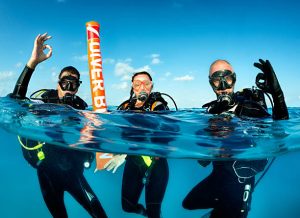
Every scuba diving student must complete a medical questionnaire before starting a diving course. The high pressure experienced underwater can affect the body functions of the diver in several ways. Physical conditions that are harmless or unnoticed on land can become dangerous beneath the waves.
Lung issues (like collapsed lung or asthma), ear problems (such as equalization difficulties), allergies, and certain diseases can be contraindicated in diving. Some medications are not also suitable for diving. Divers must read and honestly complete the medical questionnaire before starting, and also review it regularly throughout their diving careers.
Is My Age Suitable for Scuba Diving?
Scuba diving age requirements differ by country and organization. Generally, children 8 years old and above can scuba dive based on maturity. Many organizations provide special courses in controlled environments for kids 8 and older, and allow those 10 and up to join normal certification courses. In the USA, you must be at least 12 years old for certification.
Now, we can say that scuba diving has no maximum age restriction. For instance, my student in the oldest open water certification was a woman aged 82-year-old who became an excellent diver. Ongoing research is being conducted to understand the risks of scuba diving at an advanced age.
Is Swimming Proficiency Required Before Starting Scuba Diving?
No, but before delving into a scuba course, you should feel relatively comfortable in the water at least. Competitive swimming experience is not required, but a diving student should not be so afraid of the water that they feel uneasy in the bottom of a pool. In my opinion, it is not advisable to scuba dive without knowing how to swim.
For a one-day experience course, individuals only need to be comfortable in the water. To obtain scuba certification, divers must pass a watermanship assessment, which varies by organization and level of certification. For instance, According to one organization, students must continuously tread water or float for 10 minutes and swim 200 meters (or snorkel 300 meters) without taking a break.
Is it possible to scuba dive with a disability?
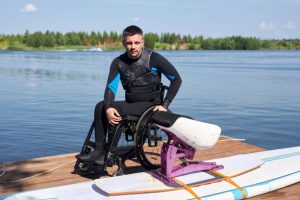
Yes, you can. Many organizations specialize in teaching scuba diving to people with disabilities, often referred to as adaptive diving.
Scuba diving is growing in popularity among individuals with physical disabilities. Adaptive diving gear, like webbed gloves for those who cannot use fins, has been created to assist divers. However, often specialized gear isn’t needed, as you become weightless and can move freely underwater, making the weight of the scuba gear insignificant.
Every new diver must adapt to using their body efficiently in an unfamiliar environment. Divers with physical disabilities start from the same point as any other new diver.
Why Scuba Diving?
Although most people can learn to scuba dive, it doesn’t mean everyone should. Prospective scuba divers should evaluate their motivations before delving into a scuba course.
Those seeking to dive for the thrill and risk should think again—recreational scuba diving, when done correctly, focuses on relaxation, control, and adventure, rather than pushing oneself into survival scenarios.
One should never start scuba diving just to satisfy a spouse, friend, or parent. Although these individuals can be inspiring, a person must genuinely want to be underwater for diving to be safe and enjoyable. The great news is that if you have the desire to dive, you can do that. Get ready to explore the 70% of our planet that remains hidden from most eyes!


