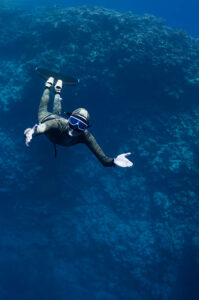
A drysuit offers thermal insulation or passive thermal protection that prevents water from entering the drysuit. It is worn by boaters, divers, water sports enthusiasts, and others who play or work in cold waters or around its areas.
A drysuit can protect your whole body as well as your head and hands. Drysuits are recommended to be worn in these situations:
- In areas in which water temperature is below 15°C.
- When you have to be submerged for extended periods in water that is 15°C.
With an integral helmet, gloves, and boots in order to protect yourself when working in hazardous liquids or near these areas.
Difference between a Drysuit and a Wetsuit
A drysuit is designed to prevent water entry to the suit, and that is considered the main difference between a drysuit and a wetsuit. That’s why drysuits allow better insulation which makes them the best choice to be used in cold water.
Fortunately they are considered hot in warm or hot water, and are more expensive than wetsuits.
A wetsuit keeps a scuba diver warm by trapping a thin layer of water between his skin and the suit which is then heated by his body temperature. A good seal prevents water from escaping to keep you warm.
On the other hand, drysuits work by keeping a layer of air between your skin and the suit. The thermal protection of the drysuit will vary depending on the material from which it was made. Due to the air within a drysuit, it functions as an airspace and needs careful regulation.
Types of Drysuits

There are two different types of drysuits:
Neoprene –
The two biggest advantages of a neoprene suit are the low price, and warmth.
A neoprene suit provides more warmth with minimal or no additional thermal underlayers compared to other drysuits, but the thickness of the suit and diving conditions will determine your thermal protection needs.
Neoprene suits are considered dense, bulky, and fairly rigid, taking lots of room in your gear bag, and also is harder to get on and off.
Neoprene is buoyant, as a result, it won’t drag you down if flooded, but you’ll need extra weight to compensate for its buoyancy.
Membrane –
Membrane drysuits are also known as “Shell” drysuits. As these suits don’t provide thermal insulation and are resembling a watertight shell. You must wear a scuba-specific undergarment to stay warm.
You can find two basic types of membrane suits:
- Tri-laminate – In recreational scuba diving, tri-laminate drysuits are the second most common in the types of drysuits after neoprene.
These suits consist of layers of nylon and rubber, creating a thin and durable shell. Tri-laminate drysuits are an ideal option for recreational diving because of their toughness, lightweight nature, ease of donning and doffing, in addition to their reasonable price.
Due to their baggier fit as well as pliable lightweight material, these suits can often be put on and taken off more easily by oneself. Some are even specifically designed with this functionality in mind.
These suits are compact and travel-friendly, taking up minimal space in your gear bag. Though you’ll need to pack thermal wear, it will likely still occupy less space than neoprene and vulcanized rubber drysuits.
- Vulcanized Rubber – Shell-type drysuits are also made from this material. They are more common in commercial diving due to their durability, ease of repair, and suitability for diving in contaminated environments.
These suits, like tri-laminates, offer no thermal protection and require a thermal undergarment. Vulcanized rubber suits lack the flexibility of neoprene suits for joint movement.
So Which One from the Types of Drysuits is the Best?
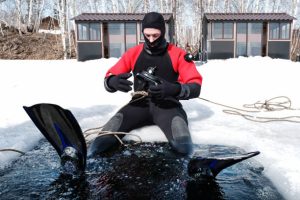
The tri-laminate drysuit is considered an ideal choice if you are travelling a lot. A neoprene drysuit is a great option in case of diving in cold areas because max warmth will be the most important thing to you.
In dive spots having a rough bottom, wear a vulcanized rubber drysuit. It will also be perfect when using a lot of equipment that is likely to puncture a suit, as vulcanized rubber dried quickly and can be repaired on the spot with a simple patch kit.
Each suit has its pros and cons and choosing a specific type will depend on the type of diving you practice in addition to the personal preferences.
Consider the diving conditions and honestly evaluate your own habits and preferences. If you have access to a local shop that rents drysuits or friends who own them, rent or borrow one to try it first.
Research thoroughly and, if possible, try a drysuit before purchasing a specific type to ensure having a perfect fit.