Your scuba tank is considered the hidden hero of your gear. Divers often maintain wetsuits, BCDs, and regulators but overlook the most vital part of their gear—their scuba tank.
Scuba tanks hold clean, compressed air. The compressor pulls in air, filters out particles and moisture through a filtration system, then stores it clean and compressed.
However, even with good filters, scuba tanks need regular checks to ensure they are working well. In this article, we will discuss together the two inspection requirements of scuba cylinders and we will tell you some simple tips to preserve your scuba cylinder’s health.
The Inspection Requirements of Scuba Cylinders
The two inspection requirements of scuba cylinders include:
1. Visual Inspection
Scuba cylinders should be subjected to visual inspection at least one time every year by a qualified visual cylinder inspector. In the visual inspection, the inspector follow the next steps:
- Empty the tank completely.
- Remove the valve from the top.
- Check inside for corrosion.
- Look for aluminum alloy buildup.
- Inspect for moisture.
- Ensure the cylinder is in good condition.
Regardless of the dive spot, ensure to check for the sticker of the visual inspection. If you didn’t find it, you should ask the dive center about their last visual inspection.

2. Hydrostatic Testing
Scuba tanks need to be tested every 2–5 years, depending on local rules. In a hydrostatic test, The tank is filled to 5/3 of its capacity, then the flex of the wall is tested. Hydrostatic testing is crucial for tank integrity and maintaining your safety.
Scuba tanks are marked with their last hydro test date. Most local laws and regulations will not exceed five years for the requirements of the hydro test, so you should ask if the last test was older.
Tips to Preserve Your Scuba Cylinder’s Health
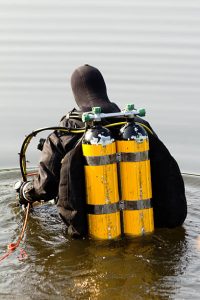
Here are some tips to help preserve your scuba cylinder’s health:
1. Never Empty a Tank Vompletely.
Tank pressure keeps water out. Also ensure never to empty your tank , because that can cause the build up of condensation on the inside and outside.
2. Use Only Trusted Scuba Air Stations for Tank Fills.
If someone’s filling scuba tanks from a van, the air might not be very clean. Don’t forget, Even tiny contamination levels, like carbon monoxide, become more dangerous under pressure, so it is essential to ensure that your air is clean to prevent such problems.
Air stations should test their air ideally every three months. Testing is a great method to check on the health of the compressor, as if the air fails to pass, there may be a problem with the compressor.
3. Store Your Cylinders in a Cool, Dry Place
Extreme heat damages scuba tanks, so keep them cool away from direct sunlight and avoid any extra pressure. Also ensure to Store them standing in a cool, dry place in which they won’t fall.
your scuba cylinder is such an important piece of scuba equipment, so ensure to preserve them! Don’t forget that maintenance is the key when it comes to anything. Keep your scuba diving equipment well maintained and serviced and it will last for years and years to come.
Happy diving!