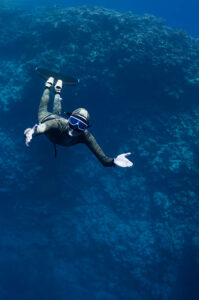
Each water activity has its unique requirements on the choice of the wetsuit fit. Whether you are swimming, diving, paddleboarding, surfing, or windsurfing, knowing the specific demands of your sport simplifies finding the right wetsuit fit.
What is the Perfect Wetsuit Fit for Water Activities?
Finding the perfect wetsuit fit is vital for performance, comfort, and safety while practicing water activities. Each sport has unique demands that make understanding the ideal wetsuit fit essential, In this article, we will discuss the following:
- How Snug Should a Surfing Wetsuit be?
- How Snug should a Diving Wetsuit be?
- How Snug should a Triathlon Wetsuit be?
- How Snug should a Swimming Wetsuit be?
- How Snug should a Wetsuit be in Cold Water?

How Snug Should a Surfing Wetsuit be?
For surfing, consider both flexibility and comfort, as they are essential. You should choose a wetsuit that is snug enough to prevent flushing of water, but to be flexible enough to enable you from paddling and maneuvering on the board.
- Importance: To surf safely, you need a high degree of flexibility, especially in both your shoulders and arms for paddling and also in the knees and hips to be able to maneuver on the board.
- Fit: The wetsuit should be fit snugly but enables you from moving freely. Choose a suit that is designed with added flexibility in the areas of your shoulder and arm.
- Thickness: Choosing your wetsuit typically depends on the water temperature, The best thickness for surfing is ranging from 3/2 mm (in warm waters) to 5/4 mm (in cold waters).
How Snug should a Diving Wetsuit be?
Divers should wear a wetsuit that offers thermal protection and buoyancy. The suit should fit snugly to prevent the entry of water, without restricting breathing or movement.
- Importance: Divers are usually submerged for a long time, so it is important to be thermally protected.
- Thickness: The wetsuit thickness a diver should choose often depends on the water temperature, it should range from 5 mm to 7 mm or more for colder waters.
- Fit: A snug fit is vital to prevent water entry to the suit and maintain thermal insulation.
How Snug should a Triathlon Wetsuit be?
Triathletes and swimmers need a wetsuit that offers a balance between flexibility and buoyancy. A wetsuit with snugly fitting will enhance hydrodynamics and enables you to swim smoother and faster.
In Triathlon and swimming, you need a wetsuit that helps in reducing drag and enhancing speed in water. Purchase a wetsuit that has smooth-skin neoprene and is designed to be more hydrodynamic.
Triathlon wetsuits usually have different thicknesses, as they are thicker in the core to provide extra buoyancy, and thinner in both the arms and shoulders to offer more flexibility.
The suit must allow for Freedom of movement in the shoulders and arms to provide an efficient swimming stroke. That means, the wetsuit should fit snugly but allow free movement for shoulder and arm.
How Snug should a Swimming Wetsuit be?
A swimming wetsuit should have a snug fit, as if it was a second skin, but not to be too tight to restrict your movement or result in any discomfort.
Your wetsuit should enable you to swim comfortably, with free movement in your shoulders , legs, and arms. When wearing a wetsuit, pay special attention to the area under your arms when raising them.
conduct swimming motions, such as the freestyle stroke. You should move your arms freely, without feeling any restrictions by the wetsuit.
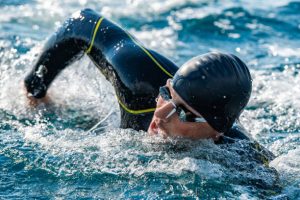
How Snug should a Wetsuit be in Cold Water?
When it comes to practicing water activities in cold waters, your wetsuit fit becomes essential. Finding the best wetsuit for cold water swimming ensures your performance, comfort, and safety, as it maintains your body temperature.
When practicing a water activity in cold waters, you should choose a thick wetsuit that ranges from 5 mm to 7 mm in order to provide better insulation without causing a negative effect on flexibility.
Here’s how to balance thickness and fit:
- Thicker Wetsuits: A thicker wetsuit (from 5 mm to 7 mm) offers more insulation, but might feel tighter as a result of the extra material. Make sure that the suit has a snug fit without restricting your movement.
- Layering: In freezing waters, wear an extra layer, like a hooded vest, a thermal rash guard weather under or over your wetsuit. Ensure that this extra layer does not compromise the snugly fitting of the main wetsuit.