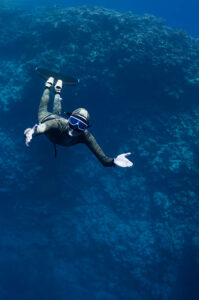
Let’s be honest, squeezing into a black rubber suit under the scorching tropical sun doesn’t seem like a good idea.
In the Caribbean, many first-time scuba divers are reluctant to wear a wetsuit because the water has a moderate temperature. However, water conducts heat away from the body about twenty times faster than air, which makes you get chilled easily while scuba diving.
Although 78 degrees F may make you feel warm (or even hot), in water, it can eventually be cool to a diver who is diving without a wetsuit. Diving in water that has a temperature that is below a body temperature can chill a diver and even result in hypothermia.
Wetsuits also offer some protection for scuba divers against accidental coral scratches or any contact with marine creatures. However, while providing this protection, divers should still avoid touching or brushing against coral or any other organisms, as they can cause more harm to aquatic life than it can do to them.
How Wetsuits Work Underwater
The role of wetsuit in scuba diving lies in trapping a thin layer of water against the body of the diver. While getting wet, a diver’s body can rapidly heat up this thin layer of water that is trapped against his body.
The temperature of this layer of water rises to nearly the temperature of the body. If your wetsuit has a proper fit, the warm water layer remains close to the diver’s body.
How does a wetsuit allow a diver’s body to warm the water inside the suit? Wetsuits reduce heat loss thanks to a thick layer of neoprene filled with tiny air bubbles. This rubber and bubble combination insulates the water in the wetsuit, and results in reducing the diver’s body heat loss.
Having a wetsuit with a good thickness and more insulating properties means there is less heat loss can happen. A proper fit prevents water from circulating out and being replaced by cool water that needs reheating. Both wetsuit fit and thickness help keep you warm beneath the waves.
Unfortunately, etsuits have their limitations. The warm water layer that is trapped between the suit and the diver’s body still conducts some body heat away, and the neoprene wetsuit loses some of this warmth. Over time, depending on the wetsuit’s type and characteristics, a diver may feel chilled.
In cold temperatures or while diving for a long time, a wetsuit might fail to keep you warm, and wearing a drysuit then can be a good option.

A Snug Wetsuit Can Keep You Warmer
A wetsuit can keep you warm as a result of trapping a layer of water inside the suit. Wearing a snug wetsuit will guarantee more effective trapping and holding water against your skin than a loose suit.
A wetsuit without a snug fit will allow cold water to enter the suit, as a result, a diver will feel chilled more quickly. A suit which is too tight in the chest area will restrict your breathing, which not only can be uncomfortable, but also dangerous.
If you feel that your wetsuit is too tight around your neck, it may restrict blood flow to your head, which can cause danger underwater or even on the surface. An overly tight suit that stretches the neoprene thin won’t be effective.
A Thicker Suit Will Keep You Warmer
While diving, the neoprene layer of your wet suit can be responsible for some heat loss. Wearing a thicker wetsuit means that there is less heat lost and you will be warmer.
However, wearing a thicker wetsuit can cause restriction to your movement, so it is more comfortable to choose the thinnest suit possible that can both keep them warm in the dive environment and also enables them to move freely.
The Deeper You Go, the Colder You Get
The neoprene rubber of the wetsuit is characterized by being light in weight and flexibility because it is made from millions of tiny air bubbles that are sealed inside its rubber material. As a result of complete sealing, this air will expand and compress based on Boyle’s Law.
The deeper you go, the more the compression and the wetsuit becomes thinner. As a result of the low insulating properties of the thin wetsuit, the deeper you go, the colder you will be. It is better for divers who dives deep to buy a thicker wetsuit.
The Longer You Dive, the Colder You Get
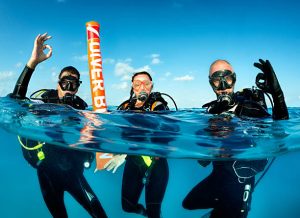
Although the role of wetsuits in scuba diving is slowing the heat loss underwater, your body still loses heat in a gradual manner when you dive for a long time. At the end of a long dive, the slow heat loss can cause a diver to feel chilled. It is better to choose a thicker wetsuit in case of diving for long periods.
Natural Insulation
While the “natural insulation” of a diver is not a feature distinguishing the wetsuit itself, the body fat of a diver is also responsible for how rapidly he gets chills underwater. Fit divers with low body fat will cool faster than those with normal body fat levels.
Scuba divers with very little body fat might consider selecting a thicker suit compared to average divers in similar conditions.
Long Suits Vs Short Suits
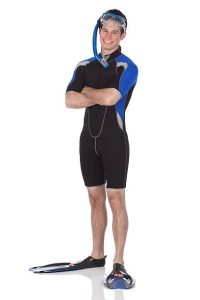
Short wetsuits, or shorties leave the lower legs and arms exposed but still make divers feel comfortable in warm water by covering the torso and reducing heat loss.
They are less effective than long suits, as more skin exposure leads to quicker heat loss. A good wetsuit reduces heat loss underwater in order to keep a diver comfortable while diving.
Consider features like wetsuit thickness and fit, in addition to the length and depth of the dive, when selecting a wetsuit for a specific dive condition.