Cold-water diving is an exhilarating experience, and the right gear can make all the difference. Whether you’re an experienced diver or just starting out, mastering the use of your drysuit is essential for comfort, safety, and enjoyment underwater.
In this guide, we’ll dive into the top tips and tricks that will help you get the best out of your drysuit. From selecting the perfect suit to mastering finning techniques, and preventing the dreaded turtle roll, we’ll cover it all.
So, gear up and get ready to unlock the full potential of your drysuit – your underwater adventures await!
Helpful Tips to Get the Best Out of Your Drysuit
Maximizing your drysuit experience isn’t just about putting it on and diving in. It’s about mastering the nuances that can elevate your comfort and efficiency underwater. Here are some practical tips to get the best out of your drysyuit:
- It starts with the suit.
- Get comfortable.
- Finning matters.
- Prevent turtling.
- Switch positions.
- PRO TIP.

It Starts With The Suit
It is important to choose a drysuit depending on your body siza, shape, and weight to ensure sufficient comfort, mobility, and insulation. You might find stock suits that fit well or to make a special order of a custom-made suit based on your measurements. It’s recommended to consult a dive retailer to determine the most suitable option for you.
Get Comfortable
Whenever you switch drysuits or undergarments, make sure to practice in the pool. You should wear different undergarments, hood, and gloves depending on water temperature.
practice putting on and taking off your gear until you make that comfortably. With gloves and a hood on, things become more difficult. If your drysuit valve sticks, know how to disconnect it to avoid an uncontrolled ascent.
Drysuit divers use various layering systems depending on the temperatures. You may need extra weight based on your setup, and thus might need to change your BCD for its lift capacity or switch to a harness weight system.
Ensure the strap of your wrist-mounted computer or compass is compatible with your drysuit; you might require a longer strap, bungee, or retractor.

Finning Matters
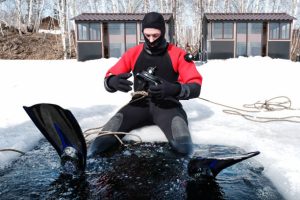
Some fins can be used for both warm and cold-water diving, but many, like full-foot fins, cannot. You might need to go up a size from your wetsuit fins. Ensure they fit over your drysuit boots.
Choose fins that work well in water, even with the extra weight from drysuit diving. Avoid tight or rigid fins to prevent cramping. Learn hand signals for cramp relief and practice self-release techniques at the surface before scuba diving.
Upon descending to deep water, focus on finning, neutral buoyancy, and trim adjustment. If your legs drag, reduce weight or engage the lower back and lift the hips toward the tank.
Raising your legs makes you more streamlined. Bend your knees at a 90-degree angle and practice the modified frog kick, while lifting your lower back to avoid disturbing the bottom.
Prevent Turtling
Swim side by side with your dive buddy in a parallel position. It’s tougher when one diver leads, as they must turn to check on their buddy. Keeping your head on a swivel is difficult in cold water.
Looking behind with a steel tank and extra weight can cause a diver to flip tankside down, resembling a turtle on its back.
Practice using your arm and core muscles to flip the tank 180 degrees so it rests on your mid-back. This will help you stay in control in case of being in this position.
Switch Positions
To switch between horizontal and vertical positions without changing your depth, Try lowering your legs without using your fins until your feet become down and shoulders up. This helps move air from the feet to the shoulder dump valve as you need.
As a result of maintaining your depth, the air in your drysuit won’t expand. This allows you to dump air without ascending. Practice by exploring your breath and exhaling while lowering your legs to master this skill further.
Practice at the surface by getting vertical and using your fins to move your body up and down resembling a seesaw. Avoid using your hands to focus on the power of the water flow over your fins.
Once you descend in deep water and reach 12 feet, switch from the vertical descent position (feet down/head up) to a neutrally buoyant horizontal position. Control your buoyancy as you slowly descend with your tank on your back.
When releasing air from your drysuit, ensure you are neutrally buoyant. Adding air in small bursts through the intake valve is more controlled than deflating through the exhaust valve. If you haven’t dived in six months, get a refresher course with a dive professional.
PRO TIP
Upon learning how to dive in a drysuit , gain experience in various conditions and temperatures. Consider location-based continuing education when traveling for water time with a dive professional/mentor/facility in new places.