For centuries, people have been fascinated by the ocean’s beauty and mystery. As we venture underwater, the diving mask is considered one of the essential tools, it is your window to the vibrant world below.
With your mask, you have a clear vision. You can easily navigate, communicate and fully appreciate the marine environment. Whether you’re a novice diver or a seasoned pro who delved into technical diving adventures, it is crucial to have a clear field of vision. The quality of your mask determines the degree of the observation of the magic of marine life, from spotting tiny nudibranchs to encountering majestic manta rays.
A diving mask has a simple but important job: It creates an air pocket, enabling clear underwater vision. Beyond their basic function, diving masks have hidden complexities. They combine functional design, advanced materials, and diver-focused features for an exceptional underwater experience.
Why is a Good Diving Mask Important?
- Safety considerations: A dive mask with a high quality guarantee that water doesn’t seep in. That allows you to focus on the beauty of this fascinating world and keep potential hazards at bay.
- Clarity and visibility: Unlike goggles, a diving mask enclosed your eyes and nose. Its design helps you to have a clear vision underwater, because of the air pocket It forms in front of your eyes. Therefore, clear lenses besides a good seal are very crucial for clear, wide underwater visibility.
- Comfort during dives: A mask with poor fitting can be distracting. Having a comfortable fit is vital for exciting, extended dives.
- Equalizing Pressure: Covering the nose helps equalize pressure by exhaling while pinching it. This step is very important to prevent any discomfort or injury.
Types of Diving Masks and Their Features
The most crucial thing you should remember about the scuba diving mask is the proper fitting over your face in addition to a good seal to ensure having an optimal underwater vision.
However, let’s know together more information about diving mask types and their features to decide which mask you need to choose. In general, there are four types of lenses with a different diving purpose for each one.
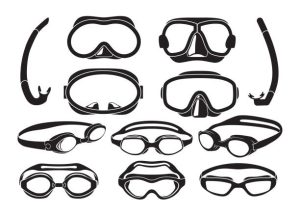
Single Lens
From the name, this type of mask has one lens that encloses the entire width of the mask, covering both eyes, with a smooth design.
The clear glass provides you with a wide view, which improves connection to the underwater world. It’s an ideal choice for those looking for obstructions and more scenery.
Pros and Cons of a Single Lens Mask:
- Since it doesn’t feature a nose bridge, it can provide you with a wide and clear range of vision. It provides a wide, clear view of the underwater world. It is a big plus when looking straight-on at close subjects and is ideal for divers who want a clear, broad view without any interruptions
- These lenses defog easily due to fewer edges and require no separate treatment.
- Higher air volume found in the masks makes equalizing it a more difficult process.
Double Lens
Double lens are considered the most common diving mask types. They are splitted by a nose bridge, and may look classic but offer an advantage: they’re compact and support prescription lenses. So, a prescription diving mask seems to be the ideal choice for divers who wear glasses.
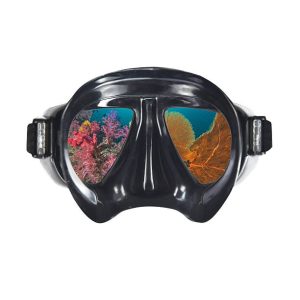
Pros and Cons of a Double Lens Mask:
- These are common for divers who need prescription lenses as they support separate prescriptions for each eye. They match your prescription for clear underwater vision.
- The low air volume in the mask helps you equalize easily at depth as well as reduce mask squeeze. Masks feature smaller air spaces (low-volume masks) need less frequent equalization and you can clear it easily by flooding it with water.
- The teardrop shape enhances downward vision.
- The bar can disrupt central vision.
Tri Lens
Tri lens feature three lenses, these diving masks feature a large single lens in addition to two small side windows on each mask side. This creates an open feel with clear side vision.
Pros and Cons of a Tri-lens Mask:
- It boosts peripheral vision as well as depth perception.
- Its openness may lead to claustrophobia.
- The front and side lenses meet in a small blind spot.
Full Face
A full face mask is considered more than a mask, it’s a different experience. from its name, it covers the whole face. This mask covers both the eyes and nose with an attached regulator to your mouth.
It combines the regulator and communication systems, which makes it the best choice for pro and technical dives. In general, they are used by cold water divers, serious commercial divers, and videographers—dosn’t suit recreational divers. It changes the way divers experience comfort and communication underwater.

Pros and Cons of a Full Face Mask:
- This mask lets divers breathe normally, helping them stay focused underwater.
- The curved lens of the mask offers 180-degree views.
- It reduces jaw fatigue and removes the need to grip the mouthpiece.
- It eases jaw strain and removes the need to hold the mouthpiece.
- The higher volume in the mask caused higher buoyancy. This means more effort is needed to keep the body stable as it rises faster.
- They typically feature bulky designs and are harder to clear due to their size.