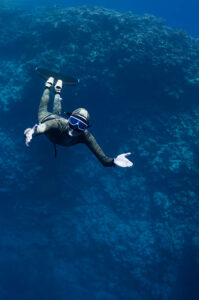
Ever wondered if you could see underwater without goggles—without turning your eyes into a red, burning blur? You’re not alone. The moment your face hits the water, instinct tells you to shut your eyes tight.
But here’s the surprise: with the right techniques and a little practice, opening your eyes underwater without goggles isn’t just possible—it can be surprisingly comfortable.
In this guide, we’ll show you how to reduce eye pain underwater and practice your underwater vision so you can swim freely, explore confidently, and maybe even enjoy the view while scuba diving. With these tips, you will embrace the world beneath the waves—eyes wide open.
Reducing Eye Pain Underwater
Stinging eyes and blurry vision can turn an underwater adventure into a painful chore, especially if you’re swimming without goggles. In this section, let’s explore these simple strategies to reduce eye pain:
- Avoid chlorinated water.
- Avoid salt water.
- Remove contact lenses before swimming.
- Have a soothing saline solution handy.
- Squint, rather than opening your eyes completely.
Avoid Chlorinated Water
While the place in which you are going to swim isn’t always your choice, you should know the constituents of water that can cause the most eye pain.
For instance, chlorinated water (which you can find in pools, hot tubs, and so on) can hurt more than ordinary water when getting in your eyes. While it’s great for disinfecting, it can leave your skin red and eyes burning afterward.
Chlorine stings more because it breaks down your eye’s protective tear layer. In some cases, chlorine can also cause dehydration to the cornea, resulting in cloudy, distorted vision for a short time.

Avoid Salt Water
Saltwater is considered another common source of eye irritation while swimming. Salt pulls moisture from your eyes, leaving them dry and irritated.
In addition to that, the types of places in which you’re supposed to swim in salt water (like beaches) can have added contaminants in the water such as biological matter, silt, and pollution.
The eyes are naturally surrounded by a salty fluid (If you’ve ever tasted tears, you already know). However, the salt content of the ocean is nearly about 3 to 4 times more salty, resulting in an imbalance that dehydrates your eyes.
Remove Contact Lenses Before Swimming
Most optometrists (eye doctors) don’t recommend swimming while wearing your contacts. The water can cause pain (resulting from deforming and pressing against the eye) with a degree depending on the type of contacts you are wearing.
Contacts can trap bacteria and microorganisms against your eye, sometimes leading to serious infections.
If wearing contacts underwater is a must, it is recommended to wear single-use disposable contacts, then discard them after swimming. Following this way, there is no need to carefully disinfect them.
Have a Soothing Saline Solution Handy
Saline solutions ’re made to match your eye’s natural salt balance. Apply a few drops when you want to open your eyes underwater without goggles as this helps in flushing contaminants out of your eyes, soothing stinging, and reducing the risk of infection. Search for bottles of saline solution at pharmacies as well as grocery stores for fairly cheap.
- In a pinch, rinse your eyes with clean, cool tap or bottled water..

Squint, Rather than Opening Your Eyes Completely
The less you expose your eyes to water, the less you’ll irritate them. If opening your eyes all the way is too painful, you may be able to get some underwater vision by simply squinting. You won’t be able to see as much, but you will still probably be able to make out vague shapes and outlines, which is better than nothing.
Practicing Your Underwater Vision
When you open your eyes underwater without goggles, you will know that it isn’t just about vision—it’s about perception, patience, and adaptation. Let’s discuss together the next tips:
- Enter the water with your eyes closed.
- Try squinting at first.
- Slowly open your eyes wider.
- Close your eyes as soon as they start to sting.
Enter the Water with Your Eyes Closed
Like any difficult skill, the ideal way to learn how to open your eyes underwater without goggles without feeling pain is through practice. First, jump into your preferred body of water. As noted above, clean fresh water is the prefered choice — chlorine and salt water hurt more. Close your eyes while entering the water in order to prevent any water from splashing into them.
- In case of using contacts, remember to take them off before getting in the water.

Try Squinting at First
Once you become underwater, try to open your eyes ever-so-slightly. Open your eyes just a little—enough to see the fuzzy shapes around you. Maintain this for one or two seconds. If it feels okay, move on to the next step.
- If squinting hurts, the water may be bothering your eyes (or you may have sensitive eyes). Try the “controlled environment” step at the end of the article.
Slowly Open Your Eyes Wider
Now, Slowly let your eyes open all the way. It might feel tough—just like taking a pill without swallowing water or Looking over a high edge when you’re afraid of falling. Slow down if you’re nervous—it might help you stay steady.
- Looking up can make it easier for some people to open their eyes underwater. Move your eyes around until it feels the most comfortable.
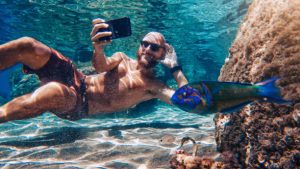
Close Your Eyes As Soon As They Start to Sting
If you’ve ever kept your eyes open in air (like for a staring contest), even without anything in them, your eyes can start to sting just from being open in the air too long.
When being underwater, Your eyes will sting faster, and you’ll have to keep them shut longer to feel better.
After feeling the first twinges of pain, try to shut your eyes and maintain them closed for a 1 or 2 seconds. Your eyelids will cover your eyes with tears again, and that will make them hurt less.
When the stinging goes away, open your eyes in a gradual manner. Repeat this step while swimming underwater to keep the pain under control.