Artificial reefs aren’t just piles of concrete or old ships—they’re full of life, history, and mystery. From the Neptune Memorial Reef to the sunken ruins of Baia, these underwater sites attract divers from around the world. But diving here isn’t just about having fun.
These man-made reefs can be tricky, even for experienced divers. Sharp edges, tight spaces, and strong currents are just a few of the risks. That’s why safety matters more than ever.
Before you dive in, let’s go over the essential safety tips for exploring artificial reefs. Let’s turn your risky dive into a rewarding one.
Understanding the Risks of Artificial Reefs
Unlike natural coral reefs, artificial reefs are man-made habitats with irregular designs. They’re checked to make sure nothing dangerous is left behind, but wind, waves, and weather can still break them down over time.
Shipwrecks can form weak paths, sunken statues can crack and turn into sharp edges, and big objects might stir up surprise currents. Even if it sounds risky, taking the plunge and scuba diving in is still worth it.
Stay sharp, follow the instructions of your divemaster, and you’ll handle these reefs like a pro.

6 Safety Tips for Exploring Artificial Reefs
Artificial reefs may look inviting, but they come with hidden risks. Before you dive in, here are six simple tips for exploring artificial reefs:
- Plan your dive and stick to it.
- Closely monitor your buoyancy.
- Be conscious of marine life.
- Never dive alone and stay close to your buddy.
- Respect the artificial reef.
- Choose the right artificial reef for your skill level.
Plan Your Dive and Stick to it
Artificial reefs can stretch wide and feel like underwater mazes. A wrong turn in Dive Bahrain’s sunken plane or missing the way out in Alexandria’s ruins can leave you lost and running out of air.
Before taking the plunge — familiarize yourself with the site, set your limits and time constraints, and have a good plan for your way out!
Bonus tip! If the dive conditions suddenly shift, call it off and head back. Trust your guts, because even in the most beautiful reef, your safety comes first.
Closely Monitor Your Buoyancy
Artificial reefs are harder than natural coral, so you will need to be more precise when managing your buoyancy control. One small mistake can cause a crash and serious injuries!
Stay clear of tight spots and protect the reef by checking your data twice and stay aware of your surroundings. Good buoyancy helps you stay steady and helps you avoid bumping into fellow divers.
Be Conscious of Marine Life
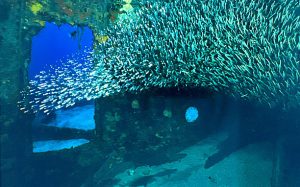
One of the best things about diving near artificial reefs is seeing vibrant sea animals which are attracted to it. Schools of fish swim quickly through underwater ruins, while octopuses and eels hide inside old statues.
Unfortunately, some of these animals, like scorpionfish hiding in wreck crevices or territorial barracudas can pose a threat if you disturb them. Don’t forget that to be safe when diving in artificial reefs, you should keep your hands to yourself and respect marine life!
Never Dive Alone and Stay Close to Your Buddy
Practicing solo diving in artificial reefs can cause a disaster. There are many blind spots that are created by wrecks and structures, and if something goes wrong, you will need to get any help from a nearby diver.
So, it is important to stay close to your dive buddy, especially in confined spaces in which the possibility of an out-of-air situation or disorientation is high.
Respect the Artificial Reef
You have to follow rules in artificial reefs. Man built these reefs to support marine life, so even the slightest disruption can result in adverse effects.
When exploring artificial reefs, it is crucial not to collect mementos off of structures, kick up sediment, and most importantly not to treat it like a playground! Even better, treat artificial reefs as if they are real ones—look, don’t touch.
Choose the Right Artificial Reef for Your Skill Level
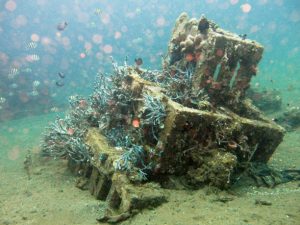
Some artificial reefs aren’t easy for novice divers. While shallow sites (having a depth of 4–8 meters) are considered ideal for new divers, some sites are much more complex and demand to be more experienced. Depth isn’t your biggest worry, as some dive spots have stronger currents in addition to other challenges that you need to deal with.
If you don’t trust your skill level, don’t go beyond your limits. Artificial reefs can be tricky, and being too confident of yourself can get you in trouble. Before delving into an underwater adventure in a specific dive site, collect the needed information about the depth, terrain, and difficulty level.