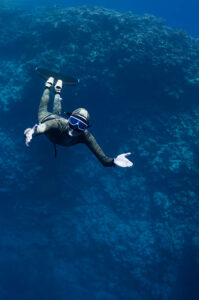
Drift diving is one of the most fun ways to explore the ocean. Instead of kicking the whole time, you relax and let the current move you along. It can feel like flying underwater as you pass over reefs, fish, and wide open blue.
But drift diving also needs good awareness and the right skills. If you don’t know what to expect, the current can take you somewhere you didn’t plan to go. That’s why it’s important to learn how to stay safe, avoid common mistakes, and work well with your dive buddy and guide.
In this article, we’ll cover simple tips for safer drift diving, the risks to look out for, the mistakes divers often make, and some of the best places in the world to try drift diving.
Ready to go with the flow? Let’s start.
Tips for Safer Drift Diving
Drift diving can be smooth and enjoyable when you’re prepared. Here are 6 tips for safer drift diving to make the most of the ride:
- Follow Your Dive Guide’s Instructions.
- The Better Your Buoyancy, the Better Your Drift Dive.
- Go With the Drift.
- Drift Dive, Keeping an Eye Out.
- Use reef hooks responsibly.
- Use common sense.
1. Follow Your Dive Guide’s Instructions
To delve in the world of drift diving, you need knowledge and experience, in addition to dive guides who are experts in these waters. These guides should understand the peculiarities of the currents, influenced by tides and wind, to guarantee your drift dive will be both safe and enjoyable.
Even when you find tidal maps accessible online, their information doesn’t always reveal the intensity of the current at depth. Watching marine life behavior while scuba diving can offer clues:
If you find fish or soft corals moving in a different direction, it could mean the current is changing. Local divers know the area well, so you can ask them for tips for safe drift diving before you start.
Downward currents can also be a rare phenomenon, but not impossible concern while drift diving, making it a vital thing to follow the instructions of your guide closely.
2. The Better Your Buoyancy, the Better Your Drift Dive
For drift divers, mastering buoyancy control is a game-changer. Maintaining a horizontal posture a meter above the bottom helps you glide with less effort. When you float upright or move too far from the reef, this increases drag, which affects badly on your drift dive (causing it to be less efficient).
You should be properly weighted to have smooth drift dives. If you want to know more about buoyancy techniques, explore our guide: “The Art of Balance: Learn the Main 2 Skills To Perfect Your Buoyancy Underwater”.

3. Go With the Drift
Swimming against the current while drift diving is considered both exhausting and futile. Instead, embrace the flow. When you need protection, use the reef’s formations as a shelter from strong currents, and always dive close to your dive buddy.
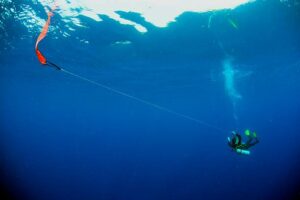
When getting separated from your dive group, deploy your Surface Marker Buoy to signal the boat to pick you up. The golden rule in drift diving is to surface and regroup instead of wasting your time searching for others.
4. Drift Dive, Keeping an Eye Out
Soft corals and gorgonians are good things to help you adapt to drifting water, as they are excellent natural indicators of current direction and strength. While navigating, pay attention for any obstacles such as reef pinnacles and rocky formations, anticipating movements to avoid collisions.
For underwater photographers, drift diving offers to them unique challenges and opportunities. You will have to keep your camera ready, because you have just one chance to capture that perfect shot of marine life in motion.
5. Use reef hooks responsibly
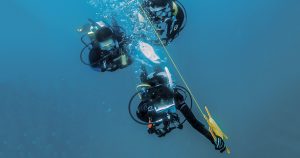
One of the invaluable tools when drift diving is reef hooks, but you must pay attention to your surroundings when using them. Even when you don’t want to stop, reef hooks can be a handy tool to carry. They enable divers to attach to the rock securely and stay stationary to take in the beautiful surroundings or even important gear adjustments are required.
You connect the reef hook to your BCD and anchor it to the reef or a rock. It is important to ensure that the hook is not attaching to anything living or fragile. The ability to pause can be a big advantage for beginner drift divers, especially if they are needing to calm their breath or someone want to catch up with the group.
6. Use common sense
When drift diving, one of the important tips is to depend on your own instincts and knowledge in order to stay safe and have fun. The difference between life or death is to use your common sense and stayy focused on what you are doing.
If the ocean shifts your plan, read the conditions and choose what’s safest for you and your dive group. This starts from knowing when to call off a dive if the ocean conditions are more chaotic than you expected or when another diver or yourself isn’t ok to conclude the dive early.
Risks of Drift Diving
As with all types of diving adventures, participating in a drift dive has its own risks. The current is considered the main risk, as any lapse in concentration can take you off course. If a sudden change in the water and an increase in the current strength happen, you can be swept further than you have planned and miss the pick-up point.
You should pay attention to your surroundings in addition to the direction of the water flow to avoid getting stuck when drift diving. Despite these serious risks, having the proper training and technique can help you avoid dangers and be aware of your next actions when you find yourself in difficulties.
Common Mistakes and How to Avoid Them
When it comes to drift diving, there are a few common mistakes that divers may make, especially if they are beginners in practicing this type of diving. Understanding these mistakes and knowing how to avoid them can help you have a safer and more enjoyable experience.
Underestimating the Current
Underestimating the strength of the current is considered one of the most common mistakes when drift diving. As a new diver, you may think you can swim against it or misjudge how quickly it will carry you.
How to avoid it: Always check current conditions before diving. Assessing the water drift is esbysential to understand the potential risks of strong currents. And the presence of an experienced guide will help you asses that properly. Always follow the dive plan and pay attention to your surroundings.
Lack of Experience in Handling Strong Currents
Some divers may face a problem in managing strong drift dives or feel panic when being carried by the current.
How to avoid it: Divers who face that should practice on how to stay calm and controll their buoyancy. If you’re a beginner in drift diving, take a specialty course that concentrate on drift dives, so you can engrain the needed skills to handle strong currents effectively.
Not Conserving Air or Energy
While drift diving, you may be carried by the current, and feel excited. That, in turn, can lead to faster air consumption or unnecessary energy expenditure.
How to avoid it: You need to keep a steady pace and control your breathing. Let the current carry you instead of fighting it to conserve less energy. Always monitor your air supply and stay in communication with your dive buddy.
Top Drift Diving Destinations Around the World
If you’re ready to experience drift diving at its best, there are spots around the world known for clear water, steady currents, and amazing marine life. Here are some of the top drift diving destinations around the world:
- Vancouver Island, British Columbia.
- Maldives.
- Cozumel, Mexico.
- Fakarava, French Polynesia.
- Kamikaze Cut, Tobago.
- Red Sea, Egypt.
- Florida, USA.
- Molokini Island, Hawaii.
- Clutha River, New Zealand.
- Ulong Channel, Palau.