Are you planning to take the PADI freediving course? Excellent, but you should know that with any PADI course, you will need to do your best and to ensure that will happen, it’s important to make the proper preparation.
Freediving is considered a leisure activity, but it’s also regarded as a sport and like other sports, if you know what is required besides being physically and mentally fit, this will help you so much. In this article, here are 7 steps to prepare for a freediving course.
7 Steps to Prepare for a Freediving Course
If you are interested in freediving and have decided to book a course with PADI, follow the next steps to prepare for a PADI freediving course:
- Start studying.
- Practice relaxation exercises.
- Practice breathing exercises.
- Practice visualization techniques.
- Work on your physical fitness and to be comfortable in water.
- Contact your PADI freediver center.
- Get a good sleep at night prior to your course.
Start Studying
The freediver courses from PADI have e-Learning available, which means that you can start studying the part of the theory component online from your home.
You will really understand the material when you work at your own pace and take the time you need without rushing. The e-learning part of this course contains information related to relaxation, breathing exercises and visualization which you can practice at home too.
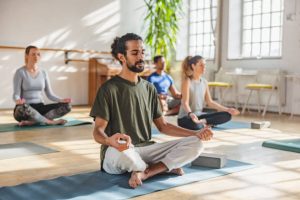
Practice Relaxation Exercises
Practice relaxation exercises is a core component of all PADI freediving courses. You will learn to relax and mainly how to remain relaxed as the urge to breathe increases. Calm, deep, slow breaths can help lower your heart rate so your body conserves more oxygen. Your tense muscles use more oxygen and energy than relaxed ones. PADI freediver manual or e-learning will recommend for you some great relaxation exercises to practice.
Practice Breathing Exercises
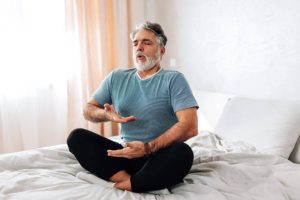
The normal breathing frequency is from 12 to 20 breaths per minute. You can get ready for the course when you practice diaphragmatic breathing (not chest breathing) from 4.5 to 7 breaths per minute. This may seem complicated but there are new apps available on smartphones that help in timing and breath control. You can download “Breathe 2 relax” and “My CalmBeat” for free.
Practice Visualization Techniques
Visualization is another process that can help you stay relaxed underwater and that in turn helps you to prevent increasing breathing rate. Visualization is the process of finding your happy place by visualizing a place that makes you happy and feel calm. Practicing this technique will help you find your happy place faster when you need it.
Work on Your Physical Fitness and to be Comfort in Water
The instructor in your PADI freediver course will ask you to show him basic water skills to ensure you are comfortable in the water. These skills include swimming to 200/300 meters without stopping using fins, mask and snorkel.
In this test, there is no time limit and nonspecific swimming strokes are needed. So, your first step to prepare yourself for a freediving course is to start swimming to improve your body fitness and be completely comfortable with water. If you have your own snorkel, fins and mask, use them.
Contact Your Local PADI Freediver Center
If you don’t have any of the freediving equipment, it is a good idea to buy your own before delving into the course. Contact your local PADI Freediving center now and book the course, don’t forget to ask for some information about equipment needs and requirements.
Get a Good Sleep at Night Period to Your Course
The last step you can do to prepare for a freediving course is to get adequate sleep at night to perform at your best. This sounds obvious but it is super important when you remember that you will participate in a strenuous activity.
You may think that you will be able to function normally with little sleep, but that will affect your diving performance.