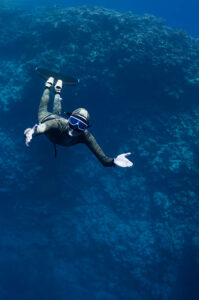
If you can’t beat them, join them. From this point, this type of diving began. Drift diving makes the currents work in your favor instead of against you. You can find nothing exhilarating than to be shot off along a huge current and watch the reef passing by while sailing along effortlessly.
Drift diving in currents is almost like sky diving underwater. Here are a few tips that will help you enjoy drift driving in currents and make it safer as well.
Five Tips for Drift Diving in Currents
The 5 Tips for drift diving in currents include:
- Follow the three S of drift diving.
- Pay attention to the depth gauge.
- Hug the button.
- Go with the flow.
- Go drift diving only in good visibility.

Follow the Three S of Drift Diving in Currents
The three S of drift driving include, surface float, surface supervision in addition to safety sausage.
If you are looking for the best way to drift dive, appoint a line handler and trail a surface float while scuba diving so that it can be trailed by your dive boat above. This makes you to be easily picked up after ending your dive and allows the dive group to dive to greater distances.
The surface float is very helpful when diving in newer waters where the boatman might be unfamiliar with the currents.
Whether you are using a surface float line while drift diving or not, it’s very important to have surface supervision on your drift dive. The importance of this is that he/they can spot any diver on the surface and bring the boot around to pick him.
The importance of the surface supervision team is to spot and pick up any diver that detaches from the group and has to ascend to the surface.
All drift divers should carry a deployable high visibility or safety sausage because these tools can help the dive boat spot you when you separate from your group and have to ascend to the surface. In such situations, having a whistle attached to your BCD may also help you.

Pay Attention to the Depth Gauge
When you are riding fast currents, you will find it difficult to mentor your depth. The currents can carry you upwards or downwards at great speed depending on the strength of it. You will find it dangerous if you are diving in deeper waters and you must be sure about your ability of equalization, as this can be a nightmare if you have trouble equalizing.
If you have drift mode in the setting of your dive computer, turn it on, as it will alert you with a series of audible beeps. You should drift dive in shallower waters, as you can use the terrain as a reference guide and check continuously on your depth gauge.
Hug the Button
You will always find the current lesser at the bottom of the sea near the sea bed, so if you want to wait for your group to catch up with you or slow down, just go lower. If you don’t find any rock outcrops to grab hold of, you can use your scuba knife to gain purchase to the sea bed.
It’s better to descend quickly to the bottom, as this will give you more time to regroup. If you have trouble equalizing or take much time to descend, you will be carried away by the stronger currents at the top, so ensure to watch your dive buddy closely and always stay together.
Go with the Flow
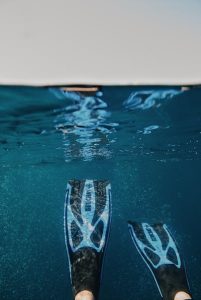
Although many scuba divers still choose not to accept this tip, it’s considered the most common tip for drift diving. Currents can cause the students for divers or aren’t used to them this oven cause scuba divers to swim against the current which is regarded as and natural instinct.
Unfortunately, this can lead to exhaustion in addition to rapid air depletion. Once you go with the flow, you will realize that there is no need to correct your course or even use your fins and by following this tip, you can dive for a longer time and cover greater distance with only one scuba tank.
Go Drift Diving only in Good Visibility
When you move at high speeds along the reef in poor visibility, you will have a high risk of running smack into something. You can find it hard to have clear water where there are currents, but at least check that the visibility is enough to allow you to anticipate and take evasive maneuvers if anything looms up ahead.
It will be hard for the group to stay together in case of poor visibility and that is something critical on a drift dive, as when you lose your buddy while drift diving that means you have to meet up at the surface which is considered extremely challenging in a strong currents, so at least be at visual contact with everyone in the group.