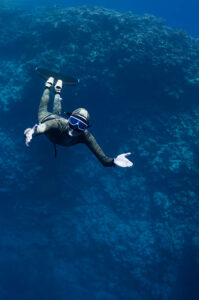
Most wrecks are located away from the shore, meaning almost all wreck dives are beginning from a dive boat.
The currents and visibility are considered the main two factors affecting how difficult you can find your way back to the anchor line when you decide to end your dive. If you can’t locate the right way, you will ultimately end up exceeding no-deco limits or have to swim a long distance back to your dive boat.
Here are a few helpful tips for navigation in wreck diving to be able to find your way around a wreck and back safely to your dive boat.
4 Tips For Navigation in Wreck Diving

Navigation in wreck diving may seem a difficult thing, however, following the next simple tips will make you reach your boat safely:
- Dive Into the Current.
- Use the Perimeter Search Method.
- Use a Strobe.
- Use a Compass.
Dive Into the Current
Start your dive into the current, so you can return easily back to the anchor line. If you are diving on a wreck diving site with good visibility, there aren’t any troubles to face upon returning if you know where you are once you arrive at the wreck, but if the visibility is poor in the wreck, it is important to use a tether line reel if possible.
Although using one can limit your ability to explore, it also makes sure that you’ll find your way back to the anchor line. Remember not to release extra lines because this poses a high risk of entanglement.

Use the Perimeter Search Method
With this tactic, you need to descend to the bottom of the anchor line, after that, swim directly to one side of the wreck, take note of the unique characteristics of the wreck and its position relative to the line, and then go around its perimeter and take your time exploring the wreck. Once you decide to end your dive, just make your way back to the side where you started on and back to the anchor line with ease.
Use a Strobe
If you have moderate visibility in the wreck site, all you need to do is keeping track of the anchor line by attaching a strobe 20 to 30 feet higher to the wreck. This way, you can see the strobe from a long distance, and you can explore freely but stay within the sight of the strobe.
Use a Compass
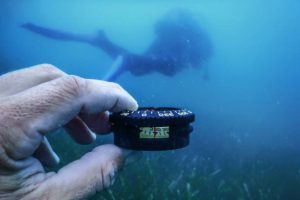
If you learn how to properly use your compass to find your way around underwater, the rate getting lost will decrease dramatically. Take note of your heading when you start exploring, and reverse when you decide to go back to your starting point.
You can then start scuba diving in a different direction and return. Repeat these steps as many times as you need to be able to cover the whole wreck site. If you are a novice in the world of wreck diving, start learning this process while staying within sight of the anchor line.
Swim for a short distance with the help of your compass, then reverse course without forgetting to note the heading. After practicing this several times, you’ll be able to find your way in the wreck underwater even in poor visibility.
In case of shore diving, you can both use a compass or just triangulate by taking note of unique objects on shore. If the shoreline has no features, you can put up a fly, tent, flag, or if you can, a strobe light or two to easily find your way back to the spot from which you entered the water. Following these steps won’t make you have to walk a long distance in your full kit.
Apply these tips in the future while navigation in wreck diving. They will help you in both good and poor visibility. The more you practice these 4 tips, the easier the navigation in wreck diving will be and you will be able to make your way around easily underwater in the future.