Sharks are often feared as deadly predators, but how much of that fear is based on fact?
In fact, sharks are far from the villains that we think they are. Understanding their behavior, the rarity of attacks, and the crucial role they play in ocean ecosystems can shift our perspective from fear to fascination.
This article dives deep into the myths surrounding shark attacks, separating fact from fiction and exploring essential topics such as shark behavior, attack statistics, prevention methods, and conservation efforts.
Let’s break through the misconceptions and uncover the truth about these misunderstood creatures.
Are Sharks Dangerous to Humans?
Sharks are one of the top apex predators in the ocean and can be a threat. Shark encounters are rare but possible.
Actually, Winning an Olympic medal, getting hit by lightning, or being killed by a falling coconut is more likely to happen to you than a shark attack. The reason behind that is that sharks are not naturally interested in humans and we aren’t even on their menu. Shark attacks mainly occur as a result of curiosity and mistaken identity not as a predatory drive.
Why Sharks Attack Humans
Shark attacks to humans mainly happen as a result of the shark’s exploratory behavior or due to mistaken identity. For instance, A shark might mistake a surfer for a turtle or a swimmer for a fish. Since sharks don’t have hands, they explore things by their mouths, which can lead to bites.

How Common Are Shark Attacks?
Shark attacks are rare. Every year, About 60-65 shark bites happen worldwide. These unprovoked bites mostly happen without any human action that may trigger the shark.
On the other hand, provoked bites happen when humans bother or feed sharks, causing a reaction. Only about six deaths occur each year.
When keeping in mind the millions of people entering the oceans in summer, the risks of seeing a shark is very low. Statistically, getting hit by an asteroid is more likely to happen than dying from a shark attack.
When Are Shark Attacks Most Likely to Happen?
While being active at any time of day, most shark attacks can happen early in the morning or near sunset. You should avoid entering the ocean at these times to have a lower risk of a shark encounter.
Which Sharks are the Most Dangerous?
The tiger shark, great white shark, and bull shark are classified to be the most dangerous in the ocean. Great white sharks as well as tiger sharks are quite large with impressively powerful jaws.
Bull sharks live in both fresh and saltwater and swim up rivers, resulting in higher rusks to get in contact with people.
Where Do Shark Attacks Occur?
Wherever you find fish, you find sharks, as they follow their prey. Therefore, most shark attacks occur in shallow waters near sandbars or steep drop-offs where sharks hunt.
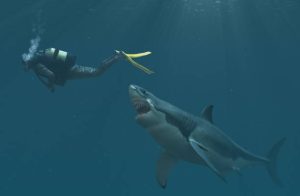
How Can Shark Attacks Be Prevented?
If you want a lower risk of a shark encounter, follow the next tips:
- Stay alert and stay close to shore.
- Practice water activities in groups and avoid fishing areas.
- Avoid murky water and areas with bait fish
- Don’t splash too much, as this can attract sharks.
What To Do If You See a Shark While Swimming?
If you see a shark, stick to the following:
- stay calm.
- Keep an eye on it while moving in a slow, calm manner.
- Avoid panicking or splashing excessively.
- Exit the water when you are safe.
What To Do If You Get Attacked by a Shark?
If a shark attacks you, try to hit it in its sensitive areas, such as the eyes or gills. Fight back and get out of the water as quickly as you can.
Common Myths and Misconceptions About Sharks

Myth: Sharks are Mindless Man-eaters.
Reality: Sharks don’t just eat anything. As any other species, they have preferences. They prey on fish, mammals, and invertebrates_humans aren’t on the menu. With their large brains, sharks are considered smart, curious, and have complex social lives.
Myth: All Sharks are the Same.
Reality: There are more than 500 different species of sharks, from the massive whale shark, which can grow up to length of 60 feet, to the tiny dwarf lantern shark, which only has 6 inches in length.
Myth: Sharks Can Smell Even a Drop of Blood from a Long Distance.
Reality: While featuring excellent olfactory systems, sharks won’t be attracted to a single drop of blood.
Myth: Sharks Must Keep Swimming to Avoid Drowning.
Reality: Some types of sharks, such as the white shark, must keep swimming to breathe, as they are ram-ventilating, so water moves over their gills.
On the other hand, buccal-pumping sharks, such as the zebra shark, can actively pump water over the gills by their mouths. These sharks can lay on the bottom of the ocean.
What Role Do Sharks Play in the Ocean Ecosystem?
Sharks are considered apex predators, which are very important to maintain balance in the marine ecosystems. They reduce algae overgrowing on coral reefs by regulating prey populations. In addition to that, they help in maintaining the health of the ocean environment. Removing one element from any ecosystem can disrupt its balance.

Do Sharks Have Natural Predators?
Yes, many types of sharks can be both predators and prey, because larger sharks can feed on smaller ones, and larger fish, such as groupers or jacks can feed on young sharks.
Even apex predators, such as great white sharks can be a prey to orcas. However, humans can be regarded as the biggest predators on the planet, as we pode a much greater danger to sharks than sharks do to us.
The Status of Shark Populations
Shark populations are dropping, with over 100 million killed annually, mainly for their fins. Overfishing results in a 70% reduction in shark numbers globally, with about a third of shark species facing extinction.
Conservation Efforts for Sharks
Efforts for sharks protection range from individual actions to global collaboration:
- Individual Level: Actions like avoiding products containing shark fins in their ingredients, reducing carbon footprints, consuming sustainable seafood, and educating others about sharks.
- Government Actions: Governments should seek for banning shark finning, regulating shark trade, in addition to Creating Marine Protected Areas and Shark Sanctuaries.
- International Cooperation: The Convention regulates trade in endangered species. Species (CITES) and the UN High Seas Treaty work to protect sharks globally.