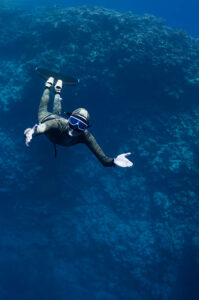
The scuba tank is considered one of those pieces of scuba diving equipment which you don’t interact with directly when scuba diving and, therefore, are rarely paying attention to. However, it is a vital step to ensure that your tank is in good condition, because it supplies you with sufficient air underwater. You shouldn’t only choose a high quality cylinder, but you should also choose one that is ++ inspected and tested.
First and foremost, you should know that there is a series of letters and numbers displayed on the shoulder of each scuba cylinder. To ensure if your scuba tank meets the safety standards or not, you need to understand those codes. So let us get down to it.
How to Ensure That Your Scuba Tank Meets the Safety Standards
As we mentioned above, you will ensure that your scuba tank meets the safety standards when you understand the codes displayed on its shoulder. These permanent markings usually indicate:
- The manufacturer.
- The material from which the cylinder was made.
- The service pressure.
- The cylinder serial number
- The size.
- The date of the cylinder’s most recent hydrostatic test (The hydro date determines whether the tank is safe to fill and use).
To simpilify these codes, let’s devide them into two categories:
- The regulatory authority markings.
- The Date of the Original Hydrostatic Test and Additional Hydrostatic Tests.
The Regulatory Authority Markings
The regulatory authority markings, including:
)TC-3ALM-207): Which is “Canadian regulatory authority markings”.
- TC – Transport Canada (which shows that the tank meets Canadian specifications).
- 3ALM – The specification code of Canada for 3-gauge aluminum.
- 207 – The working pressure of the tank (expressed in bars).
(DOT-3AL-3000): Which is “US regulatory authority markings”.
- DOT – Department of Transportation (which shows that the tank meets U.S. specifications).
- 3AL – The specification code U.S. for 3-gauge aluminum.
- 3000 – The working pressure of the tank (expressed in psi).
If your tank is made from steel, the markings will be 3A or 3AA, instead of 3AL or 3ALM.
(S110822)
This is the serial number of the cylinder.
Luxfer
This is the name of manufacturer of the tank. Some other US manufacturers include Pressed Steel, Catalina, Worthington, and Norris Industries.
08
month of manufacture.
04
year of manufacture.
SO40
The model number of Luxfer that indicates the capacity of this cylinder (in cubic feet) at normal working pressure. In this case, the number is 40 cubic feet.
There is a plus sign that you can find it stamped onto the cylinder. This means the tank can be filled up to 10% above the service pressure. Consider that this is applicable only to steel cylinders, on the other hand, aluminum tanks shouldn’t ever be filled above service pressure.
The Date of the Original Hydrostatic Test and Additional Hydrostatic Tests
The date of the original hydrostatic test as well as the additional hydrostatic tests are performed by an authorized inspection service. The purpose of the hydrostatic test is to show if the tank is able to withstand the pressure or not.
particularly, these tests measures the elasticity of t of the cylinder’s wall by filling it with water, then pressurizing the water until it reaches 1.6 times the working pressure of the tank. If a cylinder has negative results with these tests, then you should remove it from service immediately.
In the US scuba cylinders must undergo hydrostatic tests every five years (with a six-month grace). Other countries, such as Australia may need to undergo to more frequent tests, so it is essential to pay attention to these local regulations and follow it when traveling abroad.
Finally, a scuba cylinder should come with a sticker that has the date of the last visual inspection (VIP) written above. The tank must be inspected at least one time every year by a trained technician.
The process of visual inspection includes checking for stress lines, cuts, dents, bulges, signs of general abuse outside, and current hydrostatic test date, and neck cracks, pits, corrosion, coating defects, in addition to thread integrity inside.
If the tank passes the test, the technician will put the tank back together , then applies a new sticker. If your VIP sticker is expired, air-fill stations won’t refill your tank until it passes a visual inspection.
Besides the previous testing that we have described, you should examine your cylinder by yourself before every dive.
Stay safe and happy diving!