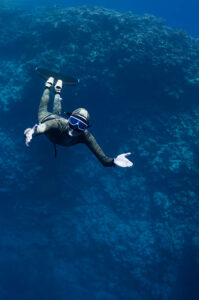
Normal scuba diving is the favorite activity for people who are passionate about diving and find themselves in warm maldivian Waters. On the other hand, ice diving is considered a different breed of scuba. This type of Diving is for those who want to take their diving to the next level.
Beneath the ice, there is an entirely different world reserved for brave divers who are always looking for different experiences. Want to learn more? keep reading!
What Is Ice Diving?
Talking about what ice diving is seems fairly obvious, but many of you may wonder about what exactly Ice diving is. For those who don’t enjoy the cold, ice diving will be the least fun thing to try.
But the more you know about ice diving, the cooler you realize it is. In a simple sentence, ice diving is just diving in ice water.
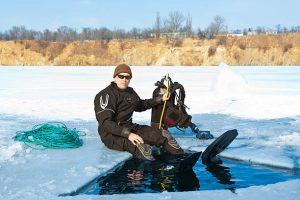
Diving in cold water is another kind of Diving that commonly be confused with ice diving, but to be clear, the first thing to know about it is that it requires cutting a hole in the overhead ice layer before entering.
Who Can Go Ice Diving?
Ice diving can be done for recreational purposes in addition to scientific research. Researchers go ice diving in the aim of studying arctic wildlife.
For instance, researchers dive below the ice to observe Seals or Orca whales and study them in their natural habitat. Rescue efforts can also require ice diving as ice divers may be paid to dive in professional situations.
Ice diving is a unique activity for avid divers who want to try something different. It can be for beginner divers ,too. However, the dangers of this type of diving are real.
You can make your ice dive as safe as possible when you get the proper courses or dive with Well educated professional instructors who will help you to prepare in advance.
Some of the potential dangers you should be well prepared for, including:
- Getting lost under the ice.
- Frostbite and hypothermia.
- Regulator failure because of freezing temperature.
- Meeting cold wild animals such as sharks and polar bears.
- Diving into this cold world can be unpredictable.
Generally we can say that ice diving is for serious and experienced scuba divers. The harsh temperatures you will dive into requires more preparation, a different kind of scuba diving equipment and larger teams to assist.
The required training for recreational Ice diving includes an advanced open water certification and to be 18 years old at least.
You should also be familiar with diving in drysuits. Diving in a drysuit is different from diving in a wetsuit because with a drysuit, your body stays completely dry while wearing your clothes underneath.
Drysuits are very necessary in ice diving to keep you warm, they also tend to be bulky that’s why you should get familiar with them beforehand.
Ice Diving for Beginners
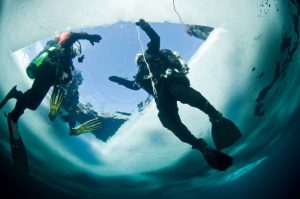
If you aren’t an experienced scuba diver and excited about ice diving and want to try it, don’t fret! You can search for dive shops that don’t require any diving certifications for ice diving, such as Val Thorens or French SKi resorts where you can find some scuba instructors who offer initiation ice dives.
In such locations, the chosen dive site is frozen mountain lakes which are much safer than open water diving.
Whether you are an experienced scuba diver or just a beginner, you will be accompanied by a well educated ice diving instructor. Each dive lasts around 20 minutes and you will be diving to 1 to 3 meters deep.
This is the perfect safe way to explore the world beneath the ice. The cost of these initiation dives is between 90-200 euro including all the necessary equipment. Many divers fall in love with ice diving after booking the first ice dive.
The Scuba Equipment for Ice Diving
Whether you are a beginner scuba diver with a scuba instructor or an experienced one, the ice diving equipment will be the same, including the following:
- A drysuit.
- Hood (as most heat loss comes from the head).
- Dry gloves (which is optional, but ensure to get comfortable while using them).
- Boots.
- Usual diving attracts, such as scuba tank, buoyancy control device, fins, scuba mask and regulator.
How to Use a Regulator for Ice Diving?
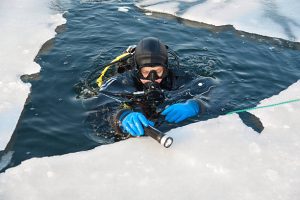
If you are a diver you will know what a regulator is and how to use it. If you aren’t, then the regulator is the piece of equipment which is used to breathe through, but when we talk about ice diving, moisture inside it can make it freeze up.
To be ready for ice diving, regulators should install a special environmental seal kit. First off, the regulator should be sealed tightly from ear and water.
Actually, there are several things to do to prepare new regulators for ice diving and they must occur in a specific order, including:
- You should keep your regulator in warm conditions before going into an ice dive.
- Ensure to avoid letting in moisture into the second chamber of the regulator.
- Finally, never exhale into the regulator before entering the icy water.
During a specialized course, you will learn about all these technical procedures and details. If you choose a Discovery ice dive, don’t worry, because your dive instructor will take all that into consideration.
Lastly, don’t forget to bring a chain saw in order to cut the entry point in the ice. You should do that with proper and skillful techniques. For example, you should cut the hole in a triangle shape to prevent breakage.
How It Works?
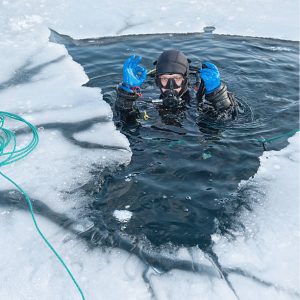
Ice divers usually use a safety line. The job of this line is to follow their path under the size and help lead them back to the entry point.
This line should be held by one member of the team in order to monitor the status of the diver and also can be used to communicate via tugs, for example, five tugs means a potential emergency and request to be returned to the surface. The safety line should be clipped to a special harness to prevent any interference while scuba diving.
Recreational ice diving usually lasts for 30 minutes. Although, professionals who have more experiences and higher-quality equipment and more professionally trained can stay down for longer periods, if necessary.
However the longer a scuba diver is down, the greater the risks. The limits of recreational diving reduce exposure to freezing temperatures and make sure scuba divers have enough air to stay down for a specific duration.