Beneath the sunlit seas and remote coastlines lie Earth’s most fascinating aquatic wonders—blue holes. These natural sinkholes plunge dramatically into the ocean floor, revealing ethereal shades of sapphire and secrets untouched by time.
From the wild heart of Belize to the coral-laced waters of Dahab in Egypt, each one invites brave divers and curious travelers into a world where mystery meets majesty. In this article, we’ll dive into five of the planet’s most breathtaking blue holes—and why they deserve to be top spots on your adventure bucket list.
5 Best Blue Holes Around the World
From iconic sinkholes tucked into tropical reefs to remote underwater wonders hidden from the spotlight, these five blue holes offer unforgettable dives in some of the planet’s most stunning aquatic landscapes.
- The Great Blue Hole of Belize.
- Egypt’s Blue Hole.
- The Bahamas’ Blue Holes National Park.
- Malta’s Blue Hole in Gozo.
- Guam’s Blue Hole.
- Swain Reefs National Park, Eastern Australia.
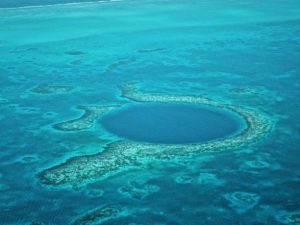
The Great Blue Hole of Belize
The Great Blue Hole of Belize was originally discovered by Jacques Cousteau and is now considered a UNESCO World Heritage Site.
This great blue hole of Belize is considered the most widely known blue hole on the planet. So, it’s no surprise that this site is among Belize’s top tourist attractions, despite the incredible marine life you can find in other parts of the country.
This sinkhole sits near the heart of Lighthouse Reef, an untouched atoll off Belize’s Caribbean shore. Most trips involve two or three tanks—one for diving into the Blue Hole, the others for exploring the breathtaking nearby sites.
While inside the Great Blue Hole, marine life here include reef and nurse sharks, midnight parrotfish, and a wide variety of juvenile reef fish.
And, unlike many other blue holes, this one has nearly vertical walls in addition to very little horizontal development – as a result of that, there aren’t many cave-like passages to delve into.
Scuba diving in the Great Blue Hole usually takes a full day, with trips often lasting for eight hours or more.
Egypt’s Blue Hole
The blue hole of Egypt is located a few kilometres north of Dahab, and is considered one of most famous diving sites in Egypt. This blue hole is different because it is connected to a cave system that scuba divers like to explore.
The cave has two diveable passageways “The Saddle” and “The Arch” which lead in and out of the formation. The Saddle is regarded as a shallow area at about six metres, while The Arch starts much deeper, around 55 metres below the recreational diving limits.
There is a second dive site in the area, called “The Bells”, which is combined with exploration of the blue hole, enabling divers to enter the site from shore, explore a plunging wall, and then starting the journey into the blue hole through “The Saddle”.
The Blue Hole is a popular spot in Egypt for recreational divers and those who enjoy more adventurous underwater trips.
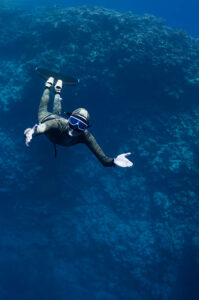
The features in this site begin below 30 metres, so it’s become a favourite spot for technical divers – with many dive centres in Dahab offering courses on sidemount, doubles, trimix, and more. Freedivers like this spot because it’s easy to reach, drops straight down, and gets very deep just a few kicks from the shore.
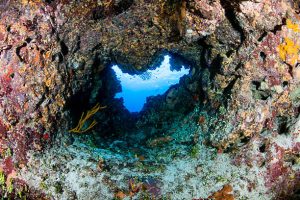
The Bahamas’ Blue Holes National Park
The Bahamas are actually a location that involve hundreds of blue holes. Scuba divers have explored about 50 of them and nearly 7 are open to recreational exploration.
The blue holes national park is located on and around the Bahamanian island of Andros, and covers a whopping 40,000 acres. You can find here the most famous and impressive of these underwater formations. Andros blue holes differ from typical sinkhole dives due to their mainly freshwater environments.
This means their underwater formations remain intact, and helps to preserve prehistoric finds including a variety of fossils!
The Lost Ocean Blue Hole is considered one of the most famous underwater sinkholes in the Bahamas and among the most accessible, open for exploration by scuba divers from all levels, including novice ones. Within its walls, you can encounter stingrays, reef sharks, and massive groupers.
Other blue holes here, such as Stargate, need technical certification, because they feature long and potentially perilous passageways, with unusual underwater conditions. These complex cave systems have rare endemic species, fascinating relics from the past, ancient human remains.
Malta’s Blue Hole in Gozo
This site is regarded as the most popular shore dive in Malta, and you can see stunning rock features surrounding them which were recently featured in the television series, Game of Thrones.
The submerged part of this limestone structure resembles that in the Dahab’s blue hole, linking to the sea through a 15-metre-deep underwater arch. This gateway opens to scenic reefs beyond the wall, perfect for relaxed dives before or after the main site.
Malta’s Blue Hole attracts scuba divers with stunning rock shapes and moody lighting below the surface. And, as a result of being surrounded by rocks, the sinkhole offers a strikingly different look from tropical versions.
It’s also considered one of the tiniest and shallowest blue holes listed, great for beginners and snorkellers. This site is reachable by land or sea, with multiple entry and exit choices to suit your preference.
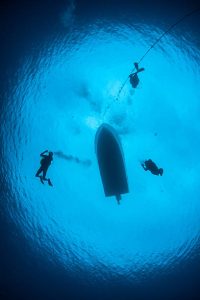
Guam’s Blue Hole
Guam’s Blue Hole located off the west coast of Guam, and considered one of the most requested dive sites – even though it may seem unimpressive from above. Unlike typical blue holes, this one stays hidden underwater, and doesn’t have the iconic deep-blue pool look.
But, it’s considered a fascinating site, which offers a wide variety of choices for exploration and crystal clear water, with visibility exceeding 30 metres all year round.
The walls of this blue hole are covered in both sift and hard corals as the entrances and exits are submerged, and it attracts plenty of reef fish and small creatures seeking cover from the open sea.
The entrance to this sinkhole has a heart-shape and lies at about 18 metres, which allows for easy access. Once inside, divers can decide their depth—either to return to the entrance or exit through a 40-metre window.
Beyond this deep-water channel, there is a plummeting wall, which is usually patrolled by sharks and other passing pelagics. You can easily reach the site, as it will take a 20-minute boat ride from shore, and exploration here is often paired with another dive, showcasing the area’s rich coral reef life.
Swain Reefs National Park, Eastern Australia
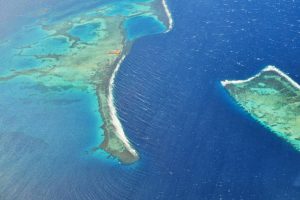
Swain Reefs National Park found around 200 kilometres off the coast of Yeppoon, It’s one of the Great Barrier Reef’s most rarely visited spots due to its isolation. Swain Reefs, known locally as Swains, is accessed by charter and includes nearly 300 individual reef systems. So, no surprise these blue holes stayed hidden for ages.
In fact, the Crystal Blue Hole, which is considered the most famous of them, was only discovered when Spotted on Google Earth satellite image by researchers, it was later explored by local dive guides.
The Crystal Blue Hole is surrounded by a shallow turquoise lagoon and offers an easy and protected anchorage, besides stunning dive spots that boast dramatic sand channels and coral bommies all around.
Once you get inside, the walls plunge to 45 metres, with stunning limestone formations in addition to lovely gardens of hard and soft coral as you going down. Because the current and temperature stay constant, the interior of the formation has been protected against the elements, which helped the internal coral structures to stay pristine.
This is very crucial, as the region regularly faces coral bleaching and tropical storms! Because it is considered a so recently discovered blue hole, we have little information about what wildlife that you might spot inside, making it among the most thrilling remote dive spots in the list.