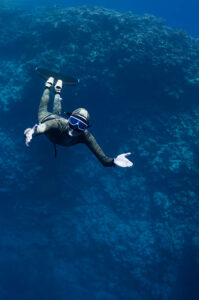
Night scuba diving is considered a whole different experience from traditional diving. As the sun sets and night arrives, the ocean turns into a magical and mysterious place.
The usual daytime sea creatures hide, while nocturnal marine creatures, glowing plankton, and eerie seascapes appear. The silence, combined with your dive light’s glow make for a calm yet exciting journey.
Night scuba diving isn’t just about practicing scuba diving in darkness; as it demands proper preparation, awareness, in addition to the proper scuba diving equipment. Whether you’re going to delve into a manta ray night dive in Kona, or just exploring a reef after sunset, the proper knowledge about what you will encounter is essential.
This guide will give you the sufficient information to make your night diving adventure special, what to expect, and the necessary equipment. Ready to embrace the deep in a whole new light?l
What to Expect on Your First Night Scuba Diving Experience
- Limited Visibility: Your dive light guides your sight, highlighting small details instead of vast landscapes.
- More Active Marine Life: Nocturnal creatures, such as eels, octopuses, and lobsters emerge can make your night dive a unique experience.
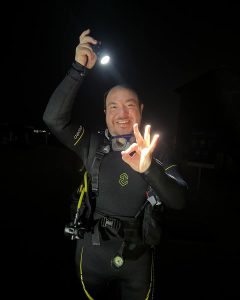
- Different Communication: In poor visibility, scuba divers communicate by dive light signals, as it is a challenge to see in these conditions.
- Heightened Senses: Motion, sounds, and light feel more dramatic, making each dive more exciting.
- A Peaceful Experience: The ocean becones quieter, with just your breath and light leading the way in the dark.
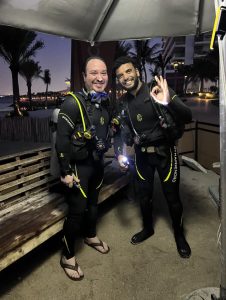
Essential Gear for Night Scuba Diving
From the fact that scuba diving at night makes you face new challenges, choosing the proper gear is essential for both your safety and enjoyment.
1. Primary Dive Light
Your main dive light is considered the most essential piece of equipment when night scuba diving. The light must be strong enough to reveal marine life without scaring them away. Choose a wide-beam LED light that can provide you with at least 1000 lumens of brightness.
2. Tank Marker Light or Glow Stick
A small LED light or glow stick on your tank makes it easier for your dive buddy and guide to see you in the dark. Most scuba divers use different colors to be able to distinguish themselves easily.
3. Compass for Navigation
Whether you are diving with a guide or not, it’s important to carry a compass with you to help you in navigation. Landmarks look entirely different underwater at night.
4. Wrist-Mounted Dive Computer
With a good dive computer, you can monitor depth, dive time, and air supply without the need for a flashlight. You can find some models with a glow-in-the-dark screen which provide better visibility in low-light conditions.
5. Exposure Suit
The temperature of the water tends to be colder at night, even in warm climates. With a wetsuit or drysuit, the temperature of the body will be stable and you will avoid post-dive chills.
Safety Tips for Night Scuba Diving
- Always dive with a dive Buddy: Never Dive alone in poor visibility, stay close to your dive buddy, and communicate by light signals.
- Use Proper Lighting: Ensure to have a primary and backup dive light. Use a tank light to stay visible.
- Plan and Mark Exit Points: Collect information about the site, mark entry/exit points using surface markers or glow sticks.
- Move Slowly: Control your movements and stay calm, as if you move suddenly this can disorient you in addition to startling marine life.
- Monitor Air and Time: Check both your air supply and dive computer regularly to stay within safe limits.
- Be Aware of Marine Life: Nocturnal creatures have different behavior, so ensure not to shine your lights directly into their eyes.
- Maintain Buoyancy: Control your buoyancy to ensure not to stir up sediment or damage coral.
- Stay Close to Entry Point: Watch your markers or compass to stay on track.
- Check Equipment: Ensure to test all your equipment, especially the regulators and lights, before you enter the water.
- Use Light Signals: In night scuba diving, it is a challenge to see hand signals, communicate by light flashes or circles.