Every diver knows the struggle—choosing your pair of fins can make or break your underwater experience. Do you look for the agility and ease of short fins, or want the power and efficiency of long ones?
It’s a decision that opens endless debate among divers from all levels. In this guide, we’ll know the pros and cons of each, helping you find the best fit for your diving style. Let’s settle the fin debate once and for all!
The Importance of Fins in Scuba Diving
Fins are essential for you to be able to survive in strong currents or when you are too tired, helping you reach safety efficiently. Fins prioritize safety over speed.
Also, they provide your legs with sufficient buoyancy. That means your legs will be kept off the coral, and they will help you stay floating while observing in one spot. Without fins, you will be slightly limited wherever you go – or at least freedive safely.
Long Fins
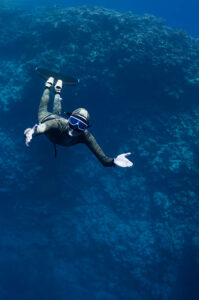
Long fins are also known as freediving fins (or spearfishing fins), as a result of being designed for freedivers and spearfishermen. But many scuba divers find that the long fins are the best choice for open water diving.
The best situation to use long fins in, is when diving in open water when current is strong. But when not to use long fins? They won’t be a good choice during reef dives as they’re hard to maneuver and can harm corals. It isn’t also recommended to use them in shallow waters on sandy bottom, as this can lead to a sand storm.
Long fins usually measure around 40-45 inches (100-115cm), as a result of that, they’re too long to be stored in normal dive bags. You can buy dive bags that were specially designed for these fins (such as Cressi, Beuchat, Seac) but they have the same price of the fins, so you can just purchase a mesh bag and hand carry them without facing any problem.
Short Fins
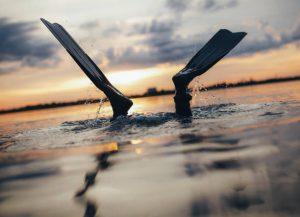
Short blade fins are a favorite choice for swim coaches because they match the natural way people kick without fins.
They move less water than long fins, making kicking easier, but this also means slower speed. You can kick faster to go faster, but there’s a limit, as short fins can hold back your top speed before you run out of strength.
These fins are smaller, extending just a little past the toes, and come in different styles like angled or flat edges to suit different needs. They are also great for snorkeling in places where reefs are close, to avoid accidental scraping.

FAQs
When to Use Long Fins?
Long fins are considered the best option for freediving, snorkelling, leisure swimming, or drills which focus on body position instead of speed.
Do Longer Fins Make You Swim Faster?
The design of longer fins make your kicks more resistant and flexible, as well as covering more surface area in the water. That helps in activating your muscles, elevating your legs and hips and also propelling you along quicker.
What Are Long Blade Fins For?
Long Blade Fins provide maximum propulsion and performance for swimming, snorkeling, and freediving..
Why Do Divers Use Long Fins?
Long-blade scuba fins provide greater propulsion due to their comparatively larger blade. These dive fins are your ideal choice for open water diving and in strong current conditions. They are also popular for freediving.
Are Short Fins Good for Diving?
The short fins need less energy to kick, making them a good option in case of diving in shallow water or when quick movements are a must.
Can You Freedive with Short Fins?
The short fins aren’t also the ideal option for freediving, especially if prioritizing performance is essential, as you’ll have more ease but lose depth and time below the surface.
Is It Safe to Snorkel or Freedive without Fins?
Snorkeling or freediving without fins means you have a reduced propulsion and maneuverability, which could lead to challenges when there are strong currents or when quick movement is a must.
Snorkelers should evaluate their swimming ability, endurance, and water comfort before snorkeling or freediving without fins.
Can You Dive without Fins?
Freediving without fins, especially in deep freediving, is regarded as the purest form of freediving, and mastering the right technique requires regular practicing in a pool.