


Have you ever looked at an image of the underwater world and wished you were the photographer? Becoming a free diver will make you able to dive beneath the surface and with the proper training and a good underwater camera, you can also learn to shoot amazing photographs and videos of marine creatures, shipwrecks and other scuba divers.
Freediving photography seems to be challenging but all you need to do is to just dive in and start practicing this amazing hobby.
We will help you in this article by telling you about seven tips on how to master freediving photography.
7 Tips to Master Freediving Photography
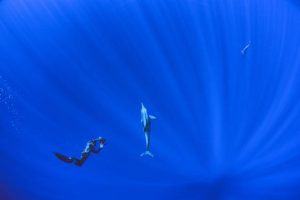
If you are looking for something different and interested in photography, freediving photography is your best choice. Here you are 7 tips to help you master freediving photography:
- Be safe.
- Put the environment into your consideration.
- Understand your subjects.
- Master composition.
- Know about shutter speeds.
- Learn about smart positioning.
- Be good at post-processing.
Be Safe
When you become a certified freediver, you should now already know the basic safety procedures for freediving which include:
- Never dive alone.
- Have a dive plan.
- Assess the conditions of the water before diving.
- Master equalization, etc…
You should consider that the situation will be more complex when you add photography to your freediving experience. Using a camera underwater will add extra distraction which can lead to forgetting your basic safety protocols while scuba diving.
So when you take photos underwater, think for a second or two about your training to make sure you have a safe dive.
If you aren’t a certified freediver yet, you must take a course before practicing freediving photography at depth. If you are a certified diver, take your next step and get your advanced or master freediver course to be able to increase your depth to get the perfect shot.
Put the Environment into Your Consideration
From the fact that diving with a camera is a distraction, you must consider the environment before and while diving when you do freediving photography.
Try not to kneel on the seafloor or brush up against any coral reefs in the area as possible. Ensure not to harm the Marine ecosystem around you with your fins and not to touch any marine life. As an underwater photographer, you should leave the environment around you as beautiful as you found it.
Understand Your Subjects
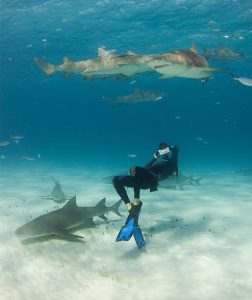
Although this tip seems technically independent of your camera or your computer in the home, it is the most important one. Understanding how people and marine life move and behave in the water is considered paramount to successful underwater photography
Subjects may give you a few opportunities to get the shot, however when you position yourself in the water based on your understanding where that subject is going have an equal importance to the settings on your camera.
So, it will be better to ask other freedivers who are experienced shooting your choosing subjects or even research movements through Media, as by doing this, you will have plenty of clues for the best way to deal with any given situation.
Master Composition
Eye-catching compositions are considered one of the most essential ways to produce perfect underwater images.
Whether you are shooting scuba divers from your group, a model or a marine creature, it will be a good idea to enter the water with a catalog of inspirational photography ideas for freediving photography in mind to be ready to react and create your own images as quickly as possible. You can visit PADI’s instagram page if you want many examples and make creative juices flow.
Know about Shutter Speeds
The importance of the shutter speed lies in that it can be the difference between a crisp and a blurry image. If you want to capture a crisp image, ensure to use a shutter speed around 1/250 to 1/320 mark or above that. Shutter speed can freeze the action in front of you and prevent unwanted blurring.
On the other hand, to have a blurry image, you should use a dropping shutter speed to around 1/10 Mark, as this will introduce blurring into your images.
This skill is considered an advanced one, as when the freediver can’t shoot it correctly, he will get a blurry, unusable miss.
Learn about Smart Positioning
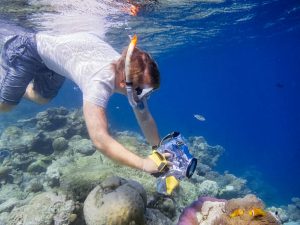
As a golden rule for freediving photographers, always maximize the amount of light falling on the subject. Do that by putting the sun behind you and the subject to be in front of you.
Even if you want to have blurry images, a sufficient amount of light will still allow you to shoot at the lowest ISO possible, Giving to you cleaner images regardless of the chosen shutter speed.
Be Good at Post-Processing
Whether you agree or not, editing the underwater images in post-processing is an essential part of the production process, so always shoot in RAW to make the camera be able to store as much light information and color as possible.
This will help you restore lost colors, especially red and also adjust the lighting levels in your images. From this point, learning about advanced image manipulations software such as Lightroom and Photoshop is almostly important as in water competency.


