


When it comes to scuba equipment, your options can extend beyond two choices. Dive gear comes in many styles to match different divers’ needs. When you submerge yourself underwater, this environment isn’t meant to make you feel comfortable and safe, or even keep you alive.
One of those items that require a careful selection from you is fine. These essential pieces of scuba gear can be a challenge, as once you get used to your own scuba gear, replacing it can be tough, especially when comparing open-heel fins vs. full-foot fins.
Believe me or not, choosing the best option between these two different styles can make or break your dive because your fins help you move through the water during your dive.
Keep reading to get a better understanding about their differences and how each style can improve your dives.
Open-Heel Fins vs Closed-Heel Fins: What’s the Difference?
Full-foot fins are preferable for many divers because of the simplicity of their operation: You slide your foot into a secure molded pocket that keeps it in place in the fin. Simply put, they resemble closed shoes that cover the entire heel (Your toes may remain exposed, as those are known as open-toed fins).
With full-foot fins, you don’t need to wear a dive boot or slipper, so they are usually called barefoot fins or warm water fins. Without doubt, it is true, for if you dive while wearing full-foot fins in waters below 60°F, your feet will definitely feel it afterward!
The fit of the full-foot fin can affect the amount of pressure placed on the top of the foot and toes or, even cause blisters and cuts when choosing a bad fit, which leads some to struggle to choose a pair to rent or opt for strap fins instead.
Then again, the closed-heel fins which can be worn easily are still the easier-to-be-use option for quick dives and snorkeling adventures (in warm, tropical waters).
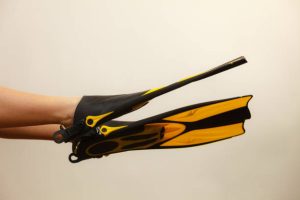
Key Characteristics of Full-Foot Fins:
- Can be worn and removed easily.
- No need for socks or booties.
- Getting the right size is more important.
- It doesn’t keep you warm.
- The best choice for warm waters.
Recommended Products:
- Oceanic Viper Full Foot Fins.
- Mares Avanti Super-Channel Full Foot Fins.
- Aqua Lung Express Full Foot Fins.
- Cressi Reaction Pro Full Foot Fins.
Open-Heel Fins
In the design of the open-heel or strap fins, the heel doesn’t be covered. Instead, they have rubber straps which you can suggest to be more comfortable.
Spring straps revolutionize dive gear by fixing common strap issues and boosting durability.
This advantage makes this type of fins suitable for those who prefer scuba diving in colder waters as the adjustable nature of it helps you to wear different sizes (and thicknesses) of dive boots or socks with the fin.
Wearing diving boots with your open-heeled fins helps your feet stay safe and steady on rocky shores. Some divers notice better propulsion when diving with open-heel fins because the bond between the foot and fin is stronger.
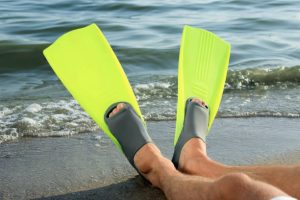
Key Characteristics of Open-Heeled Fins:
- Can be adjusted to a more custom fit.
- Used with booties or dive socks.
- The ideal type for scuba diving.
- A bit bigger and more expensive.
- Creates resistance on the surface.
Recommended Products:
- Mares Avanti Quattro Plus Open Heel Fin.
- Cressi Frog-Plus Fins.
Which One Should I Use?
Start by assessing your diving environment to choose the best foot style for your fins. Are you diving in cold or warm waters? Will you go walking before, after, or during your dive? Your responses determine the right heel type for your dive.
For warm-waters, the best option is full-foot fins. They’re considered affordable in general and simple to put on and take off. They’re a smart pick for saving money or quickly putting on fins.
On the other hand, open-heeled fins should be your choice when extra thermal protection is a must, because they enable you to wear booties and socks. Extra foot protection prevents blisters and cuts on beaches, stairs, and rocks.
Scuba diving fins are usually open-heeled to be more comfortable in addition to the better fit as boots compress underwater.
Meanwhile, snorkeling fins tend to be closed-heeled to be more simple and reduce drag on the surface. Some strap fins can be worn barefoot, with choice depending on size and cost.

To Make the Right Choice, Do Your Research
Choosing fins with a perfect fit and suitable for your needs certainly doesn’t end with your decision between Open-heel fins vs Closed-heel fins. You can also choose between blade and split fins, in addition to blade lengths (which is related to the debate between scuba fins vs snorkeling fins).
If anything, you’ll need to research and ask the right questions before buying your first fins and other diving gear. So, Which types do you prefer: Open-heel fins vs closed-heel fins? We value your feedback!


