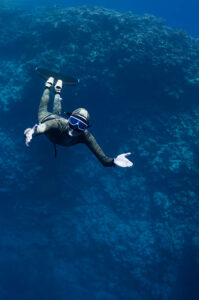
On october 14, 2016, Harry Chamas, a British freediver, set a new sled record in freediving when he rocketed down past 344 feet (105 meters). While there are several freediving methods, Chamas plunged into the Kalamata waters in Greece using the Variable Weight method to exceed 262 feet (80 meters) and surpass the previous record.
With the help of a weighted sled to pull him down, Chamas reached the record mark and then swam back up to the surface while only taking a single breath. He began practicing freediving when he was seven in Australia. He is also working as a staff instructor for the Freediving Club in Greece.
The sled mode of freediving, which is also called VWT, is the method in which you are pulled down via artificial means, then swim back to the surface under your own power. This is just one of several techniques of this highly disciplined and challenging activity. VWT is regarded as one of the most extreme techniques of freediving. Let’s take a look at the other freediving techniques. Ready to dive into the details?!
What are Freediving Techniques?
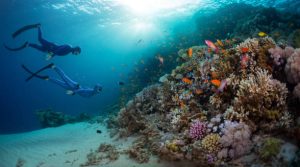
Freediving techniques are diverse and fascinating, each offering unique ways to explore the underwater world on a single breath. Mastering these techniques not only enhances performance but also ensures safety and enjoyment during each adventure in the deep blue.
Our list for freediving techniques include:
- Constant Weight.
- Free Immersion (FIM).
- Dynamic with Fins (DYN)/Dynamic Without Fins (DNF).
- Static Apnea (STA).
- No Limit (NLT).
Constant Weight
In constant weight (CWT) freediving, a diver descends using only fins and a small amount of weight that is enough to be able to pull himself down. In this technique, you aren’t allowed to use guide ropes or even get any aid from any other objects.
CNF is an abbreviation for Constant Weight Without Fins and it is considered a variation on this discipline in which the freediver descends without wearing any fins, he only uses his own muscle power to propel himself.
Free Immersion (FIM)
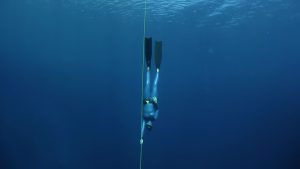
Free immersion is a very similar technique to the Constant Weight freediving methods, however, in Free Immersion the freediver is allowed to use a guide rope to pull himself down. Without using fins, this rope is considered his only means of propulsion. Divers have the option to descend either head first or feet first.
Dynamic with Fins (DYN)/Dynamic Without Fins (DNF)
This is one of the freediving techniques that is performed in a pool. The freediver swims underwater in a pool in an effort in order to cover as much distance as he can with one breath. In DYN, the diver uses fins, whereas in DNF, the diver swims without them.
Static Apnea (STA)
This is a freediving technique that is considered a measure of stamina, in STA a freediver floats with his face down in a pool while he holds his breath. Records are judged by the length of time instead of the distance covered.
No Limit (NLT)
In NLT, which is considered the other extreme freediving pursuit after VWT, a freediver pulls himself down with the help of a heavy weight, then surfaces using counter-balance pulley system or a lift bag. This is regarded as a risky freediving method with which Divers can reach tremendous depths.