Getting ready for underwater adventures or chilly conditions? Picking the right drysuit is very important to stay comfortable, warm, and safe. But how do you know the essential drysuit features?
This guide will help you to find the perfect drysuit for your needs and enjoy your activities to the fullest! Let’s dive in!
What are the Essential Drysuit Features
In this article, we will talk about the essential drysuit features, including:
- Neoprene or membrane drysuit.
- Feet.
- Zips.
- Entry methods.
- Telescopic suits.
- Seals.
- Quick fit wrist systems.
- Dry gloves.
- Quick fit neck systems.
- Pockets.
- Pee valves.
Neoprene Or Membrane Drysuit
This is probably considered the first decision you need to make when thinking about the essential drysuit features. Here’s a summary of the advantages and disadvantages of neoprene and membrane drysuits.
Neoprene Drysuit
- The material of the suit insulates.
- The suit has a snug fit.
- A great choice for divers who feel the cold.
- It needs more lead.
- The suit can lose buoyancy at depth.
Membrane Drysuit
- Have many different styles and materials.
- You can mix and match base layers depending on the weather.
- It needs less lead.
- It provides no warmth by itself.
The membrane drysuit has a baggier fit.
Drysuit Feet
For your feet, there are two options as essential drysuit features in a drysuit. You can have integrated boots with your suit or purchase socks and wear separate boots.
When there are integrated boots in your drysuit, you may find that the off-the-peg suits are limited in terms of sizing options. For instance, if you have big feet while being short (or vice-versa), it may be a problem to find the perfect suit. If you don’t have a “standard” size, you may need to choose socks or opt for a custom route.
I prefer suits with socks, as they are easy to turn inside out for cleaning and repairs. It also offers flexible sizing since one sock can fit more divers, but their downside is their flimsiness.
Avoid walking barefoot to prevent leaks. For sure you’ll need boots besides your socks. Tech boots are more flexible than built-in ones, making it offer better frog-kicking flexibility (you could even try the other option).

Drysuit Zips
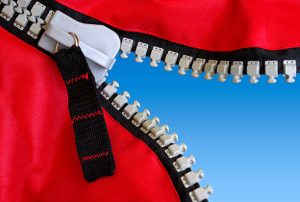
When talking about drysuit zips, you should know that they are very essential drysuit features that have two types: brass zips and plastic zips.
Brass zips
Brass zips were considered the mainstay of drysuits for several years. They’re durable and dependable as long as you do regular maintenance. However, salt and metal buildup can cause issues with metal zips, so it needs extra cleaning after every dive and it is better to apply some zip lube or beeswax in order to keep it sliding smoothly.
The main thing you may dislike in brass zips is that they can be a bit restrictive in the storing and transportation process, especially on front entry suits. You should pay special attention to how you are folding your suit in order to avoid stressing the zip.
You should also ensure to keep the zip open in case of not using it, as keeping it closed can snap and dislodge its teeth which leads it to be harder to operate and can result in leaks in the water.
Plastic zips
Plastic zips are known for their inconsistent performance and lack of reliability. Fortunately, all those issues have been resolved as materials and technology have progressed. Plastic zips are considered much more flexible. That makes wearing front entry suits more comfortable as it hugs you nicely.
The storing and transporting of the plastic zips should be the opposite to brass zips. Just ensure to keep them closed as the teeth will be stronger in case of knitting them together.
Drysuit Entry
When talking about getting the drysuit on or off, there are a couple of different essential drysuit features to choose from. You can purchase a back entry suit in which the zip runs across the back of the shoulders, or a front entry suit in which the zip runs diagonally across the torso (or in an arc around your chest in some cases).
Back entry suits are common on simpler models of drysuits. In these models, the zip is kept out of the way, so you can place inflation valves in any place.
The main disadvantage of a back entry suit is that it requires assistance to zip up unless you have exceptional flexibility.
Front entry suits are easy to get on and take off theoretically, especially if you need to take off then in a hurry. They’re designed so that you can close the zip with your own, although, it is recommended to get your dive buddy assistance to ensure that the last little bit is closed (as it may be hard to see it by yourself). There’s nothing worse than jumping in the water while thinking it was all the way closed!
When the zip is running across your chest, this may mean that your inflator valve isn’t in its right position. It won’t take long in order to get the hang of it, but you may need some hoses with different lengths depending on your body frame and scuba gear set-up.
Telescopic Drysuits
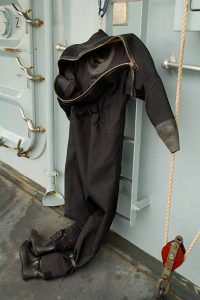
Having a telescopic torso is regarded as one of the essential drysuit features that you can find on trilam suits. Its importance lies in providing extra length for easier head entry through the neck. Squeezing through a neck seal is already challenging without the added discomfort provided by tight space.
After getting your head through, pull down the suit, fold the excess material, and secure it with a crotch strap.
Telescopic suits also offer a little bit more leeway in case of sizing up for an off-the-peg suit. you may find that extra length in the torso makes you don’t have to purchase a more expensive custom-fit suit!
Drysuit Seals
When it comes to drysuit seals, there are three different options: neoprene, latex and silicone. Each type has its pros and cons. So, you’ll need to try each type and decide which one is the best option for you.
Neoprene Seals
It is a fact that neoprene seals are essential drysuit features that keep us warm underwater. They are often more comfortable than latex, easier to put on with practice, and gentler on your hair. They’re also a long lifespan although they can be prone to leaking especially when flexing your wrists or looking up.
Latex Seals
The main problem you may face with latex seals is that nasty rash it gives you when scuba diving a lot, especially in salt water. It’s uncomfortable, looks silly, and may lead to strange questions from friends because it looks like you’ve been choking yourself. You can use balms on your neck to avoid this or wear a silicone neck guard as a barrier.
With consistent balm use, latex offers the best seal and allows more sizing and trimming options for an ideal fit. One disadvantage compared to neoprene is that it doesn’t offer thermal protection from the seals, but you can overcome this with some decent hoods and gloves.
Latex seals can also tear easily as they degrade upon exposure to certain chemicals, sunlight, or heat, and, like neoprene, need replacement at your local dive center when damaged.
Silicone Seals
Silicone seals are considered a very comfortable option, and they rarely irritate the skin. One drawback is that they can tear more easily than the other types of seals. However, you can replace them by yourself! ensure to keep some spares in your dive bag to be able to switch them out in minutes. You won’t have to stay on dry land feeling upset over broken drysuit seals!
These quick-fit systems are excellent, allowing for durable latex seals and compatible modified neoprene neck seals.
Drysuit Wrist Systems
Quick fit systems are one of the essential drysuit features in which standard latex and neoprene wrist and neck seals are bonded to the suit. If any tears happen, the seals require professional repair at a dive center. As a result, the suit will be out of action temporarily.
A quick fit systems enable you to replace these seals by your own easily. When gearing up for a dive, it is normal to find them failing. A torn standard seal can ruin your dive unless you have a spare suit. Quick fit systems allow seal replacement on-site without removing your gear. That makes them from the very essential drysuit features.
The other added advantage is that if your suit has an installed quick fit wrist system, you can use dry gloves.
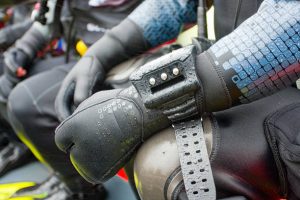
You can find a few quick fit systems on the market. The most popular ones include:
Sitech
Sitech manufactures the Slaggi in addition to the Quick Cuff. Slaggo has a more flexible ring, but the dryglove options are limited. Quick Cuff has existed for some time, and most drygloves are compatible with it. To be honest, Flexibility isn’t crucial as both are quite comfortable.
KUBI
Kubi is a well-known and popular quick-fit system. It has a reliable dryglove attachment, but its larger size can make it hard to be added to some suits, especially neoprene or women’s styles. It’s better to install it in the manufacturing process of the suit.
Santi
Santi have developed “Santi’s Smart Seals” which are their version of the quick-fit system, included with Santi and Avatar drysuits. They’re easy to use, effective, and compatible with both latex and silicone.
Dry Gloves
If you have a quick-fit wrist and suffer from cold hands while scuba diving, dry gloves are a great option to try. Surprisingly, they offer better dexterity than wetsuit gloves. Although they may seem bulky on the surface, compression underwater makes them excellent.
There are many options, and this drysuit feature generally keeps your hands completely dry. You’ll use marigold-style gloves that lack thermal insulation, so base layer gloves are necessary. Fourth Element G1 liners are highly recommended as they provide warmth even if a leak occurs.
My top dry glove systems include Santi Smart Seals, Kubi, Fourth Element Eclipse, and Waterproof Ultima. Your choice should depend on how they assemble, so visit a local dive shop (or Honest HQ) to try them out.
Drysuit Neck Systems
Quick fit neck seals can also be installed, offering latex, silicone, and neoprene options that are easy to replace if you get a tear, but they require more practice than wrist systems. Sitech is regarded as the main manufacturer of this system, offering their first-generation newer Orust and Quick Neck.
Between the two, Quick Neck seals are easier to replace, but the ring is more rigid, which can limit movement and flexibility. Orust is softer and avoids these mobility issues. Swapping the neck seal can be tricky due to the many small clips, especially if you are suffering from cold hands or swaying on a dive boat.
A key drawback of these neck systems is reduced shoulder mobility, which can be challenging for twinset divers performing shutdowns. Scuba divers with narrower shoulders, often women, tend to experience this issue more.
Some women’s cut drysuits lack enough space between the seams to fit the system. If there is enough space, the ring will likely rest under your BC shoulder straps or harness, causing discomfort, especially with a front-entry zip drysuit.
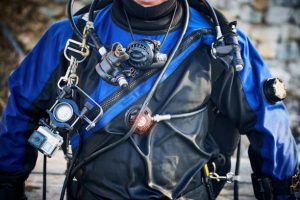
Drysuit Pockets
Having pockets is one of the essential drysuit features that provides you with extra options to store important gear, such as reels, SMBs, wetnotes, spare masks, etc. (All the items you’ll have to clip to your BCD if you have no storage options).
For most custom suits, you can choose the place in which you can put your pockets. For sidemount divers, it’s important to choose a suitable place for the pocket carefully, as the usual position might be blocked by the tank.
Drysuit P-valves
With your drysuit P- valves, you will transform your diving, as no more rushing to the bathroom or desperately holding on while getting out of your suit!
P-valves are one of the great drysuit features to add if you want to stay hydrated (which is super important for scuba diving) without worrying about urgent bathroom breaks. However. you may need some time to get used to p-valves, especially for the ladies.
Men have the option to add a convenience zip like that found on surface suits. It makes surface intervals simpler but introduces another potential leak point.