Plunging into the ocean at night transforms the familiar into the mysterious. At night, you can spot ocean creatures with different behaviors, and you may encounter some magnificent ones that you will never see in the daylight.
Although night diving is an extremely fun and exciting experience, you may feel it a little daunting at first. If you are interested in night diving, this guide includes a list of tips for night diving beginners to help you in the preparations, so you can descend into the darkness with ease and confidence.
Tips for Night Diving Beginners
Scuba diving at night offers a unique thrill, but it comes with challenges. Here are essential tips for night diving beginners to help them navigate the depths safely and confidently.
2. Get some diving under your belt first.
3. Collect information about the different marine life in the area.
4. Visit the same site at the daytime before delving in at night.
5. Listen carefully to the briefing.
6. Bring a backup flashlight.
7. Descend before it becomes completely dark.
8. Stay shallow.
9. Get to know your equipment.
10. Focus on the place you are pointing your flashlight to.
11. Look out for bioluminescence.
12. Stay calm, breathe.
13. Stay close to your dive buddy.
14. Be prepared to warm up.

1. Improve Your Buoyancy
The best thing to do before delving into a night diving adventure for the first time is improving your buoyancy. Having poor buoyancy control means you may kick up silt and sand from the sea floor which in turn worsen visibility.
At nighttime, you already have extremely limited visibility, so you have to avoid doing anything that can make it any worse. It is also a difficult thing to know your definite position in the water while tracking your depth gauge.
Don’t breathe heavier or kick too much, as this can lead to shallow watering without realizing, getting too deep, or you may bump into rocks or coral and cause damage to marine habitats. It is highly recommended to sign up for a Perfect Buoyancy specialty program before delving into a night dive adventure.
2. Get Some Diving Under Your Belt First
If you don’t yet feel comfortable in the daylight scuba diving, you may feel daunting when night diving. As a night diver, you need to consider many things, such as: buoyancy control, navigation, hand signals, light signals, distance from your buddy, etc.
So it is a better to get some experience on diving in the daytime until you become sure you are ready to take the adventure into the darkness.
3. Collect Information about the Different Marine Life in the area
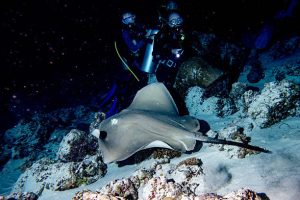
You are supposed to encounter different marine creatures while night diving than daytime diving at the same spot. Some marine creatures hunt at night, so you may see your favorite marine animal acting differently.
Collect more information about the area where you are diving or ask at the local dive center to find out the different types of marine life you are going to spot at night, and the unique behaviors they act on.
4. Visit the Same Site at the Daytime Before Delving in at Night
Visiting the same site on a daytime dive will help you to recognise the topography there and that will help you to navigate with ease in the dark. Focus on any coral bombies, certain rock formations, or other distinct landmarks that are fixed, so you can recognise your position when spotting them on the night dive.
5. Listen Carefully to the Briefing
Pay close attention to your dive guide’s briefing before your first night dive. The briefing covers the dive route, depth, lost diver procedures, unique marine life, in addition to hand signals.
On a dive night, you will use slightly different hand signals than on a daytime dive because you will be holding a flashlight in one of your hands.
Hand signals requiring both hands will need adjustment. You should conduct hand signals under the light of the flashlight, so other divers can see.
When you want to say “I’m ok” to your guide or buddies with your torch, make a big circular “O”. Your dive guide will explain everything and ensure your group understands.
6. Bring a Backup Flashlight
Flashlight batteries can run out or stop working during night dives. This is the reason why it is better to bring a spare flashlight with you on a night dive. Carry your primary flashlight in your hand and keep your spare in the pocket of your buoyancy control device or clipped onto it
7. Descend Before It Becomes Completely Dark
The perfect time for you as a night diver to descend is in the dusk! The reason behind that is to get all your scuba equipment ready and perform your buddy checks before complete darkness, and Your eyes will adjust as it gets darker.
Dusk offers a unique dive experience, with enough light to skip the flashlight and watch marine life hunting.
8. Stay Shallow
Before delving into the night diving world, you should practice deep diving, but you should stay shallow in poor visibility, especially if you are still a beginner, because if you ever feel panic or get list from the dive group, you can reach the surface quickly. But, Don’t forget to surface slowly even in emergencies.
You will likely feel a little nervous on your first night, so avoid making it scarier by making it a deep dive.
9. Get to Know Your Equipment
Most scuba gear follows a standard setup, but minor variations may exist. If possible, dive with the same set of scuba equipment of the daytime, so you can find the place of everything.
You will know the exact place of your octopus (spare regulator) on your body, where your air and depth gauges are secured, and the proper way to turn on your inflator/deflator hose buttons. If finding these equipment is easy in the daytime, you can confidently find them in the dark, too.
Remember to secure hoses and gauges close to your body to streamline your gear, as it’s easy to miss something dragging in the dark.

10. Focus on the Place You are Pointing Your Flashlight to
Bay attention to the place you are pointing your flashlight in. Remember that you want to see as many fantastic marine creatures as possible, but you have to respect your friends and not blind them!
You can make them feel stressed when you shine your light directly into their eyes, so ensure to shine your light only to the side of them. When you do this, you will have enough light to see while making them stay relaxed. Follow this advice when you shine to your dive buddy.
11. Look out for bioluminescence
If you are interested to see bioluminescence, you likely know that this phenomenon can only be seen at nighttime. Some sea creatures glow blue and green which is considered an amazing sight to witness. Bioluminescence isn’t a must to be seen in every night dive, but you might get lucky!
12. Stay calm, breathe
You are likely to feel a little nervous on your first night dive; it is strange and there are many things to think about and to take in. you need to breathe deeply calmly, relax, and remember your dive training until you get used to it (and probably love it!).
13. Stay Close to Your Dive Buddy
Regardless of the type of your dive, staying close to your dive buddy is highly recommended, and getting a little closer on a night dive is crucial. If your dive group meets another one, you might get confused about who you’re with. So, Ensure to be in a reaching distance of your dive buddy at all times.
Glow sticks and stick torches are common equipment every night diver has underwater. You can find many colours of glow sticks that you can attach to your scuba tank to be able to identify your buddy or dive group easily while night diving.

14. Be prepared to warm up
From the fact that you are exiting the water in the dark, the sunshine that helps you warm up is absent. You will need a towel and dry robe/ (coat/hoodie) to wrap it around yourself quickly after exiting from the water.
Ensure to stay warm while diving. Change before taking your gear apart, and it is better to have a hot tea to get ready.