Beneath the shimmer of coastal waters lies a portal into Earth’s ancient stories—blue holes. These mysterious, vertical caverns plunge unexpectedly from shallow seas into darkness, carved by time and tide.
Formed through geological wonders and steeped in marine legend, blue holes invite divers into an underwater landscape unlike anything else.
Whether you’re wondering about their origin, curious about what awaits beneath, or seeking the world’s most iconic dive spots, this article will guide you into the depths—where science meets adventure and silence speaks volumes.
How Blue Holes Are Formed
These curious features began forming thousands of years ago during the Ice Age, in which sea levels were about 100 meters lower than today.
Over time, glacial water slowly dissolved the limestone ground, making deep holes and large caves underneath. The ceilings of these caverns collapsed over time, leaving deep holes behind. the deep holes filled with water, forming today’s blue holes which we are so fascinated with.
Some holes keep growing as natural chemicals in the water slowly break down the surrounding limestone and rock. Some blue holes formed in areas that are still landlocked, but have tunnels that connect to the ocean.
These tunnels allow sea water to get inside the hole and fill it with the tides, that’s why some inland blue holes contain saltwater. The inland holes are usually formed by the same methods as oceanic ones. A rare cases of inland holes are filled only with fresh water from rain or natural runoff, like many of Mexico’s cenotes.
The marine life in blue holes depends on their location, but their ancient formations in which you can dive make them fascinating enough to be from the top and most popular diving spots around the world.
What to Expect from Blue Hole Diving
The blue holes that are found in the open ocean are protected from the currents and waves and as a result of that, they often have their own unique ecosystems.
And scuba divers may encounter interesting and ancient things while exploring them, including
- Fossils, and ancient coral formations.
- Cave and cavern-like features.
- Haloclines which are a visual effect in which fresh and salt waters meet.
- You may also see strange endemic species of shrimp, cave fish, and other crustaceans
It’s also important to consider that blue holes look very different from above than when you see it at sea level.
When you dive within these geological formations, you probably won’t notice the deep blue color or changes in the water (as the famous shade of deep blue is considered less obvious inside blue holes).
And from the fact that their walls are usually made of sheer limestone, it is expected that this experience will be more similar to scuba diving in caverns, caves, or cenotes than the open sea. The coolest parts of blue holes are found deep down, which is why many tech divers love exploring them.
Entry and exit routes of these sites may involve enclosed areas or swim-throughs without surface access, so they’re perfect for advanced underwater explorers with a good experience in buoyancy control and diving to 30 metres or below.
If you’re going to try cave or cavern diving or exploring beyond the limits of recreational diving, it’s an important thing to have the proper certifications.
You should also take your time in practicing the new skills before the adventure, as this will boost your confidence, help you to have a safe diving experience, in addition to allowing you to relax and enjoy every tank while being away!
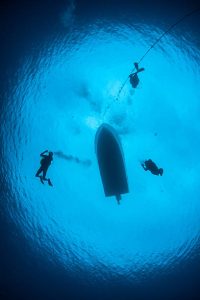
Earth’s Most Breathtaking Blue Holes Hidden in Equatorial Waters
The rock formations by which blue holes typically form can develop in a wide variety of environments around the globe. But, if you are looking for the most stunning ones, you will find them in tropical waters close to the equator, including the following:
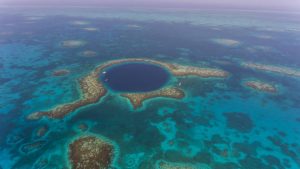
The Great Blue Hole of Belize
- The Great Blue Hole was first explored by Jacques Cousteau and is considered now a UNESCO World Heritage Site.
- It’s one of the most famous blue holes in the world.
- The marine life inside this blue hole includes midnight parrotfish, nurse sharks, reef sharks, and juvenile reef fish.
- Scuba diving at the site usually takes a full day (about 8 hours on the water).
Egypt’s Blue Hole
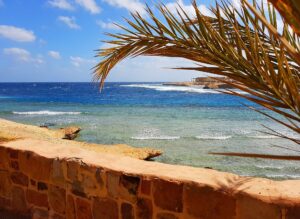
- The Egypt’s Blue Hole is one of the country’s most famous diving spots that located in north of Dahab.
- It’s connected to a cave system with two main passageways: The Saddle (~6m depth) and The Arch (~55m depth).
- This blue hole is considered a popular dive site among recreational divers, technical divers, and freedivers due to depths exceeding 30 meters.
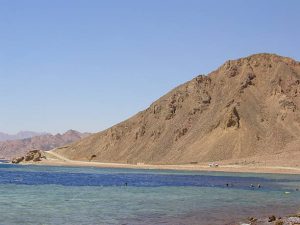
The Bahamas’ Blue Holes National Park
- The Bahamas host hundreds of blue holes, but only around 50 have been explored, and about 7 are open to recreational scuba divers.
- Blue Holes National Park on Andros Island spans 40,000 acres and contains the most iconic formations. And unlike many blue holes, they are filled with freshwater, which have a big role in oreserving prehistoric fossils.
Malta’s Blue Hole in Gozo
- Malta’s Blue Hole is the island’s most popular shore dive, which is surrounded by striking limestone features seen in the television series “Game of Thrones’.
- It connects to the open sea through a 15-meter-deep underwater arch, making it much like Dahab’s blue hole.
- This blue hole is regarded as one of the smallest and shallowest around the world, so it is the ideal choice for beginner divers and snorkellers.
Guam’s Blue Hole
- Located off Guam’s west coast, this fully submerged blue hole is considered one of the top dive spots in the island which is located off the west coast.
- The visibility here is good to 30 meters year-round, with crystal-clear waters, making it ideal for diving.
- Divers can reach the spot (with its heart-shaped opening) easily by boat (only takes 20 minutes) and usually includes one extra dive nearby.
Swain Reefs National Park, Eastern Australia
- Swain Reefs, which is about 200 km off Yeppoon, is a remote part of the Great Barrier Reef with nearly 300 reef systems.
- The wildlife inside this park is still largely unknown, making it an exciting site for adventure seekers.